Open Seams Along Old Membrane Laps
Laps that have pulled apart let rain run under the sheet. On an older TPO or EPDM roof, several open seams in one season usually point to a membrane near the end of its service.
Reading commercial roofing is our work: we install TPO, EPDM, and metal roofs and replace worn industrial roofs on buildings across the city.
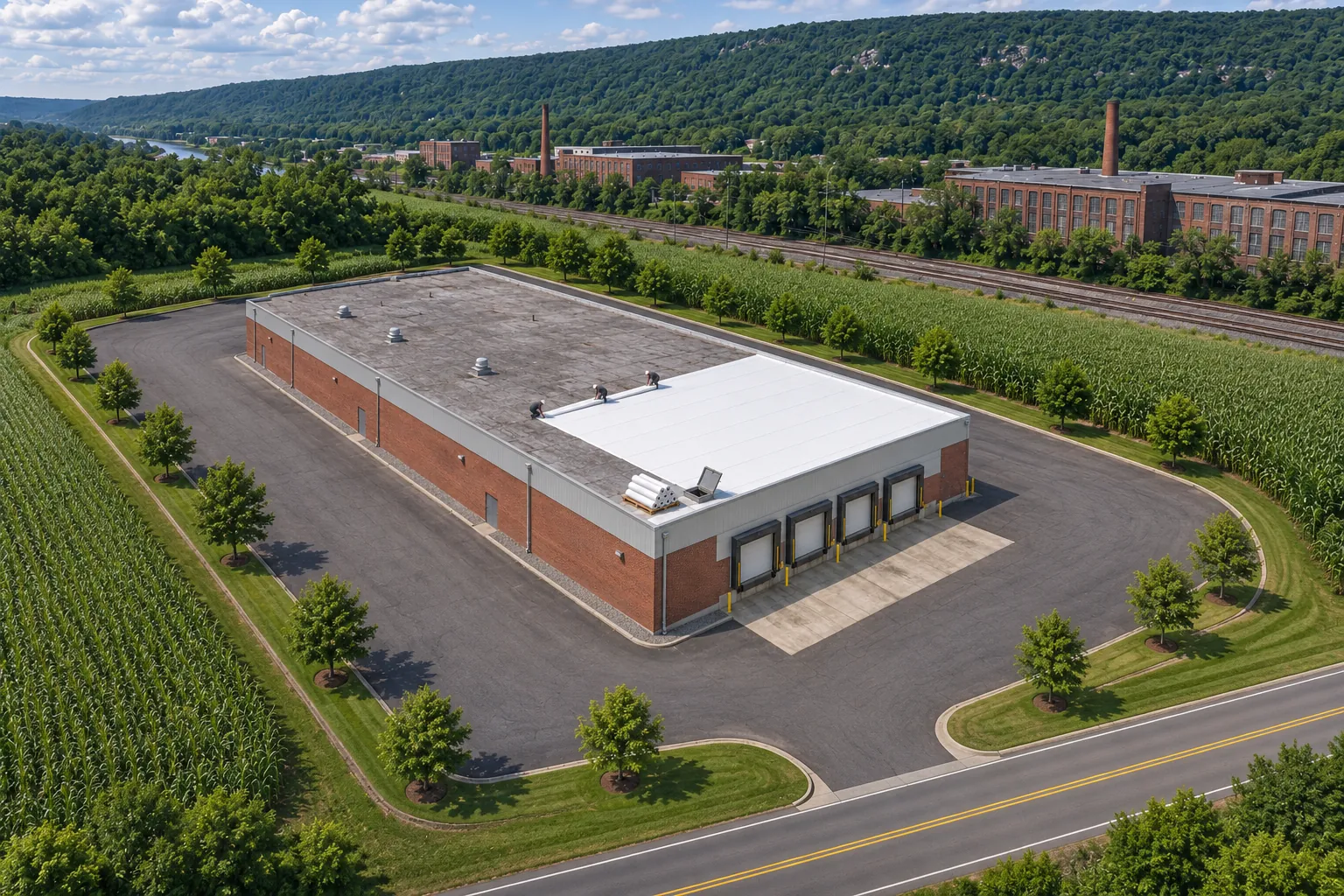
Most owners who ask about Reading commercial roofing are looking at one of these six conditions on an aging flat or metal roof.
Laps that have pulled apart let rain run under the sheet. On an older TPO or EPDM roof, several open seams in one season usually point to a membrane near the end of its service.
Water still standing two days after a storm means the insulation has sagged or the drains sit high. A new roof needs that slope fixed, or the same puddles return on the new sheet.
Soft spots underfoot and blistered areas often hide soaked board. Core cuts show how much of it is wet, which sets how much tear-off the replacement needs.
Red rust at laps and along panel ends weakens older metal roofs. When rust has gone through the steel, we price new panels or a retrofit instead of another round of patches.
Cracked base flashing at curbs, stacks, and vents is where many leaks start. A new roof rebuilds those details at the right height for the new insulation.
Wind lifts edge metal that has lost its fasteners. Once the perimeter loosens, the membrane behind it peels back, so edge work belongs in any replacement plan.
Each job follows the same order, from the first roof walk to the final walk with you.
Every part of the roof gets walked: we photograph seams, drains, curbs, and edges, and take small core cuts to see the layers and check the insulation for water.
You get a written scope naming the membrane, insulation, attachment, edge metal, and flashing, plus what comes off, what stays, and how hidden deck damage gets priced.
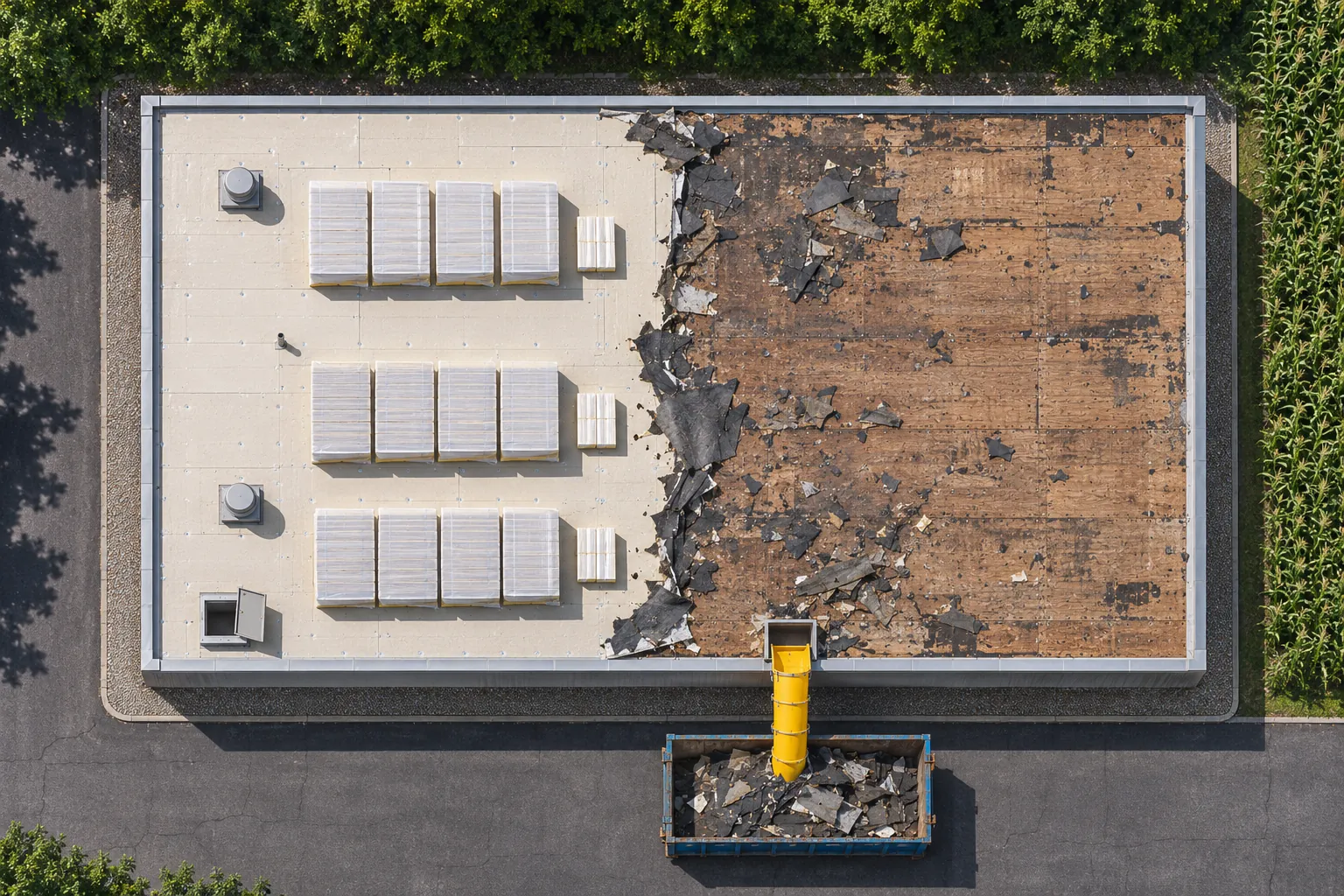
We set crane or hoist spots, material routes, and protection for the floor below, and we schedule rooftop unit work with your HVAC contractor before tear-off reaches it.
Old roofing comes off only as far as we can dry in that day. New insulation, membrane or panels, flashing, and edge metal go down section by section.
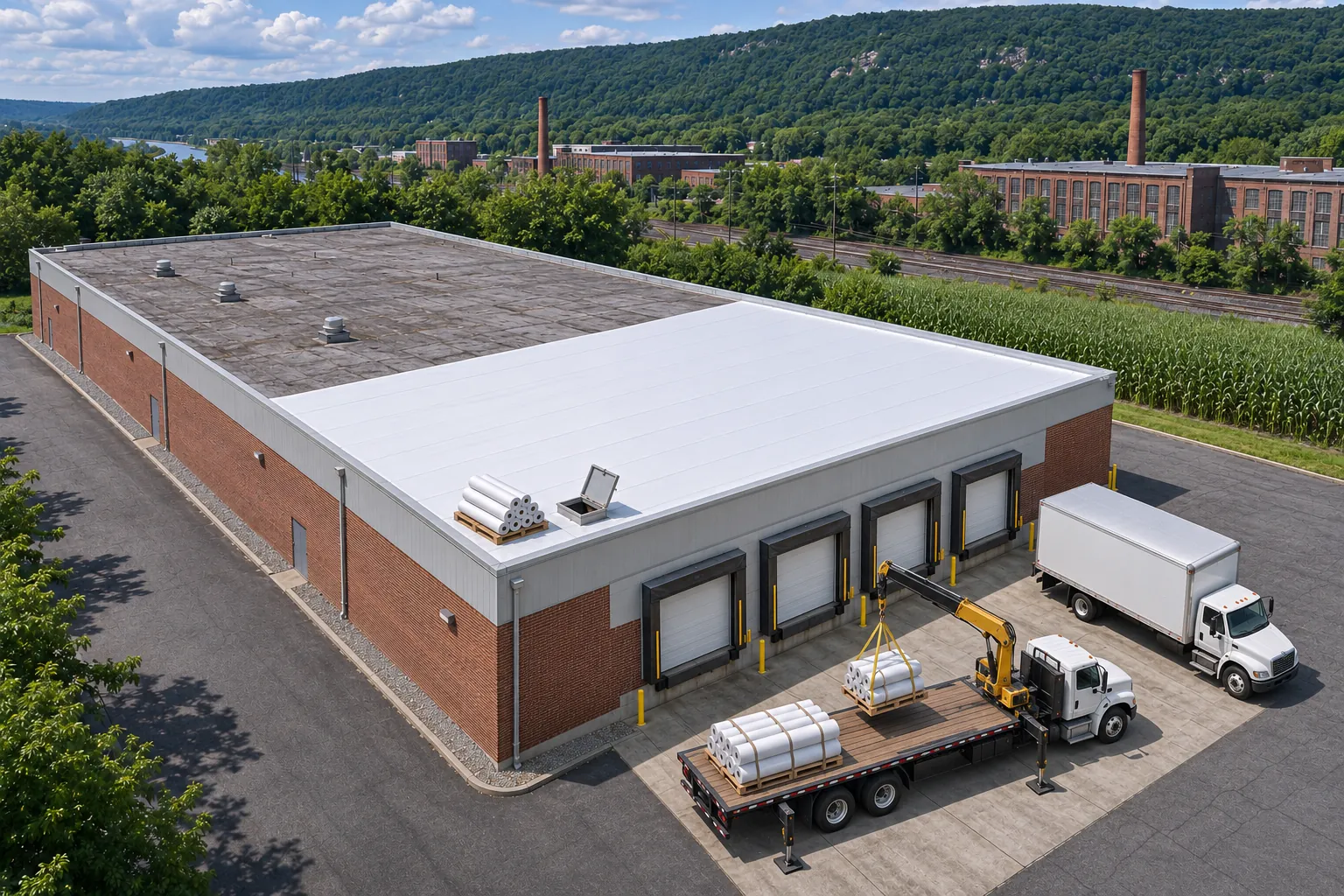
Together we walk the finished roof, check welds and laps, and hand over photos of the details plus the system and manufacturer records.
Four roof systems cover nearly every flat and low-slope building in the city. Pick the one closest to your roof.
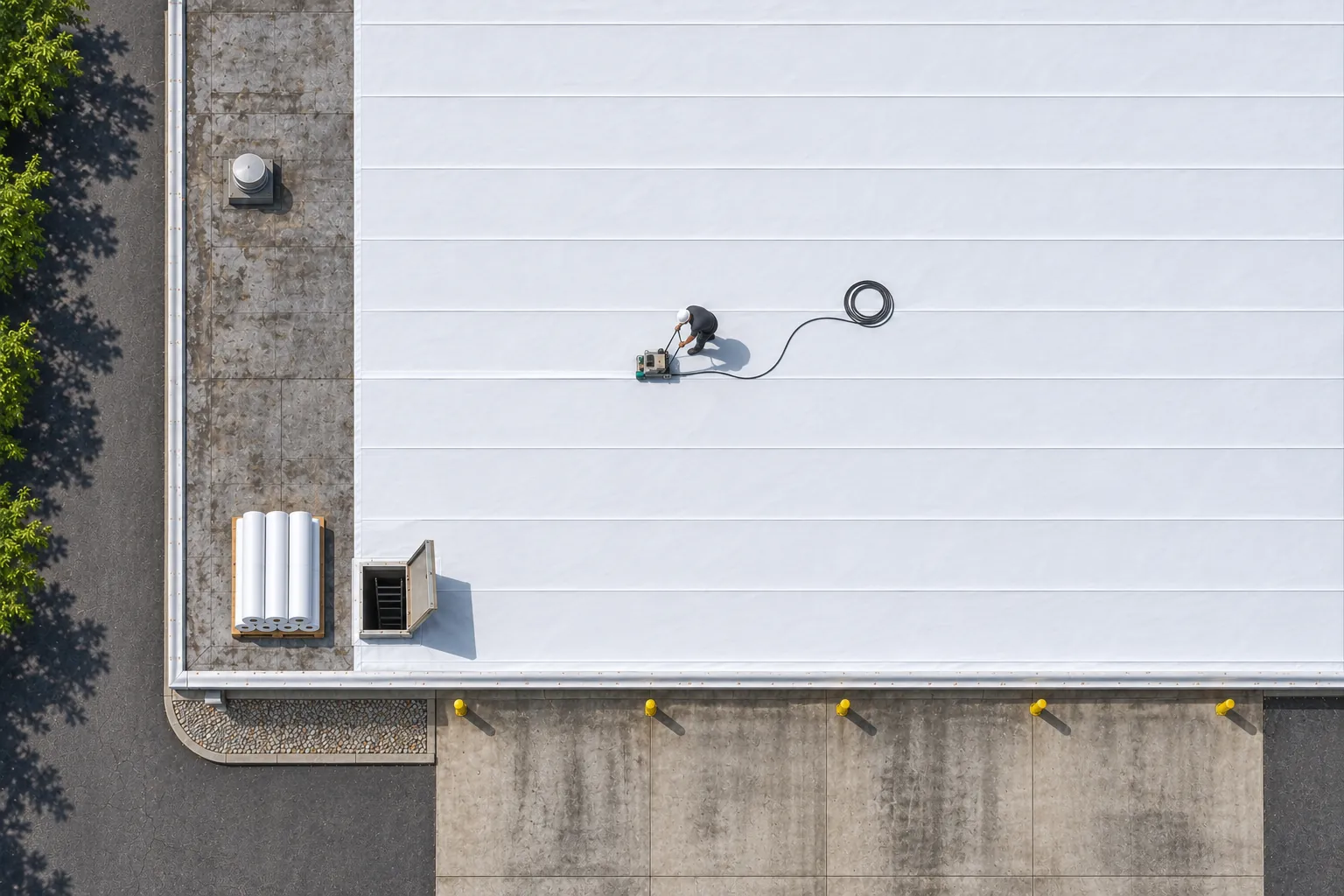
Heat-welded white membrane over new insulation, a common choice for warehouses, offices, and food plants that want a bright, reflective surface.
See TPO roofing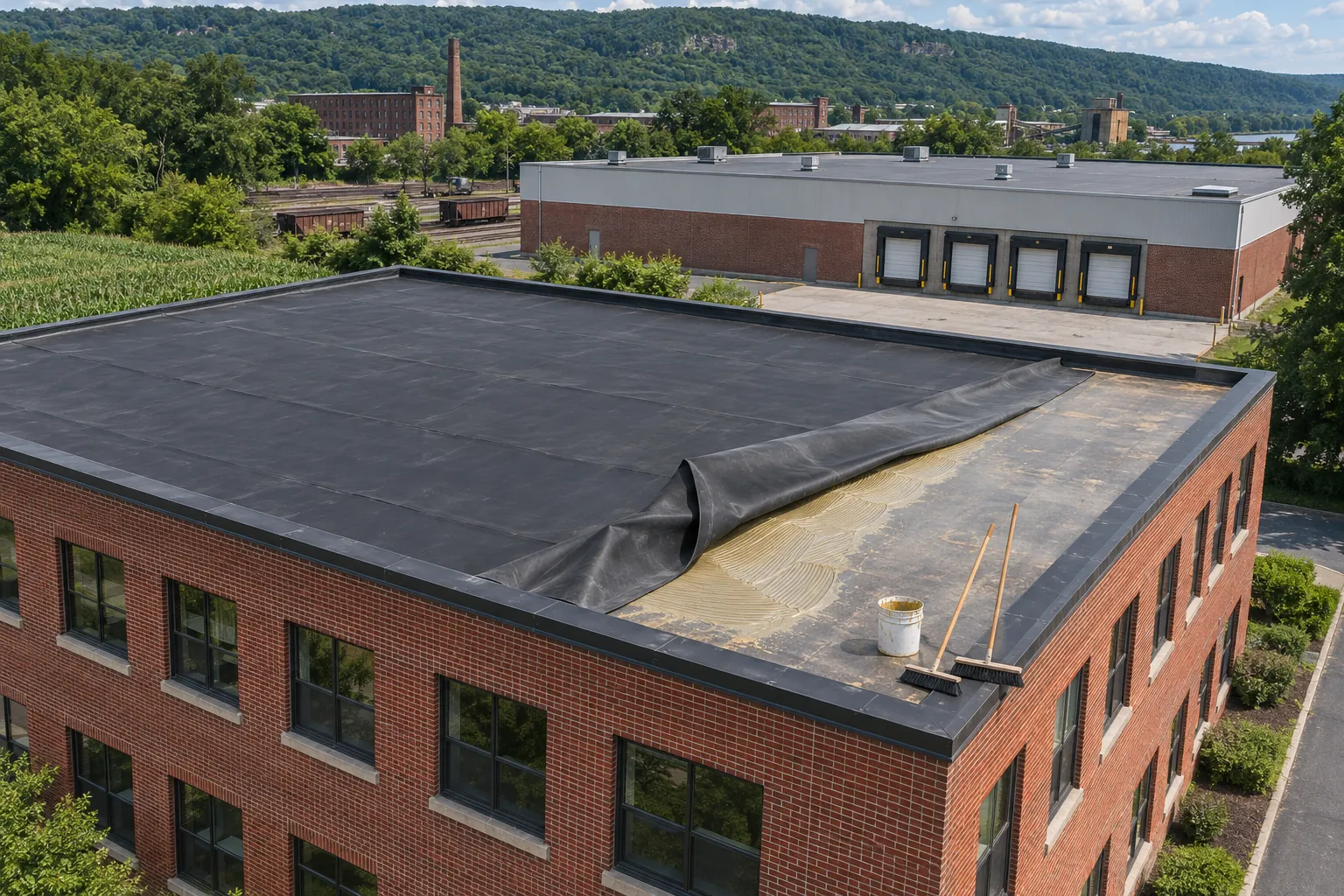
Fully adhered or ballasted rubber sheets for older mill buildings and low-slope roofs where flexible membrane handles movement and cold winters well.
See EPDM roofing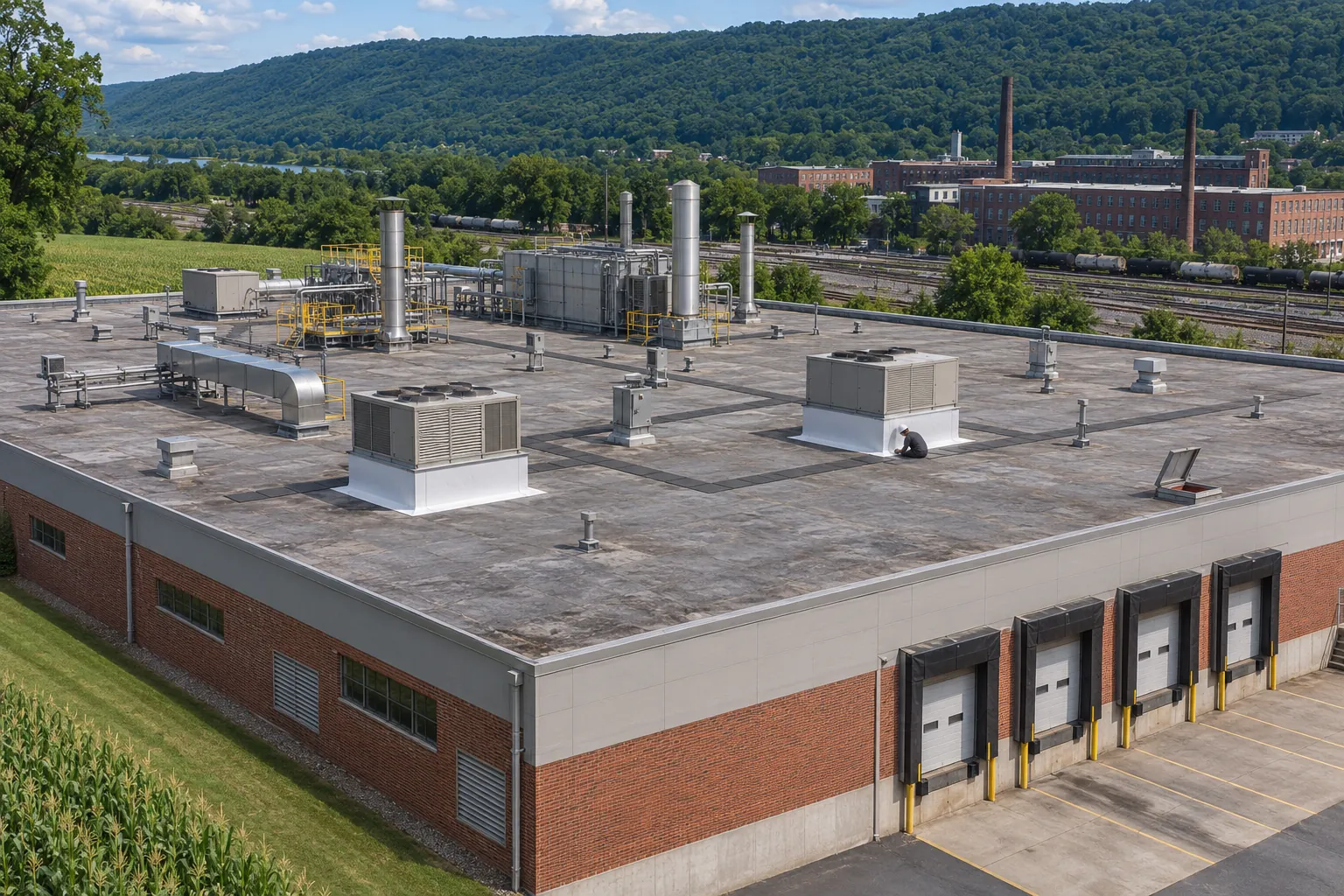
Reroofing planned around exhaust stacks, ducts, curbs, and shift schedules on plants, fabrication shops, and distribution buildings.
See industrial roofing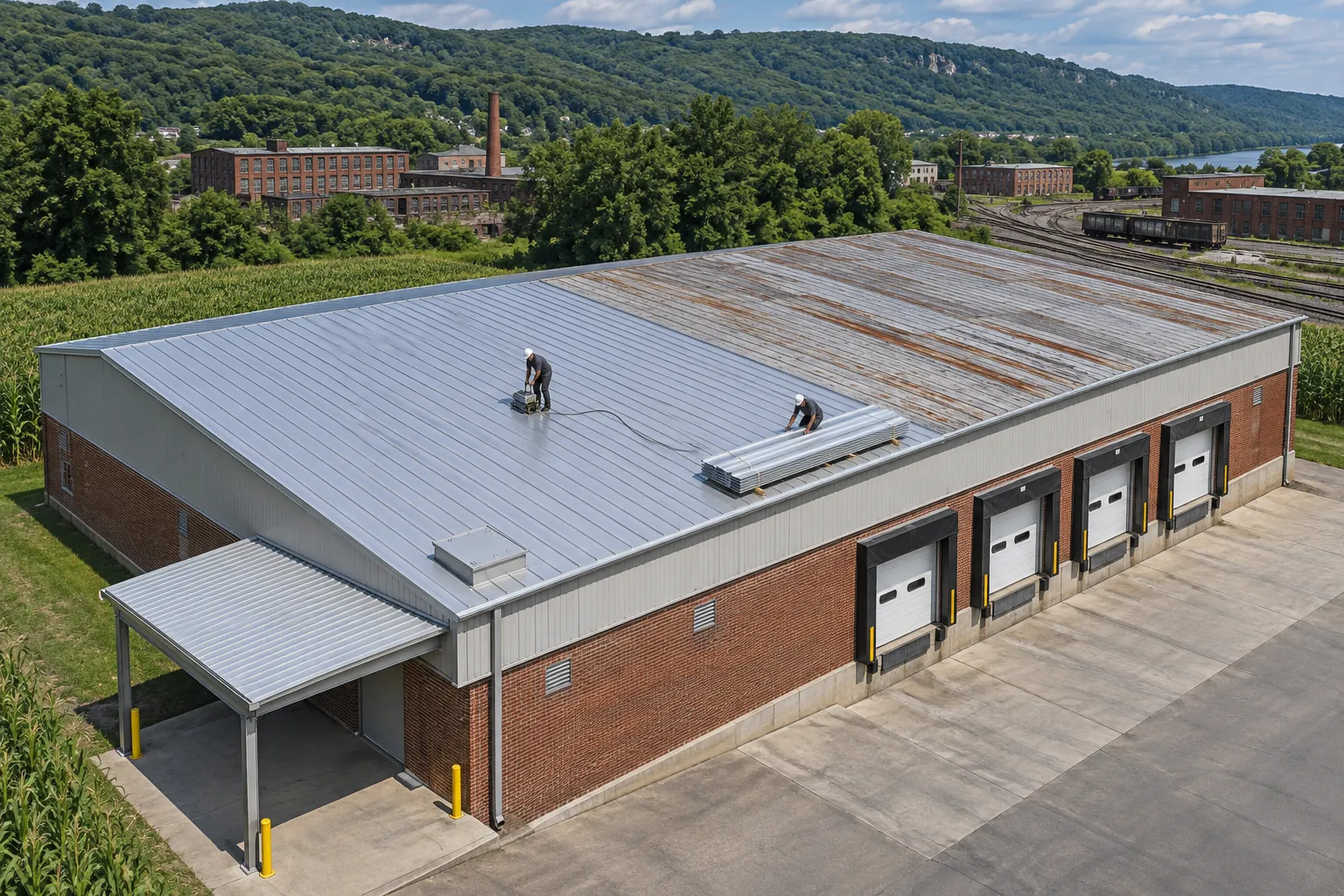
New metal roofs, panel replacement, and retrofit framing over worn metal on warehouses, farm buildings, and shops.
See metal roofingCall before the old roof fails in winter. We will set up a roof walk and core cuts.
Call UsBoth membranes work on flat roofs here. The building, its equipment, and its exhaust decide which one fits.
Thermoplastic single-ply, white surface
Synthetic rubber single-ply, black surface
We compare attachment, insulation, drainage, and access around equipment before naming a membrane.
A full replacement resets the whole roof assembly, from the deck to the edge metal.
Wet board comes out and new insulation goes in at the thickness the energy code asks for at reroof time.
Tapered insulation and crickets correct the low spots that held water on the old roof.
Curbs, stacks, pipes, and drains get new flashing matched to the new roof height.
Photos, system records, and the assembly list help with future repairs, insurance questions, and resale.
Not sure your building is in our area? Call (484) 978-6354 or send us a message. We install and replace commercial roofs in Reading, Wyomissing, Collingdale, Downingtown, Brookhaven, and Ridley Park.
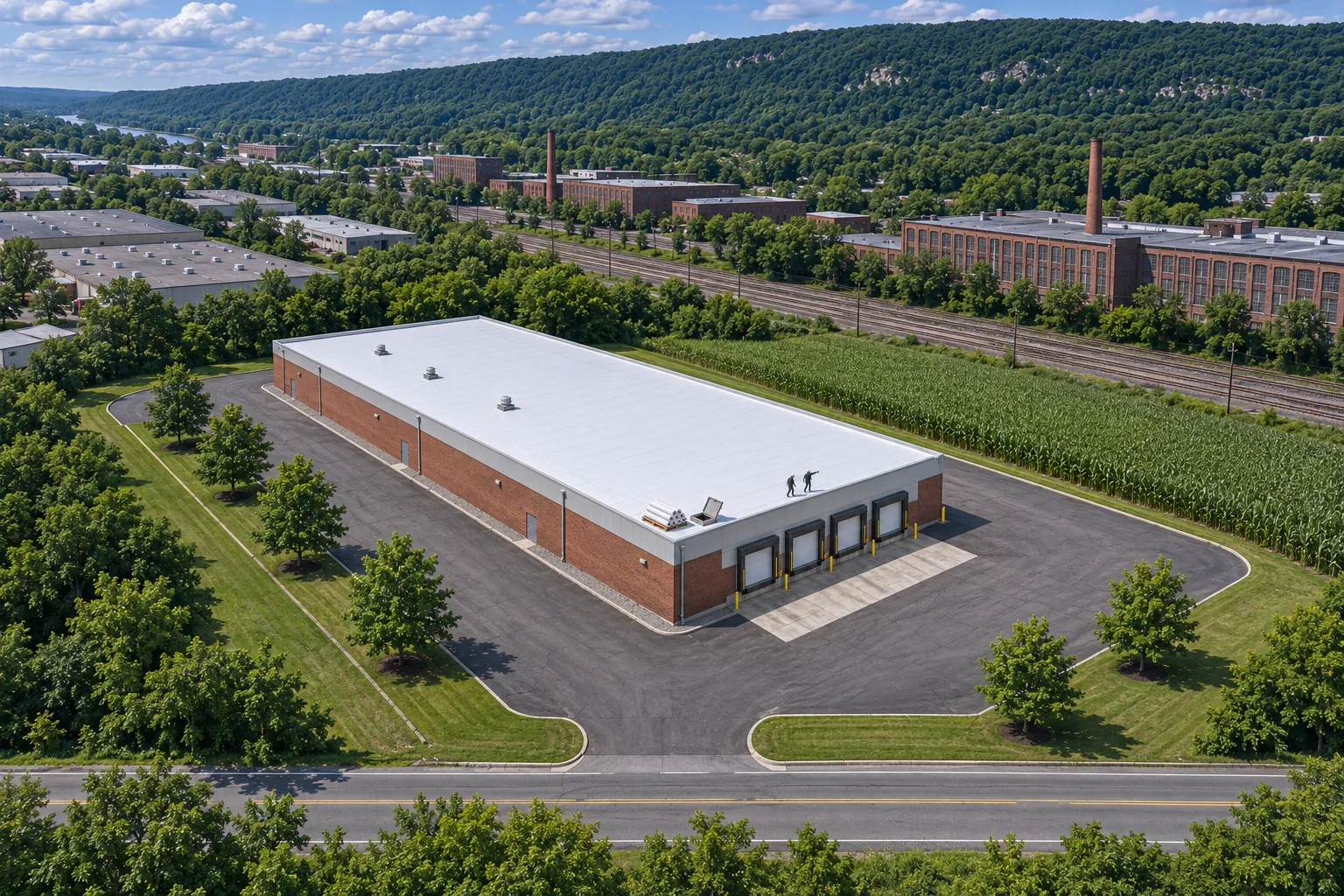
Warehouse and office roofs just west of the city, often over stored stock that needs protection.
Flat roofs on older brick buildings where perimeter flashing and coping need a close look.
Low-slope roofs where drainage and drain heights get reviewed before the new membrane goes down.
Commercial roofs crowded with rooftop units that need curb and HVAC coordination.
Roofs with frequent service traffic, where walkway routes protect the new membrane.
Six short answers. The FAQ page has the full set of thirty.
The price follows the building: roof size, the system and its thickness, insulation, how many old layers come off, deck repairs, edge metal, and flashing. Crane access, staging, and the season also count, so a price comes after a roof inspection and core cuts.
Either membrane can work on a flat roof. We look at exhaust from the process below, foot traffic to equipment, how seams get made around curbs, and how the roof drains. The membrane name comes last, after the assembly fits the building.
Service life depends on installation quality, drainage, upkeep, and traffic, so two roofs of the same age can be far apart. We judge a roof by its seams, flashing, and the condition of the layers under damaged spots, and leave the birthday out of it.
Snowmelt backs up behind ice at drains, gutters, and edges. A replacement roof needs open outlets, sound transitions at those spots, and details that tolerate freeze-thaw movement. Heavy wet snow is a structural question, which we review separately from the membrane.
Only when the water comes from the roof. Damp brick can come from indoor humidity or wall flashing, so we compare roof moisture readings with ventilation and wall conditions first. The new roof fixes documented roof defects, and other sources get their own investigation.
Pennsylvania’s Uniform Construction Code sets the statewide framework. We describe the existing assembly, insulation changes, removal, and any affected supports clearly, then take them to the reviewing authority for the building.
Tell us about the building and the roof. We will set up an inspection and give you a written scope you can compare.