TPO Membrane
The welded white option
- Seams
- Welded with hot air
- Surface
- White, reflects summer heat
- Repairs
- Weld a new patch on clean sheet
- Good On
- Warehouses, food plants, offices
- Weak Spot
- Punctures where crews walk
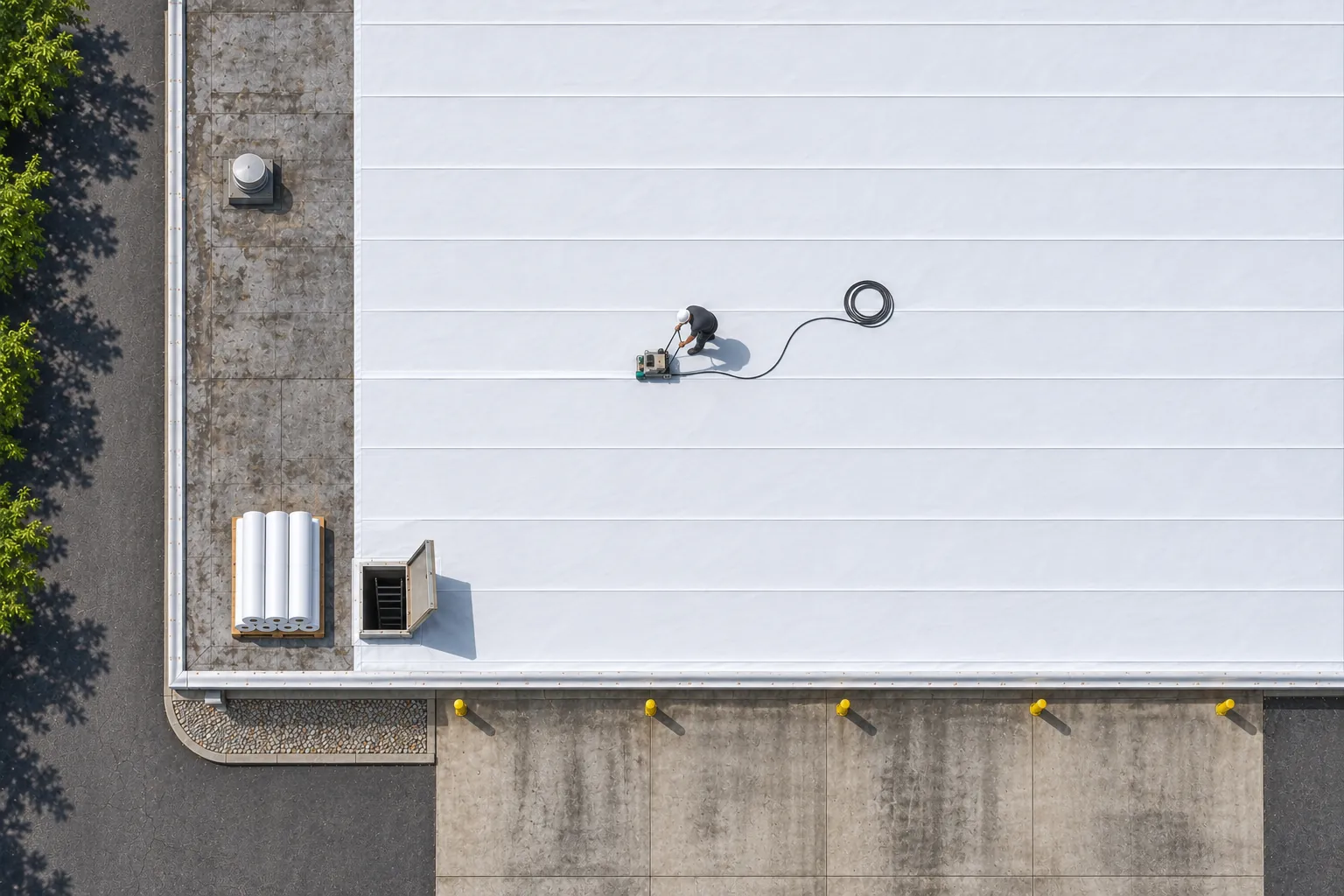
Reading TPO roofing is the white membrane work we do most: we install TPO over new insulation on flat commercial roofs.
Before Reading TPO roofing goes on a building, we compare it with EPDM for that roof. The equipment and exhaust above the deck often decide it.
The welded white option
The rubber alternative
Close call on your roof? We look at drainage, access around equipment, and seam work at the curbs before choosing.
These conditions show up on older single-ply roofs in the city and decide whether a new TPO roof is the next step.
A weld can look straight and still be cold. Probing old TPO laps often finds sections that lift with a hook tool, which lets water travel under the sheet.
Dropped tools and boots near rooftop units leave small holes in the membrane. Wet insulation spreads out from those holes long before a ceiling stain shows.
Flashing that pulls tight at curb corners tears over time. A replacement sets new curb flashing with enough height above the finished roof.
Low spots around drains keep the sheet wet and dirty. Tapered insulation under the new TPO moves that water to the outlet.
Kitchen and process exhaust can soften some membranes. On food plants and bakeries, we check what lands on the roof before choosing the sheet.
Edge metal with missing fasteners lets wind get under the TPO. New edge metal and termination bars lock the sheet at the perimeter.
The sheet is one part of the roof. Here are the assembly choices we price on a TPO job.
| Choice | Options | What Decides It |
|---|---|---|
| Attachment | Mechanically fastened, fully adhered, or induction welded plates | Deck type, wind exposure at the edges, and noise limits inside the building |
| Membrane Thickness | Standard and thicker sheets | Foot traffic, equipment service visits, and how long you plan to own the building |
| Insulation | Polyiso boards with a cover board, tapered where needed | Energy code at reroof time and the slope needed to reach the drains |
| Edge Detail | New edge metal, coping, or termination bar | Parapet height, wall condition, and how the old edge was built |
| Walkways | Welded walkway pads to the units | How often HVAC or process crews cross the roof |
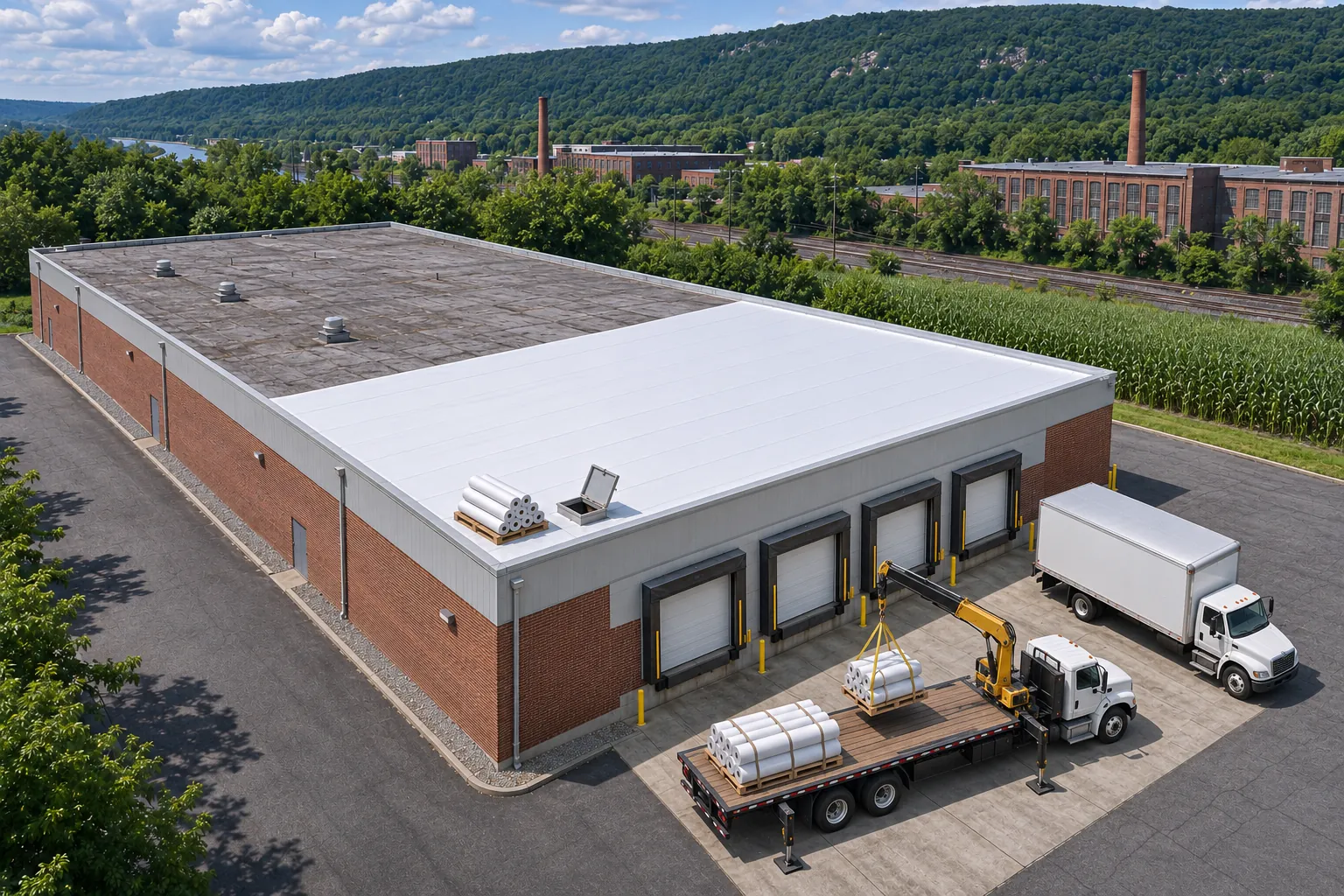
A TPO replacement brings the whole flat roof back into a known condition.
The light sheet reflects summer sun, which helps keep the top floor and rooftop units from running hot.
Every seam gets probed after welding, so weak spots get fixed while the crew is still on the roof.
New tapered insulation sends water to the drains instead of leaving it on the membrane.
Walkway pads mark the path to units and protect the membrane where service crews walk.
Call and describe the roof. We will set up a walk with core cuts and a seam check.
Call UsThe steps below match how a TPO roof gets built on an occupied building.
We probe laps, check curbs and drains, and take core cuts to see whether the insulation is dry enough to stay or must come off.
Your scope lists the fastening pattern, sheet thickness, insulation layers, tapered areas, and edge metal, so two bids can be compared line by line.
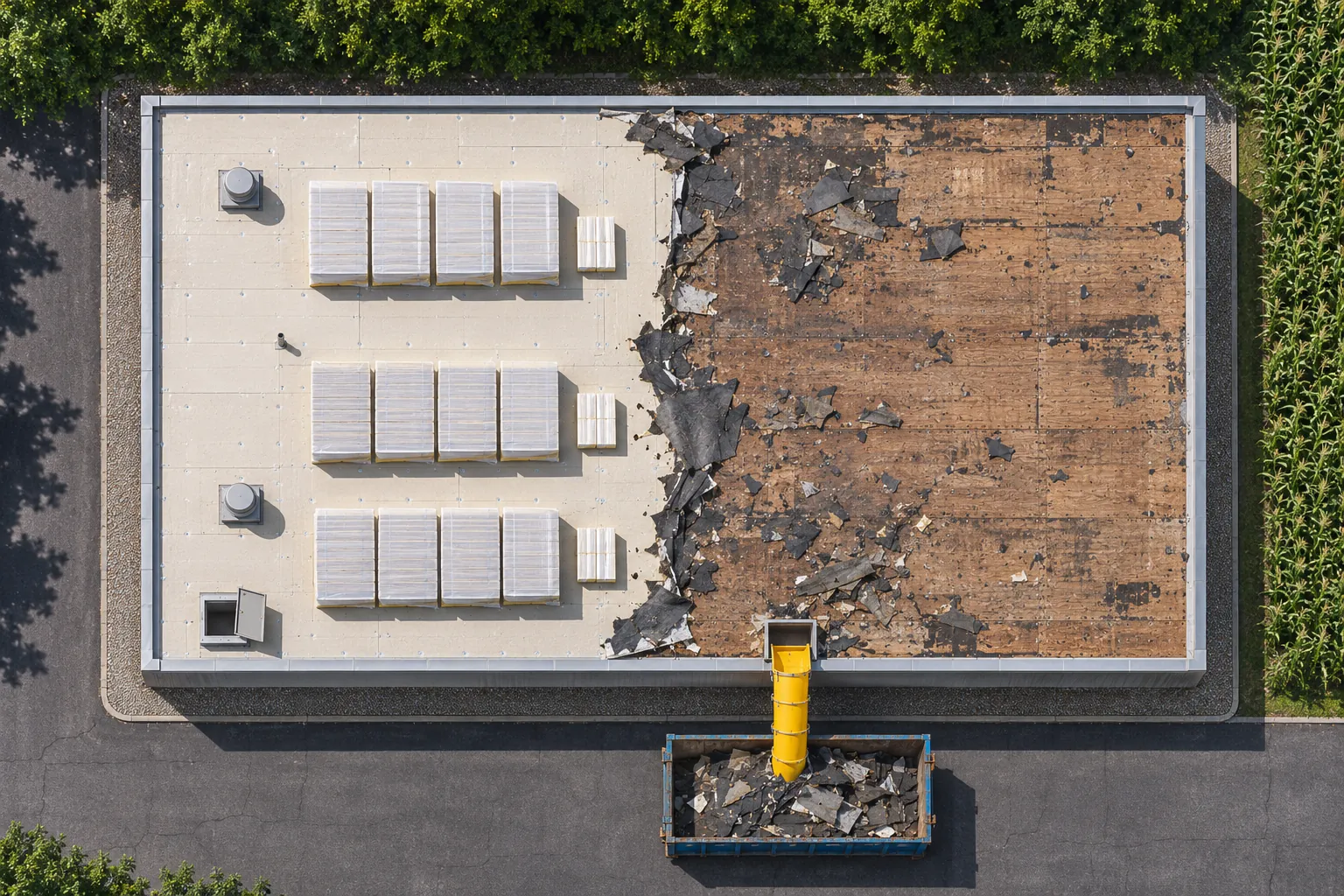
We remove only what we can close by the end of the day, set new board, and fasten or adhere the TPO sheet over it.
Each day starts with trial welds cut and pulled by hand. That sets the welder for the heat and the sheet before seams go down.
Every seam gets probed, details get photographed, and you receive the system records with a marked roof plan.
TPO fits many flat roofs, but not every one. These three cover the rest.
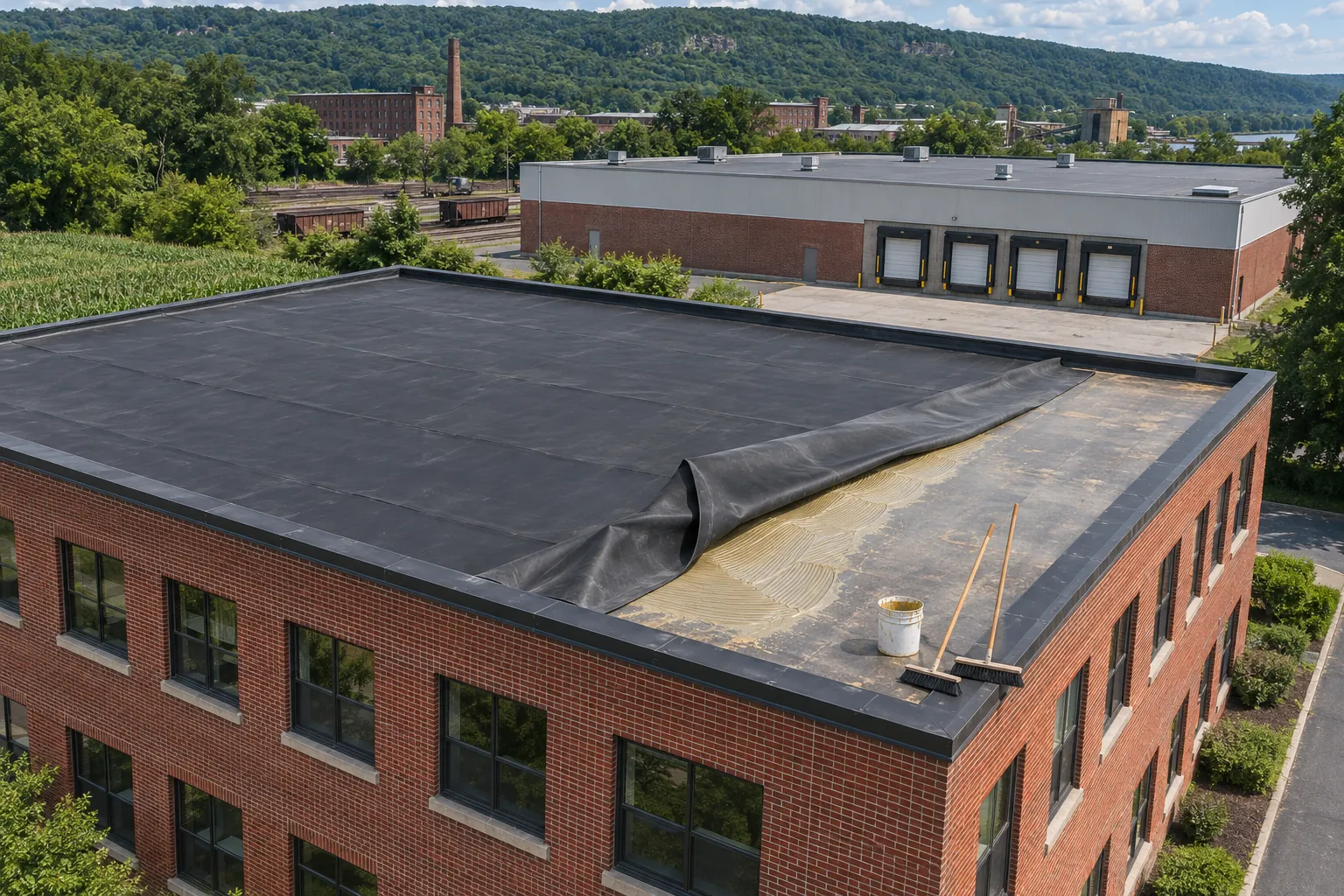
Rubber sheets for low slopes and older mill buildings, adhered or ballasted to match the deck and the structure below it.
Compare EPDM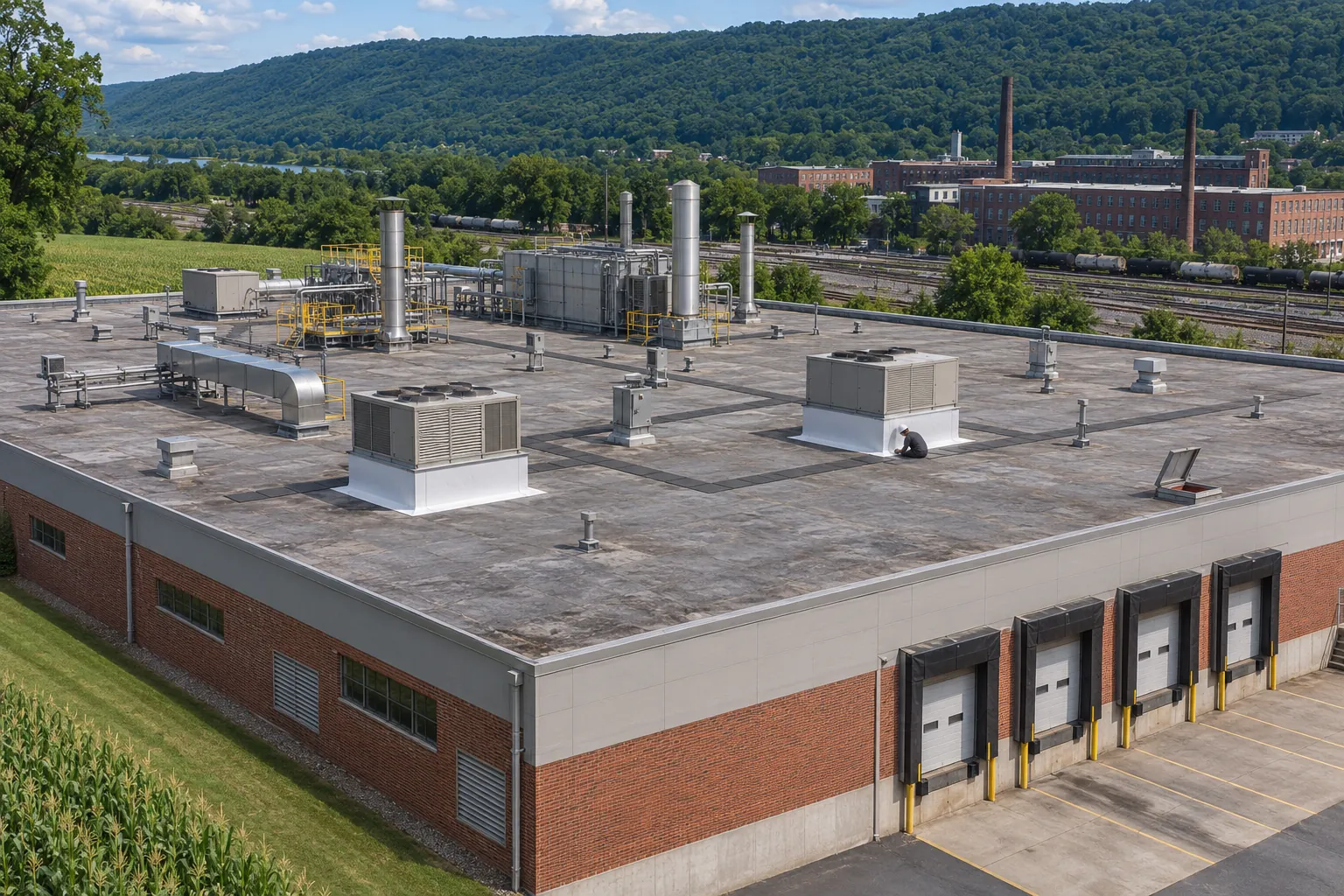
Roof replacement planned around stacks, ducts, curbs, and production shifts on manufacturing buildings.
See industrial work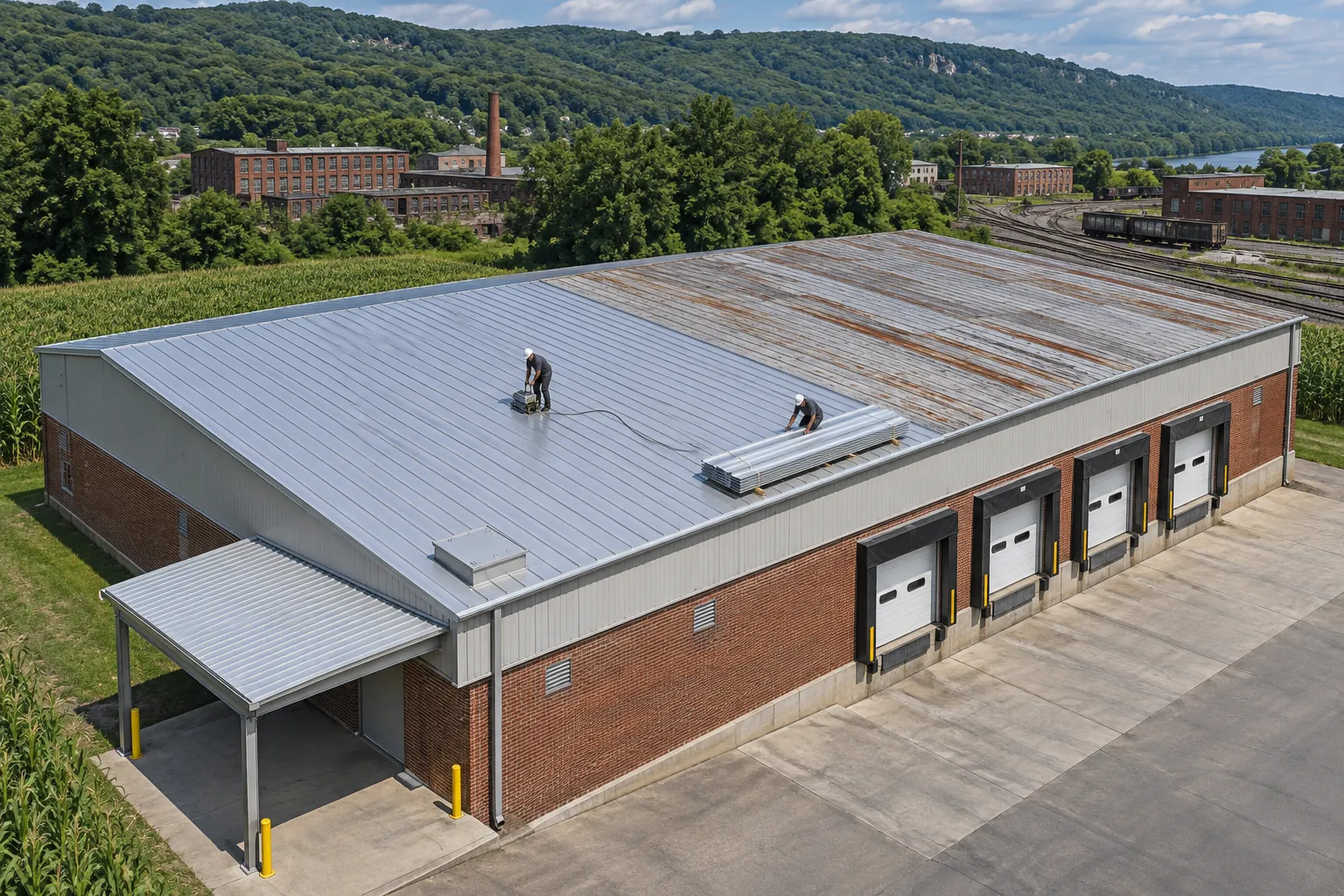
Standing-seam and exposed-fastener panels for warehouses, shops, and farm storage buildings.
See metal roofsShort answers about the membrane, its seams, and the parts under it.
TPO stands for thermoplastic polyolefin, a single-ply sheet sold mostly in white. It is laid over insulation on flat roofs, then joined by melting the laps together with hot air. The weld becomes one piece with the sheet once it cools.
The sheet sits on insulation and a cover board, held down by fasteners or adhesive, with flashing at every curb, drain, and wall. Drainage and edge metal are part of it too. We price the whole assembly, so nothing important is left to a change order.
The sheet can be punctured where crews walk, and seams depend on the welding conditions that day. Tight spaces beside curbs make welding harder. We plan service paths and detail spacing so those weak points are handled in the design.
Foot traffic, dropped parts, and cramped flashing at unit curbs cause most TPO trouble near machinery. We check how much room each curb leaves for a proper weld and whether exhaust lands on the sheet, then add walkway pads along the service route.
Hot air melts TPO laps into one piece. EPDM laps are joined with primer and seam tape made for that system. Both need a clean, dry surface. We look at how each method works around your curbs and edges before choosing.
Yes. A straight, tidy seam can still be a cold weld. We run trial welds at the start of each day and after weather changes, pull them apart by hand, and probe finished seams, since dirt and welder settings affect the bond.
Send the address and a few words about the roof. We will walk it, cut cores, and write up the TPO assembly.