Short Curbs After Past Reroofs
Each reroof raised the roof but not the curbs, so flashing now stops only an inch or two above the surface. Snowmelt and driving rain top that low flashing and run inside the curb.
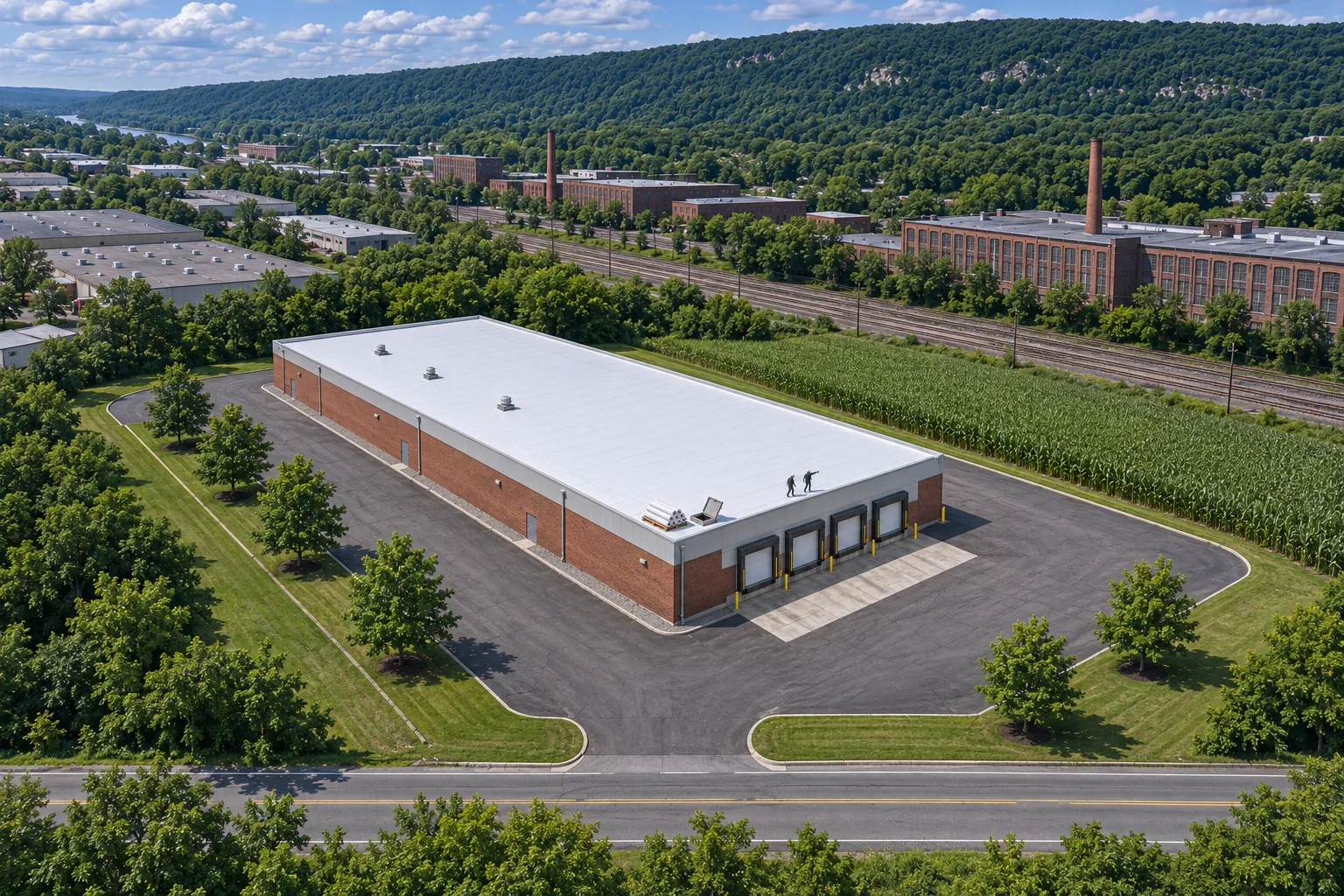
Brookhaven commercial roofing often means working around equipment: we replace roofs on buildings with rooftop units and plan the HVAC work first.
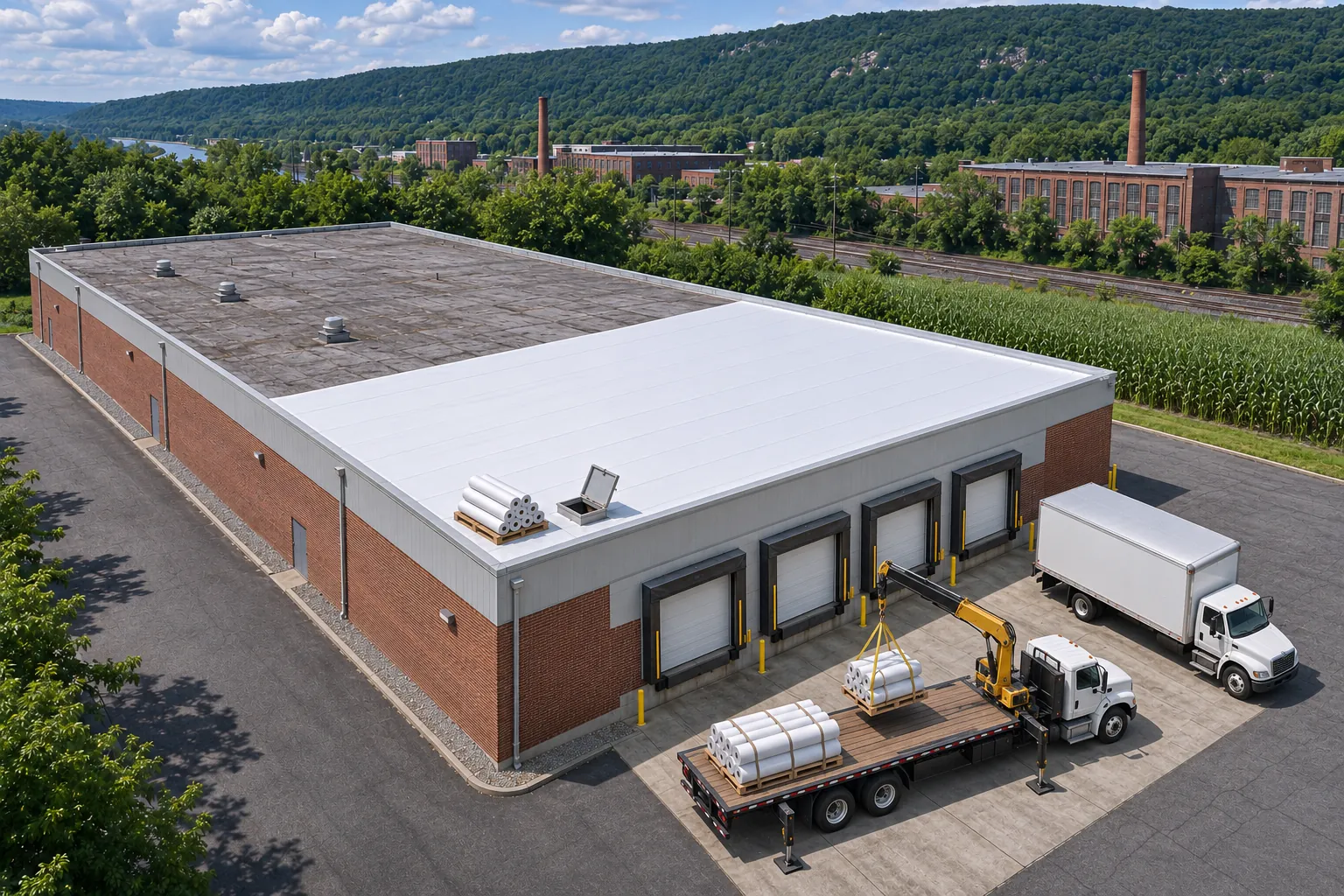
On Brookhaven commercial roofing jobs with rooftop units, the equipment plan is written before tear-off starts.
A new roof usually sits higher than the old one because of added insulation. That shrinks the flashing height at every unit curb, so some curbs need raising and some units need lifting.
We list each unit, decide what happens to it, and book the HVAC contractor for those days. When roofing reaches a unit, the disconnects, lifts, and curb extensions are already lined up.
Units cause more roof leaks than any other detail. These are the ones we find most.
Each reroof raised the roof but not the curbs, so flashing now stops only an inch or two above the surface. Snowmelt and driving rain top that low flashing and run inside the curb.
Units drip condensate onto the membrane, staining it and keeping one spot wet all summer. Algae grows on that wet patch and holds even more water against the seams.
Corners at unit curbs take the most movement and crack first, letting water in beside the unit. Preformed corners on the new roof replace the folded and patched ones.
Technicians walk the same path to each unit, and the membrane wears thin along it. Scuffed seams and small cuts collect along that line first.
Old curbs from removed units stay on the roof as leak points nobody maintains. Many still have open ducts under their caps that let rain into the building.
Large units across the slope trap water on their uphill side. That trapped water finds any small opening in the curb flashing nearby.
Coordinated roof and HVAC work leaves every unit flashed and accessible.
Curbs are raised to give proper flashing height above the new insulation. Units are reset level on the raised curbs by their own trade.
Unused curbs come out and the deck is patched, removing leak points. The patched deck gets insulation and membrane like the rest of the roof.
Condensate lines are routed so water stops sitting on the membrane. Lines are strapped on supports so they stay off the membrane.
Walkway pads mark the service route and protect the sheet underfoot. Technicians reach every unit without crossing open seams.
Each system below handles rooftop equipment a little differently.
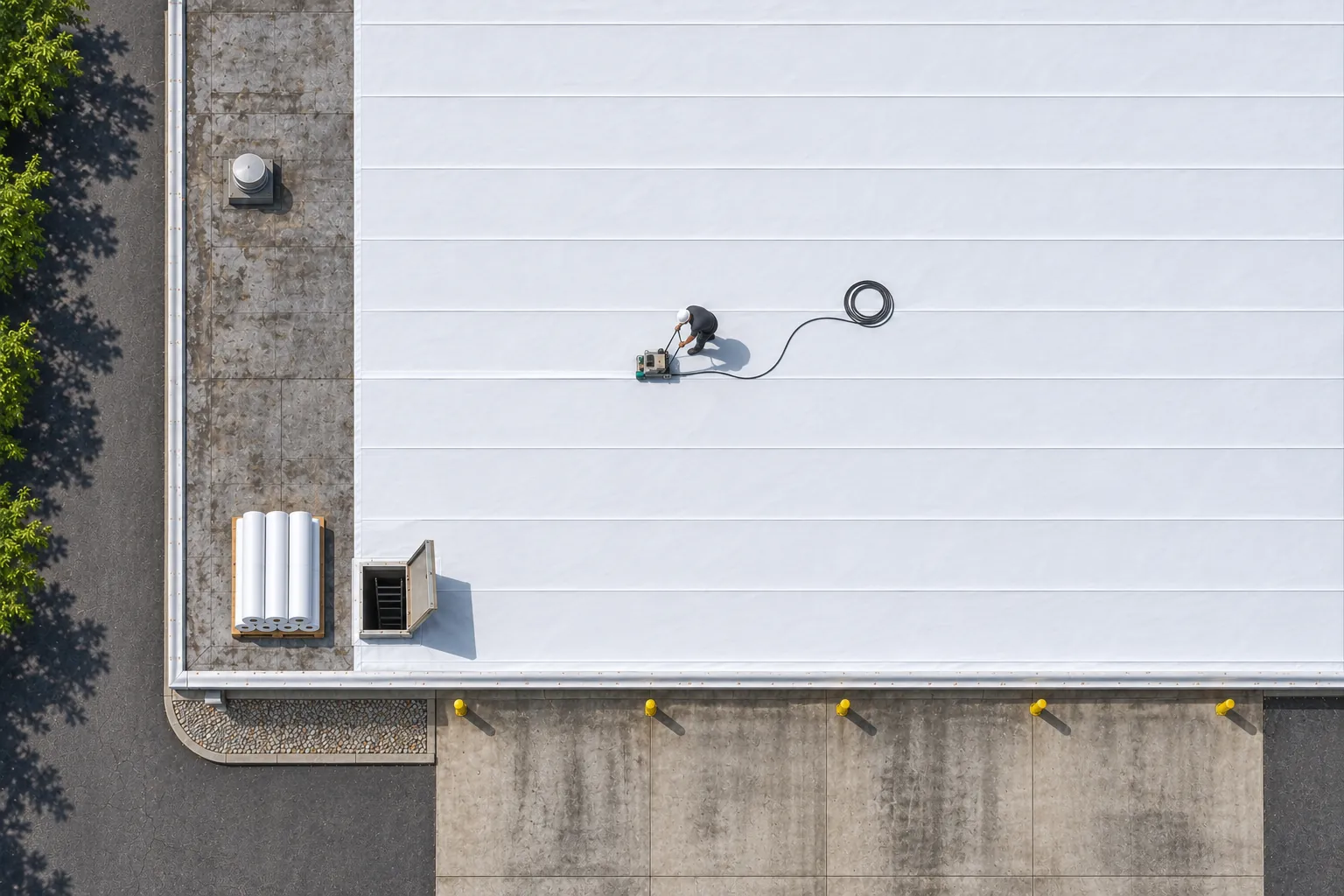
White membrane with welded curb flashing, a common pick for roofs with many units.
Read the TPO page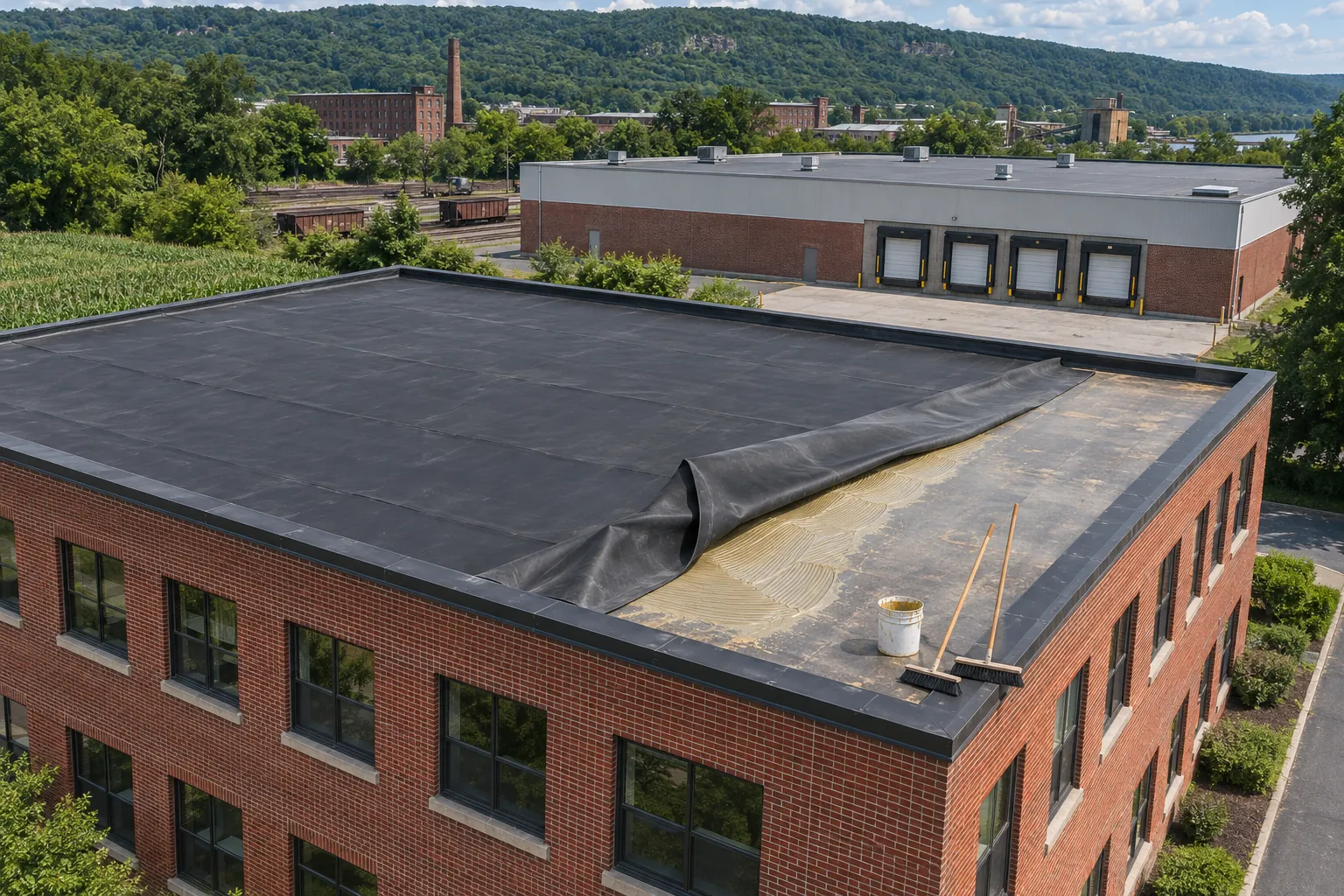
Rubber membrane with primed and taped flashing around curbs and pipes.
Read the EPDM page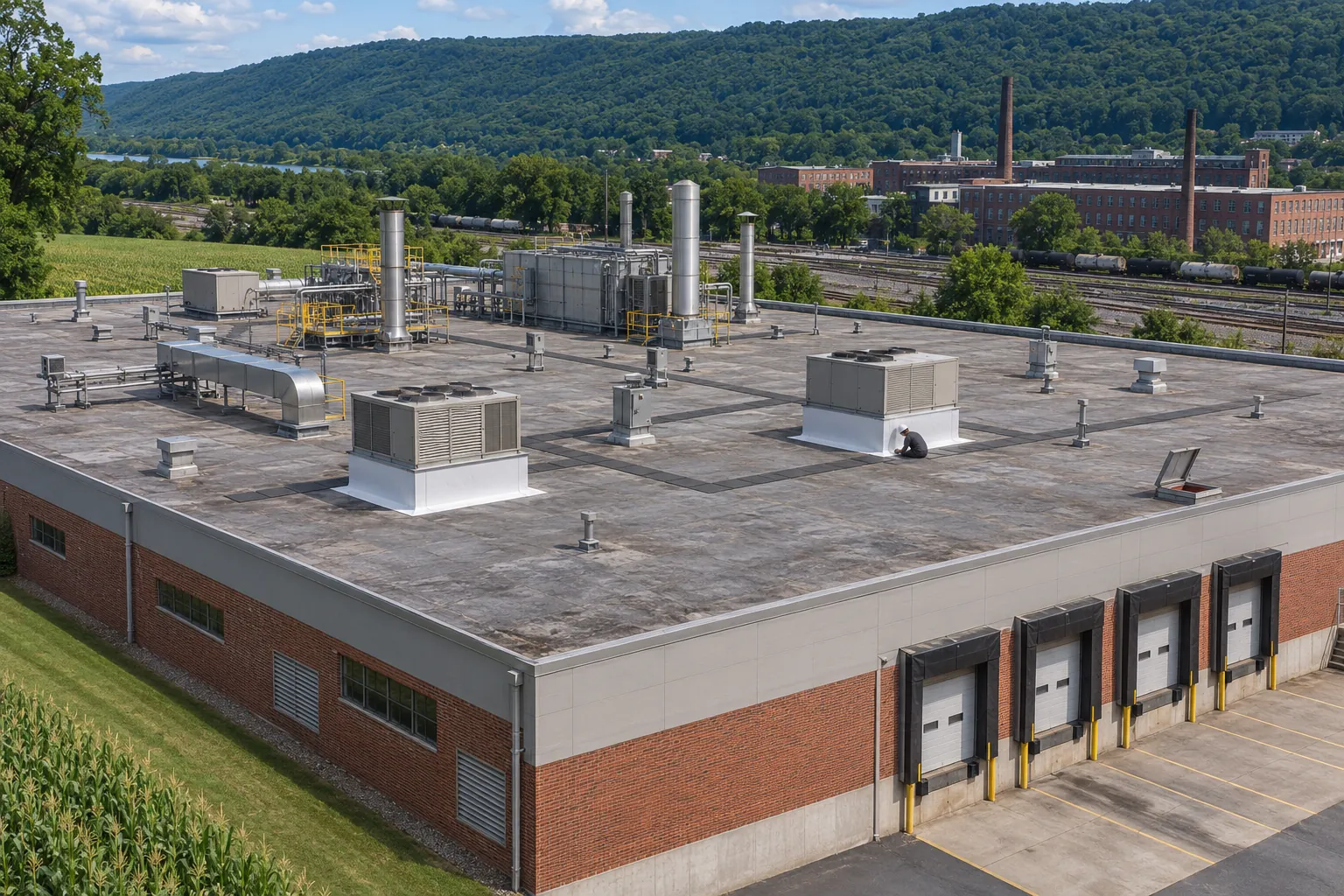
Roof replacement around large units, stacks, and duct runs on production buildings.
Read the industrial page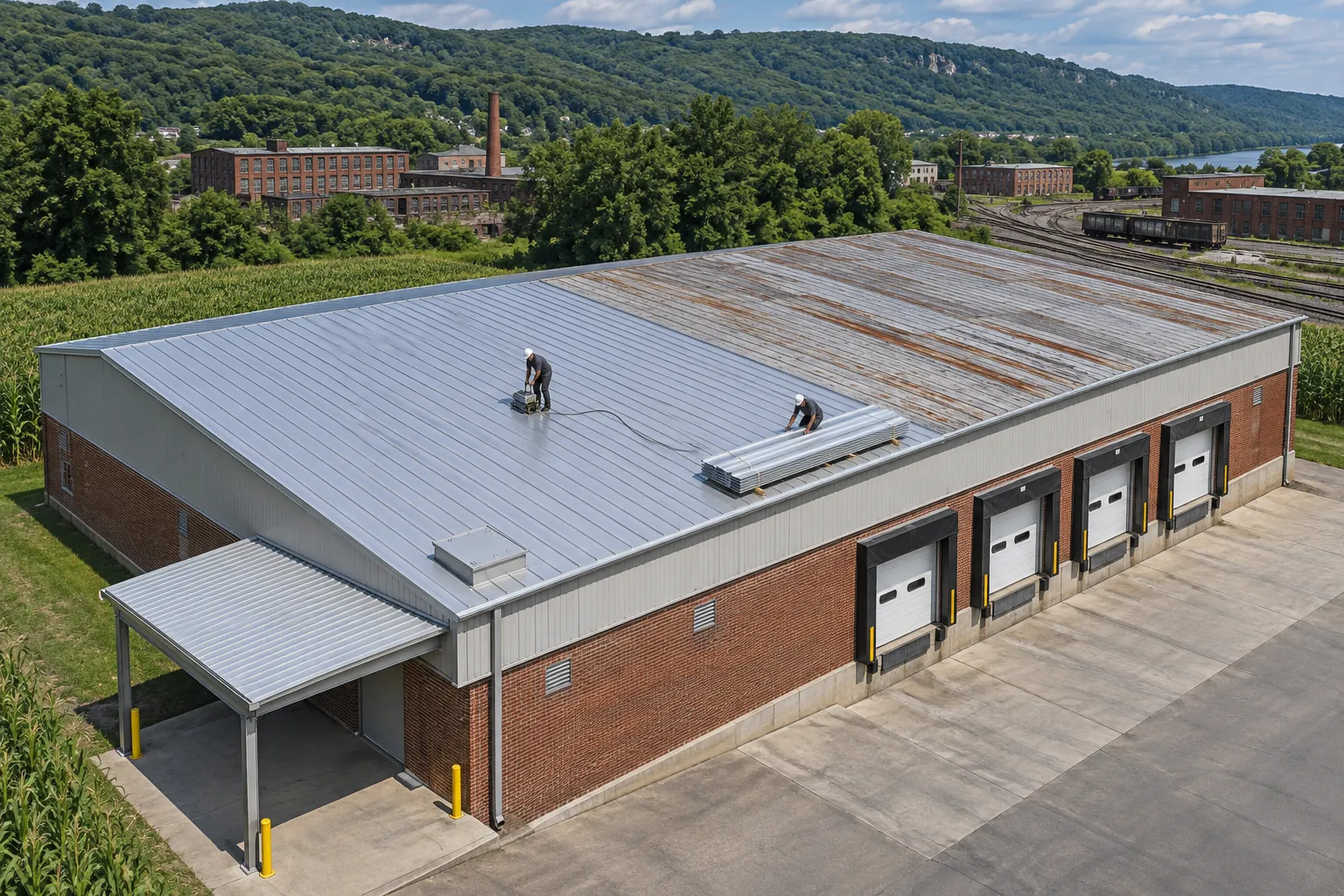
Panel roofs with framed and flashed openings for equipment.
Read the metal roofing pageRoof and equipment work are scheduled together from the start.
We record each unit, curb height, condensate line, and abandoned opening, and cut cores around them.
Every unit is marked to stay in place, get a raised curb, be lifted, or come out, with the trade responsible for each.
We agree on dates with you and the HVAC contractor so units go off only when roofing reaches them.
Curbs get extended, units get reset, and new flashing goes on as each section is finished.
Units are reconnected by their trade, and you get photos of every curb and the final roof plan.
Brookhaven is on our regular list, along with these towns. Somewhere else? Just call (484) 978-6354 or send us a message.
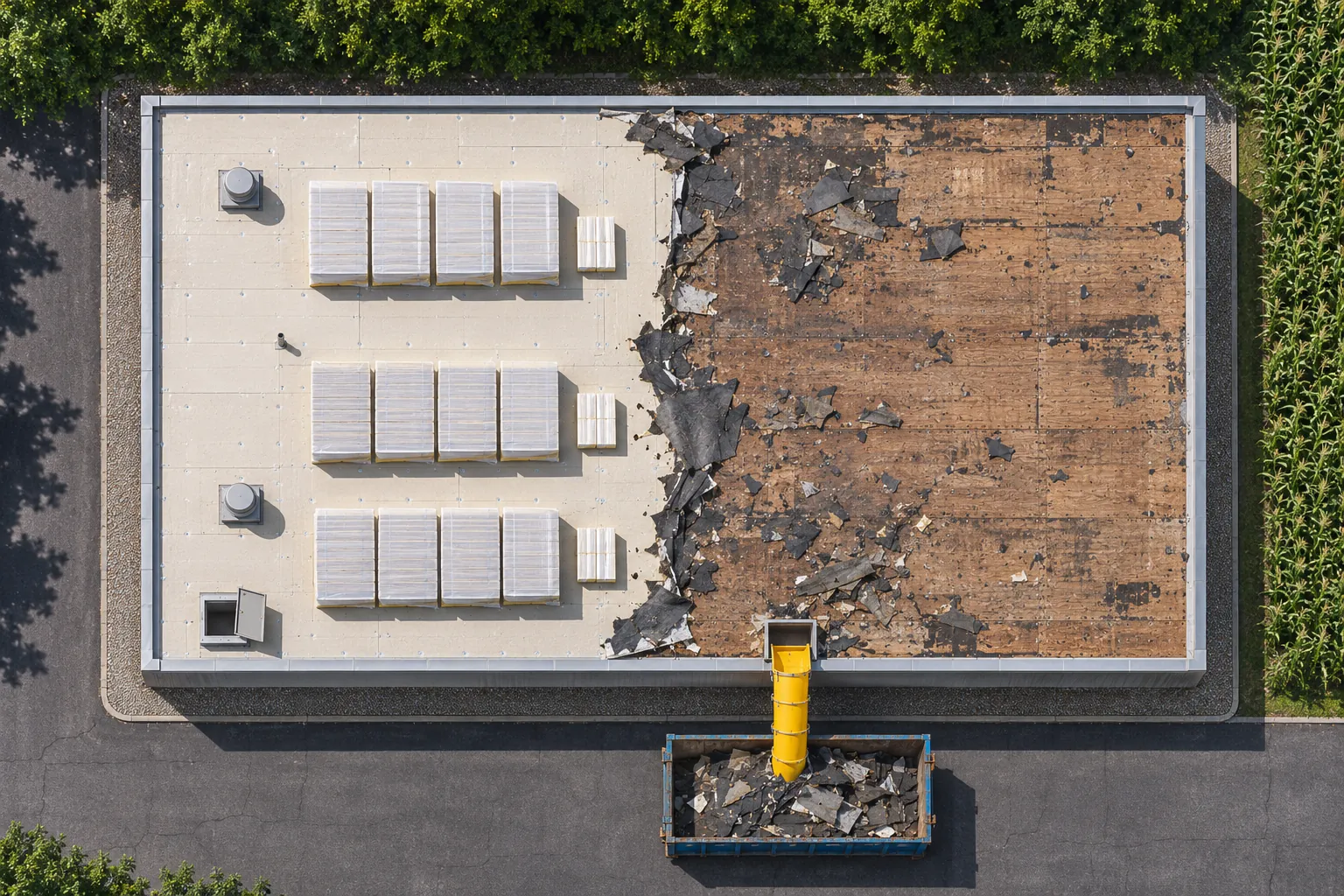
Plants and warehouses in Berks County, many with exhaust stacks and large units on the roof.
Neighboring roofs where technicians walk to units every week, so routes and pads get mapped early.
Older brick buildings where coping and counterflashing set much of the scope before the field gets roofed.
Flat roofs where drain heights and tapered insulation fix water that stands around equipment pads.
Warehouses with fans and curbs spread across wide roofs, replaced section by section over full racks.
What owners ask about units, curbs, and HVAC timing.
Yes, whenever the new roof changes flashing, access, or roof height at a curb. We list the equipment tasks before removal reaches those areas, and the HVAC trade handles disconnects and resets, with clear responsibility for putting both roof and unit back together.
We give you and your HVAC contractor a section schedule. Units come off line only on the day roofing reaches them. Disconnects, lifts, and restarts are booked ahead, so the crew is not waiting on equipment.
Base flashing wrapped up each side of the curb, preformed corners, and a cap or counterflashing at the top under the unit. It must rise far enough above the finished roof to keep water out during heavy rain and snowmelt.
When the new insulation leaves too little flashing height at the curb. We measure each one. Short curbs get extensions, which often means lifting the unit for a day.
We take them out during the reroof, patch the deck, and roof over the opening. Leaving them in place keeps a leak point nobody services.
We route them to a drain or onto a protected pad instead. Constant drips wear the membrane, grow algae, and keep one spot wet.
Send the address and how many units sit on the roof. We will inspect the roof and each curb.