Wet Insulation Over Racking
Small leaks above high racks soak insulation for months before anyone sees a drip on the floor. Core cuts find it.
Wyomissing commercial roofing is part of our regular work: we install and replace flat and metal roofs on warehouses and offices in town.
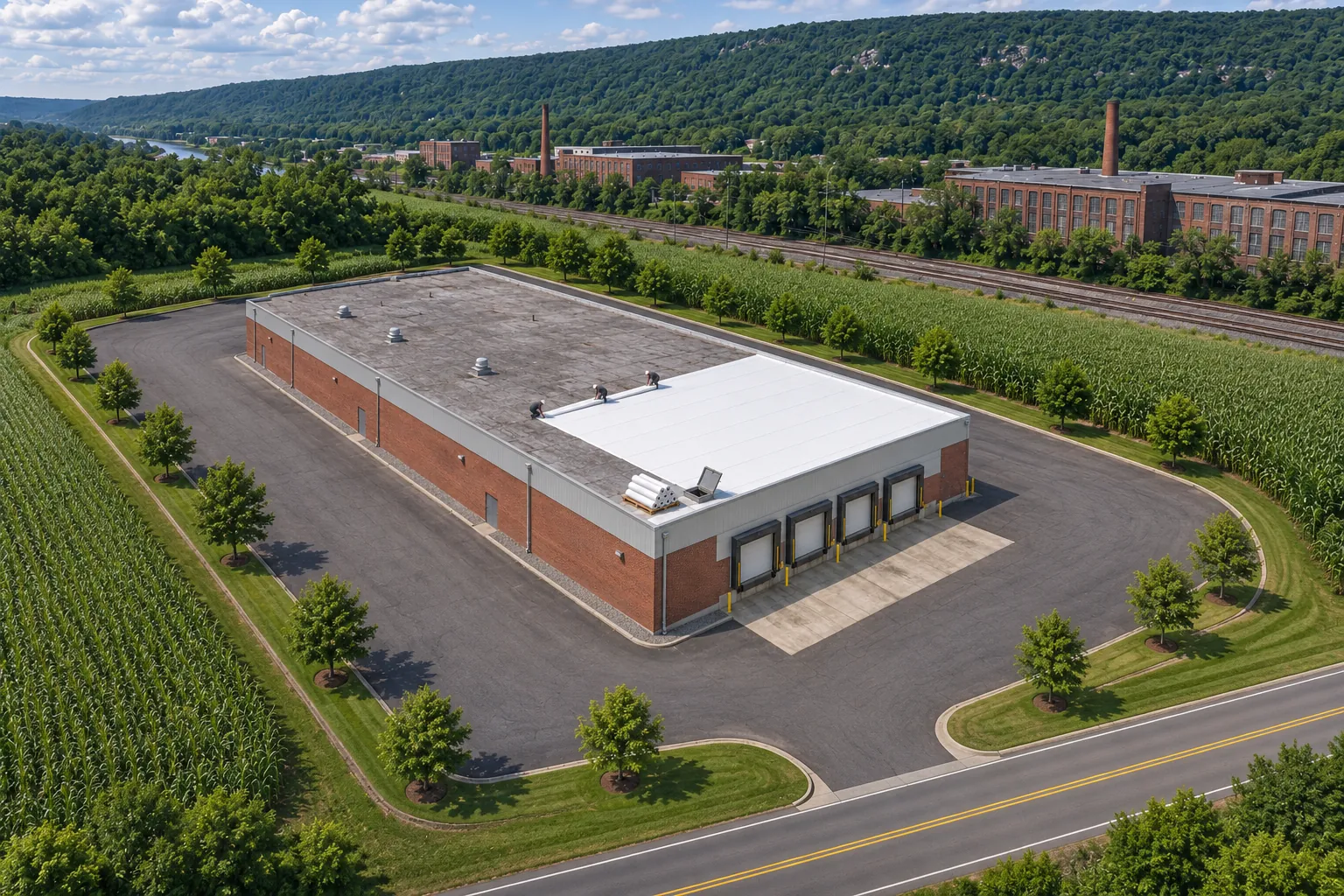
Most Wyomissing commercial roofing calls we get involve a warehouse that stays full while the roof comes off.
A warehouse roof replacement means open deck above pallets and racks. We plan sections small enough to close each day, and we cover the stock below the open area before any old roofing moves.
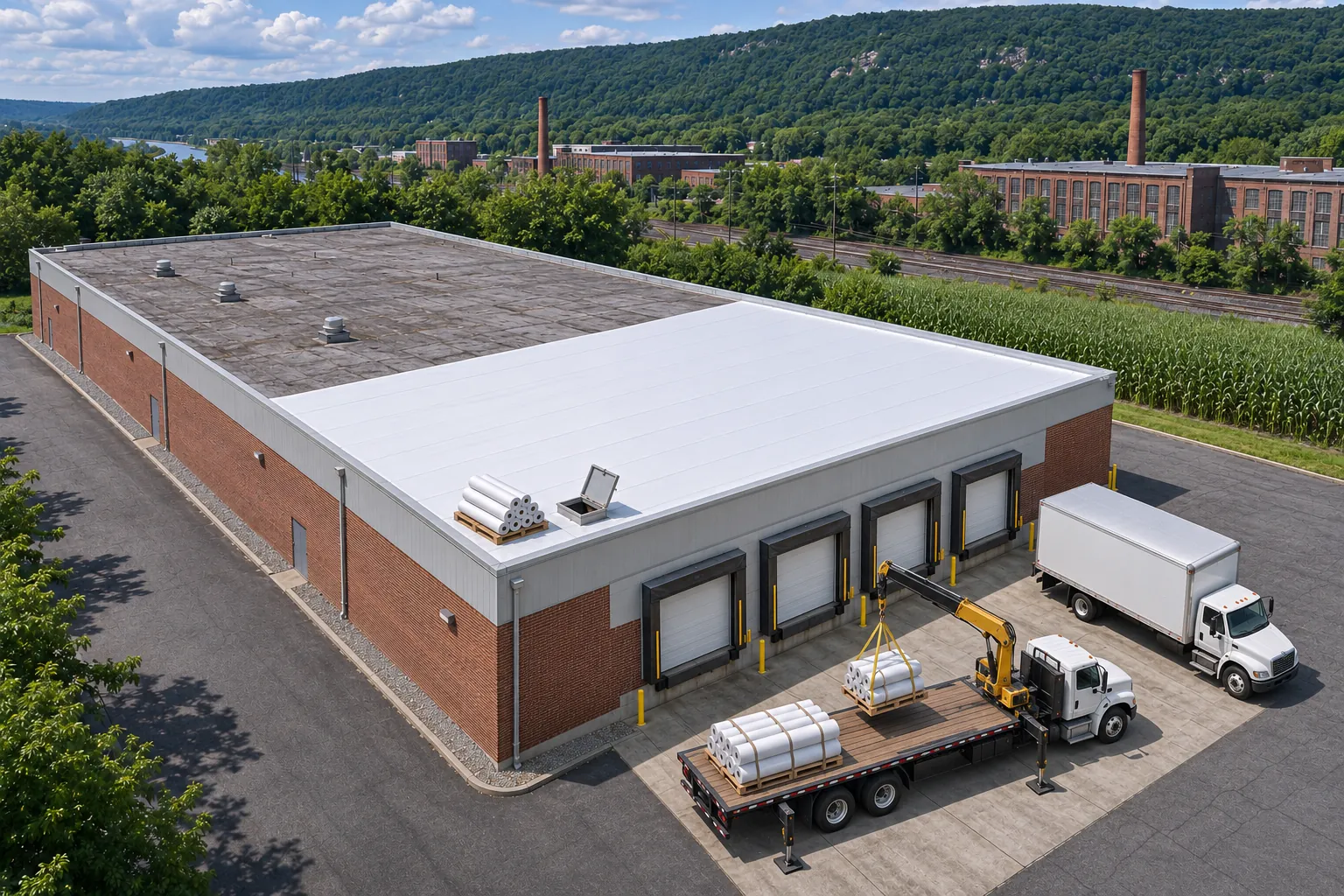
Loading access matters just as much. Crane picks and debris chutes go where trucks are not backing in, and we agree on dock times with your shipping staff before the first delivery.
These six conditions come up most when a Wyomissing warehouse or office roof is due for replacement.
Small leaks above high racks soak insulation for months before anyone sees a drip on the floor. Core cuts find it.
Seams on older single-ply roofs open after many winters. Several open laps in one season usually means the sheet is near the end.
Leaves and grit clog drains and scuppers on large flat roofs, so water backs up across the field. Strainers missing their lids let that debris into the leaders as well.
Wind works loose the edge metal above loading doors, where trucks and snow both add strain.
Metal storage bays beside flat warehouses rust at laps and screws and leak onto stored goods.
Fan curbs on warehouses often have cracked flashing that lets water run down inside the wall.
A planned replacement protects both the building and what is stored inside it.
Daily dry-in and covers over open sections keep pallets and racks out of the weather.
Wet board comes out and new insulation goes in, which helps hold heat in winter.
Drains and scuppers are rebuilt with the new roof and set to catch water from low spots.
Removal limits, insulation, and deck repair pricing are written down, so proposals compare fairly.
Each of these systems fits a different kind of Wyomissing building.
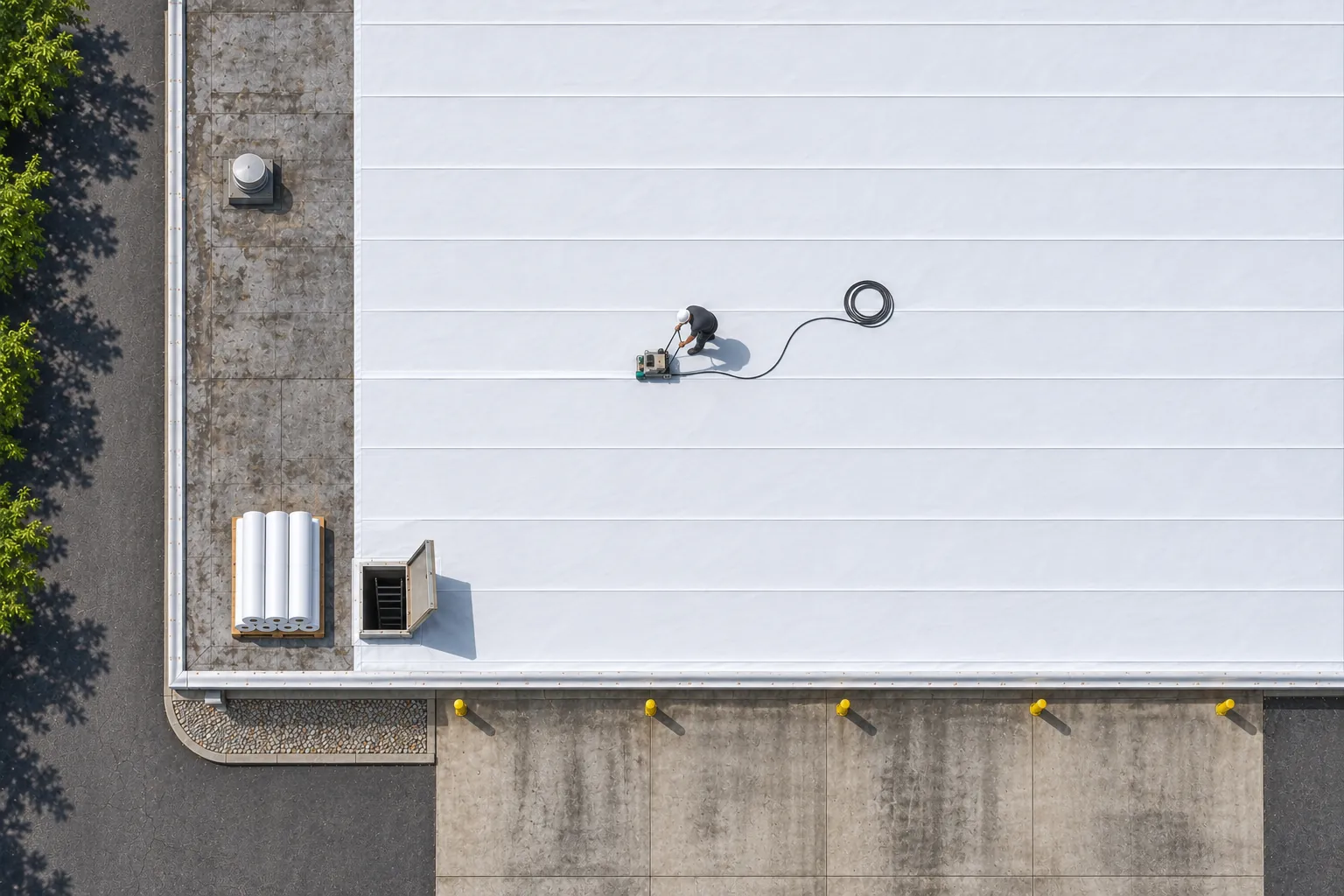
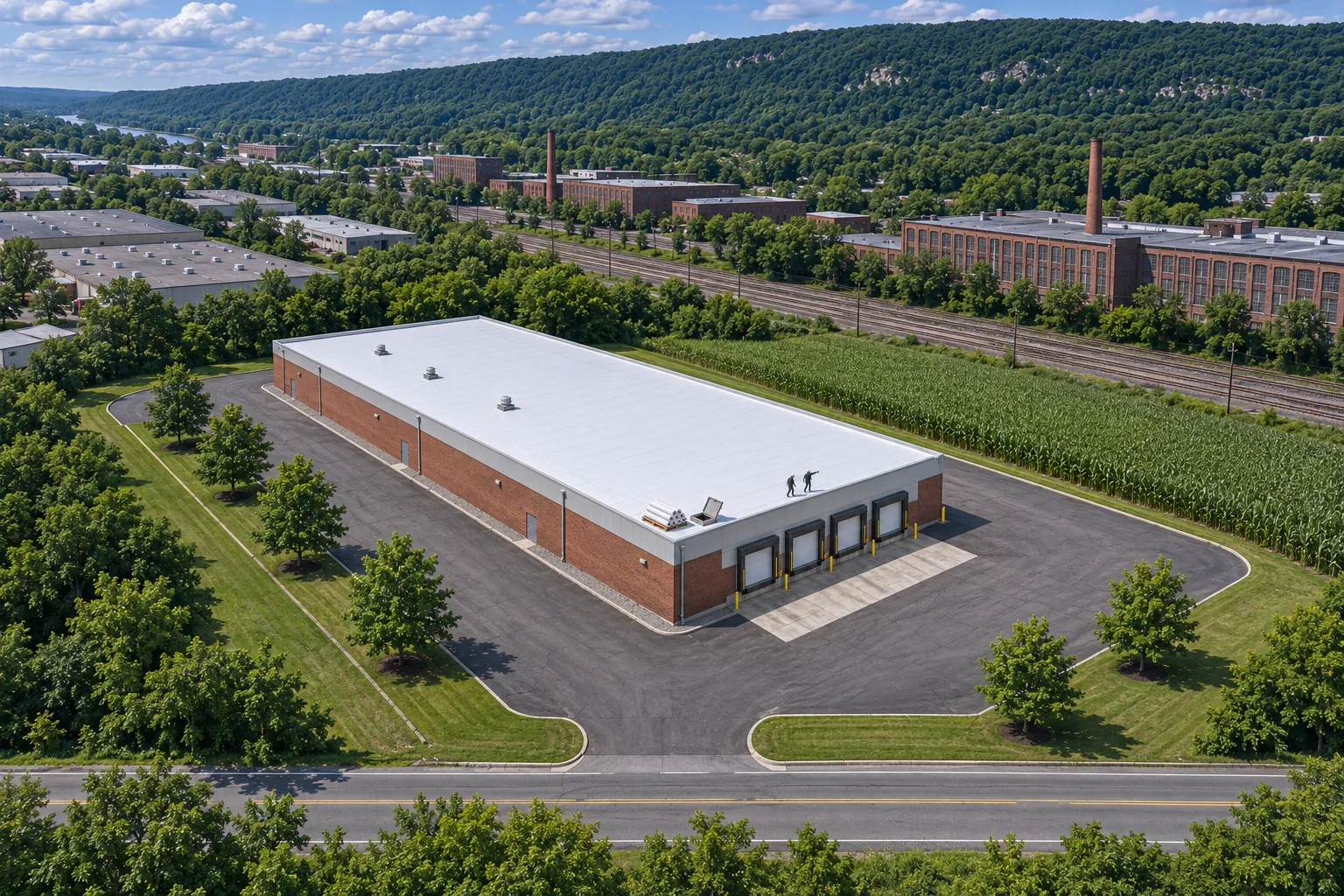
A welded white sheet over new insulation, common on wide warehouse roofs with many fans and curbs.
TPO roofing details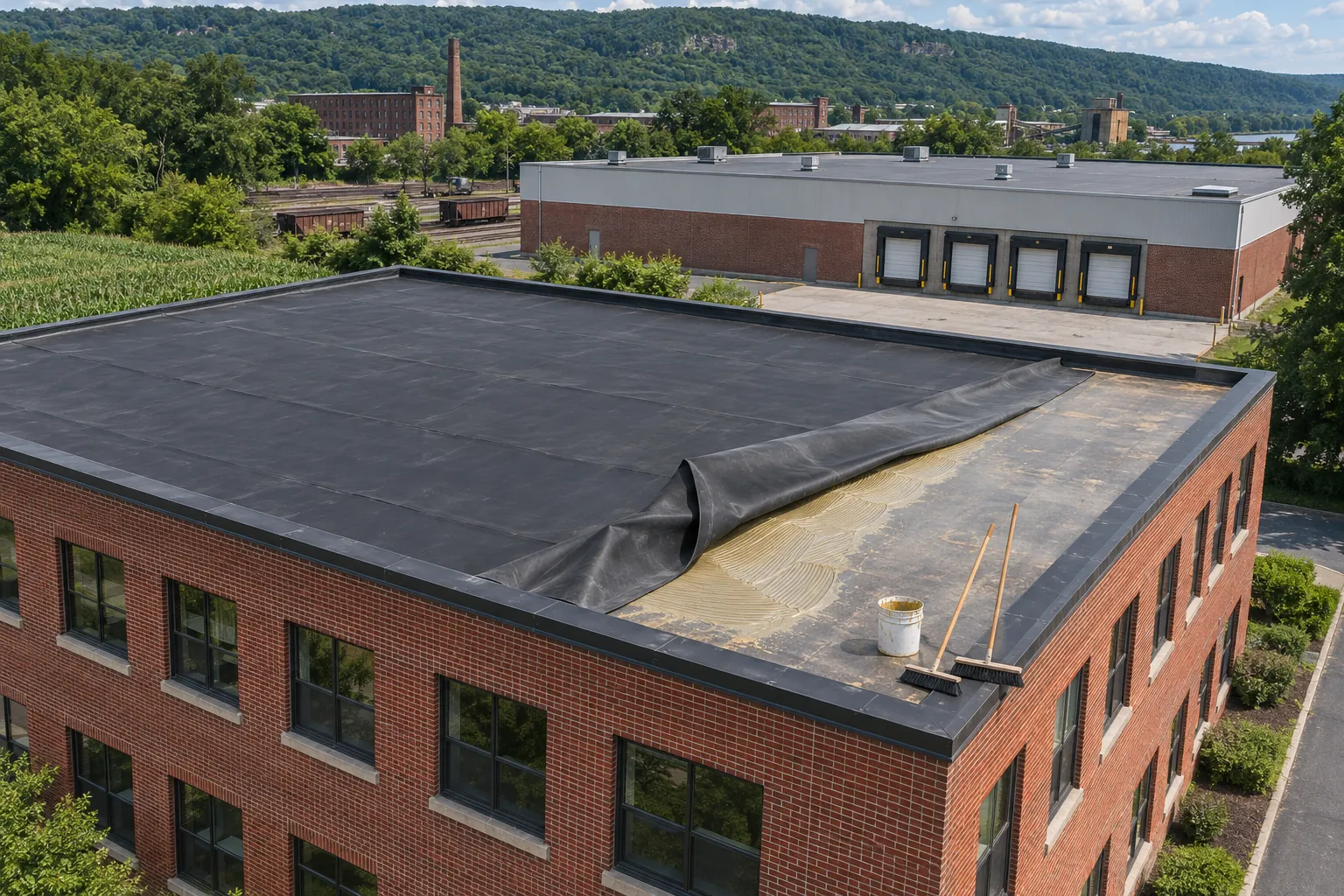
Rubber membrane for low-slope roofs on older buildings, adhered or ballasted as the structure allows.
EPDM roofing details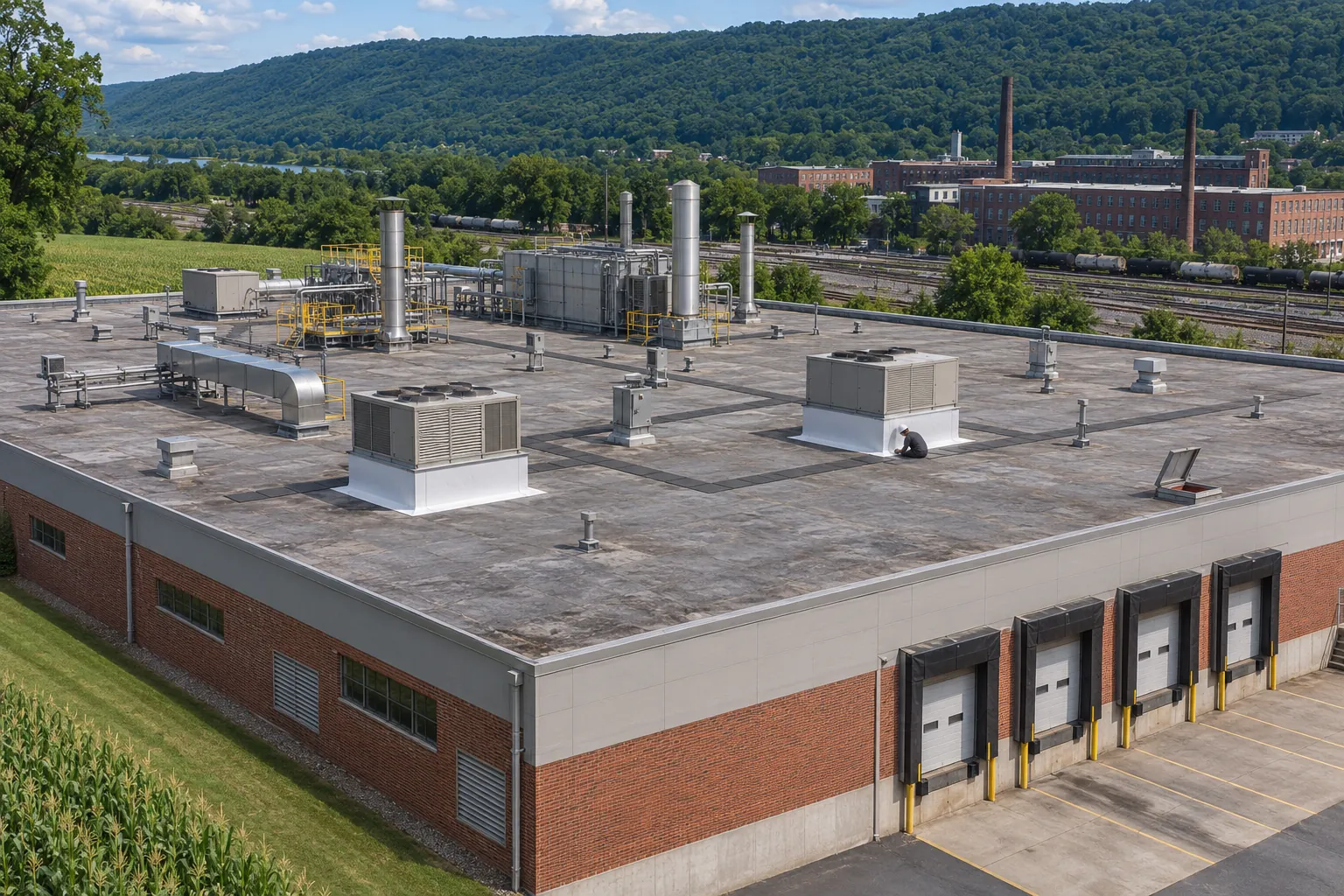
Roof replacement planned around equipment and shifts on shops and light manufacturing.
Industrial roofing details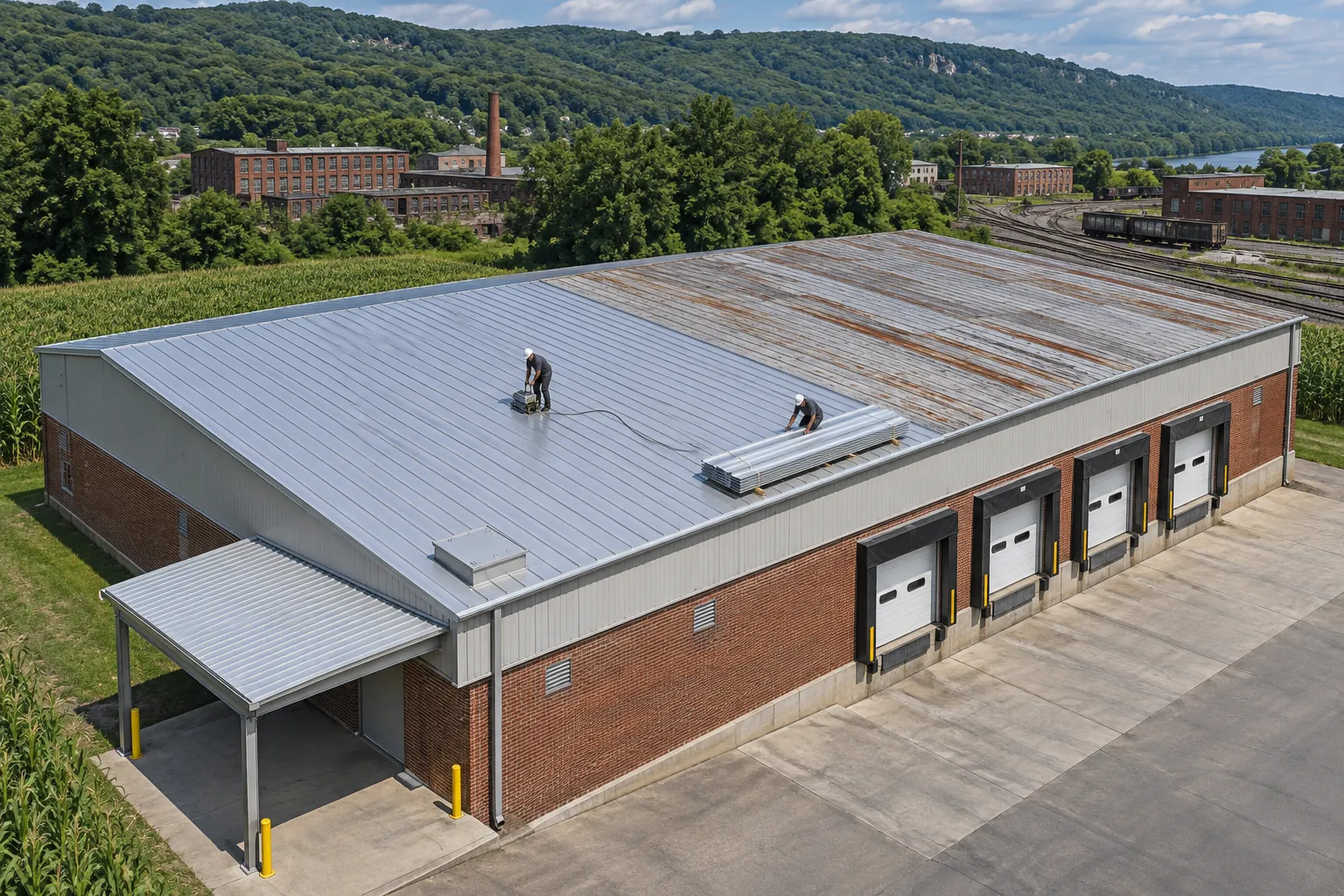
New panels or retrofits on metal bays and additions beside flat warehouse roofs.
Metal roofing detailsCall and tell us which aisle is wet. We will check the roof above it.
Call UsThese steps keep a full warehouse running while its roof is replaced.
Cores get cut over the aisles and racks while we walk the roof, and wet areas are marked so removal is sized to what we find.
Stock under each section, docks that stay open, and spots for the crane and dumpster all get noted on a site sketch.
Removal limits, insulation, attachment, drains, and deck repair pricing are spelled out, so any other bid can be held to the same items.
Each section is opened, insulated, roofed, and closed before the crew leaves, with covers over stock below any open deck.
We walk the finished roof with you and hand over photos, the assembly list, and the roof plan.
We serve Wyomissing and the towns below. If your building sits outside them, call (484) 978-6354 or send us a message and ask.
The city next door, where we replace roofs on plants, mill buildings, and warehouses much like the ones in Wyomissing.
Older brick buildings in Delaware County, where most of our planning goes into parapet coping and wall flashing.
Flat roofs in Chester County where drains sit high, so tapered insulation is part of most replacements there.
Retail and office roofs with several units each, where curb heights and HVAC dates get set early.
Roofs that service crews cross every week, so walkway routes go on the plan before the membrane does.
Short answers for warehouse and office owners in town.
Compare what each bid removes, the insulation, how the sheet attaches, and how drains are handled, along with the membrane name. Check whether loading access, stock protection, equipment work, and deck repairs are in the price, since leaving them out changes the project.
Line up removal limits, insulation thickness, attachment, edge metal, and flashing side by side. Then compare how each bid prices hidden deck damage and wet insulation. Two bids with the same square footage can describe very different work.
We open only what we can close by evening and cover stock under any open deck. Debris goes down a chute away from racks. Before work starts, we agree with you on which aisles need extra covering.
Usually most of them can. We place the crane and dumpster away from active docks and agree on delivery windows. A dock right under a section being replaced closes only for the day that section is open.
Replacement makes sense when core cuts show wet insulation across large areas or seams are failing all over the field. Isolated leaks on a dry roof point to repairs instead. The inspection tells you which applies.
Many large flat warehouses get TPO for its welded seams and white surface. EPDM suits some older or lower-slope roofs. Metal fits storage bays with enough pitch. Equipment, drainage, and the deck decide between them.
Send the warehouse address and what is stored under the roof. We will plan the inspection around your docks.