Drains Set Higher Than the Roof
When a drain bowl sits above the surrounding roof, water pools around it instead of going in. This often happens after insulation compresses around a drain set at the original height.
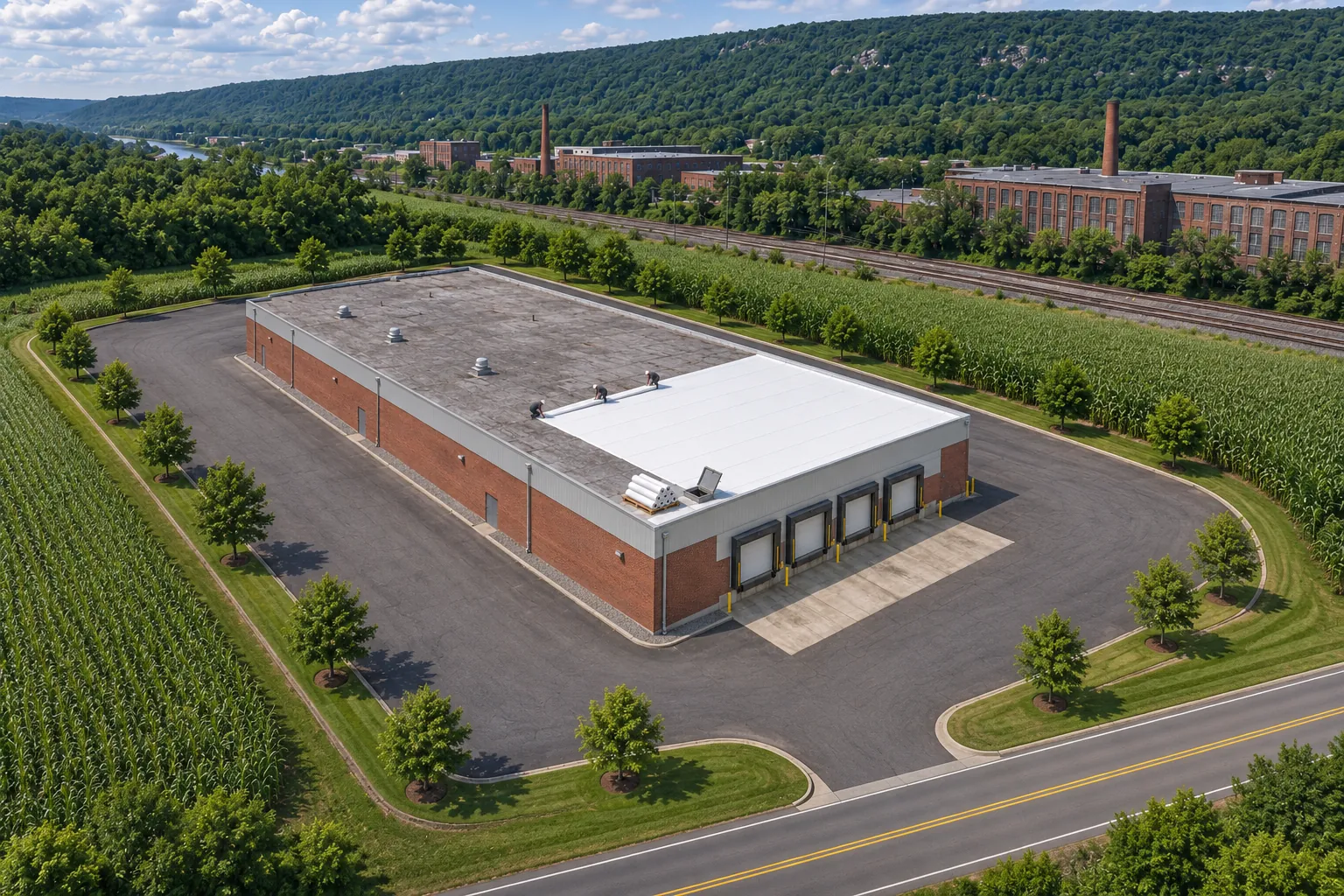
Downingtown commercial roofing jobs start with the water: we replace flat roofs and fix the drainage under them so water leaves the roof.
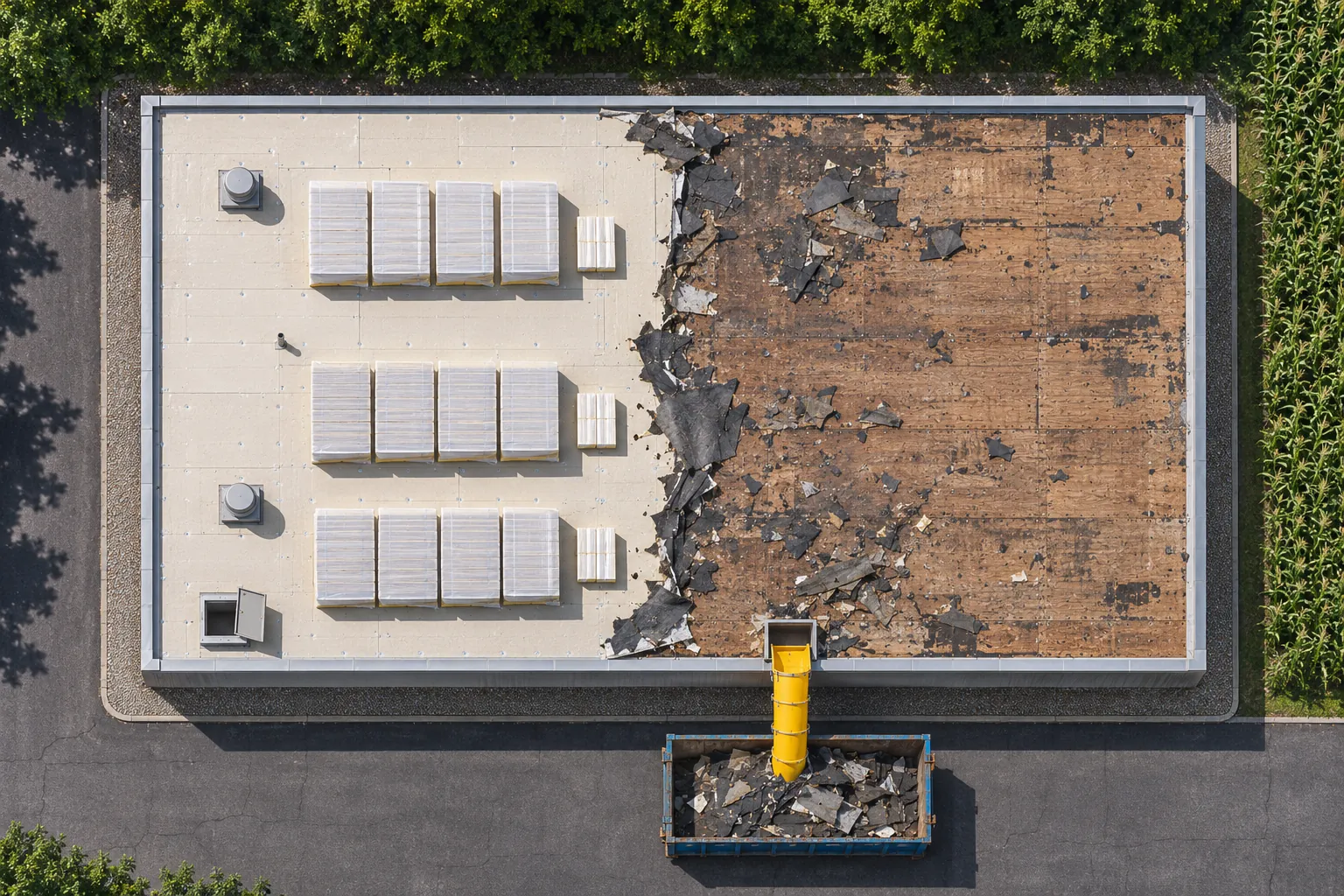
Before any Downingtown commercial roofing goes on, we find out where water goes on the roof today.
Many flat roofs hold water because the drains sit higher than the roof around them, or the insulation has sagged between joists. A new membrane over the same shape keeps the same puddles.
We measure drain heights, mark low areas after rain, and look for equipment pads blocking water paths. The new roof then gets tapered insulation and crickets that move water to the outlets.
These are the conditions that leave water standing on Downingtown commercial roofs.
When a drain bowl sits above the surrounding roof, water pools around it instead of going in. This often happens after insulation compresses around a drain set at the original height.
Sagged insulation or a deflected deck creates shallow bowls that stay wet for days after rain. Dirt rings left on the membrane show where the water sat.
Units and duct supports set across the slope dam water behind them on the uphill side. Crickets on the uphill side of each unit split that water and send it around.
Snowmelt freezes at outlets in winter, and water backs up behind the ice under the sheet edges. Heated drain areas and open strainers help outlets keep flowing through cold snaps.
Long-standing water finds small seam openings and soaks the board around the low area. Core cuts at the edge of each pond show how far the water has spread.
Missing strainers let debris into the leader, and loose clamping rings let water slip under the membrane. Both are cheap parts that cause expensive leaks when left alone.
Fixing the slope under the new membrane is the change owners notice first after rain.
Drain bowls are reset or sumped so the roof slopes into them from every side. Sumps around each bowl help it catch the last of the water.
Sloped boards and crickets send water around units and toward drains and scuppers.
Less standing water means less dirt, fewer wet laps, and a sheet that dries soon after storms.
Open drains and sealed transitions handle melt water through freeze-thaw cycles.
Each system below goes on over the new drainage layout.
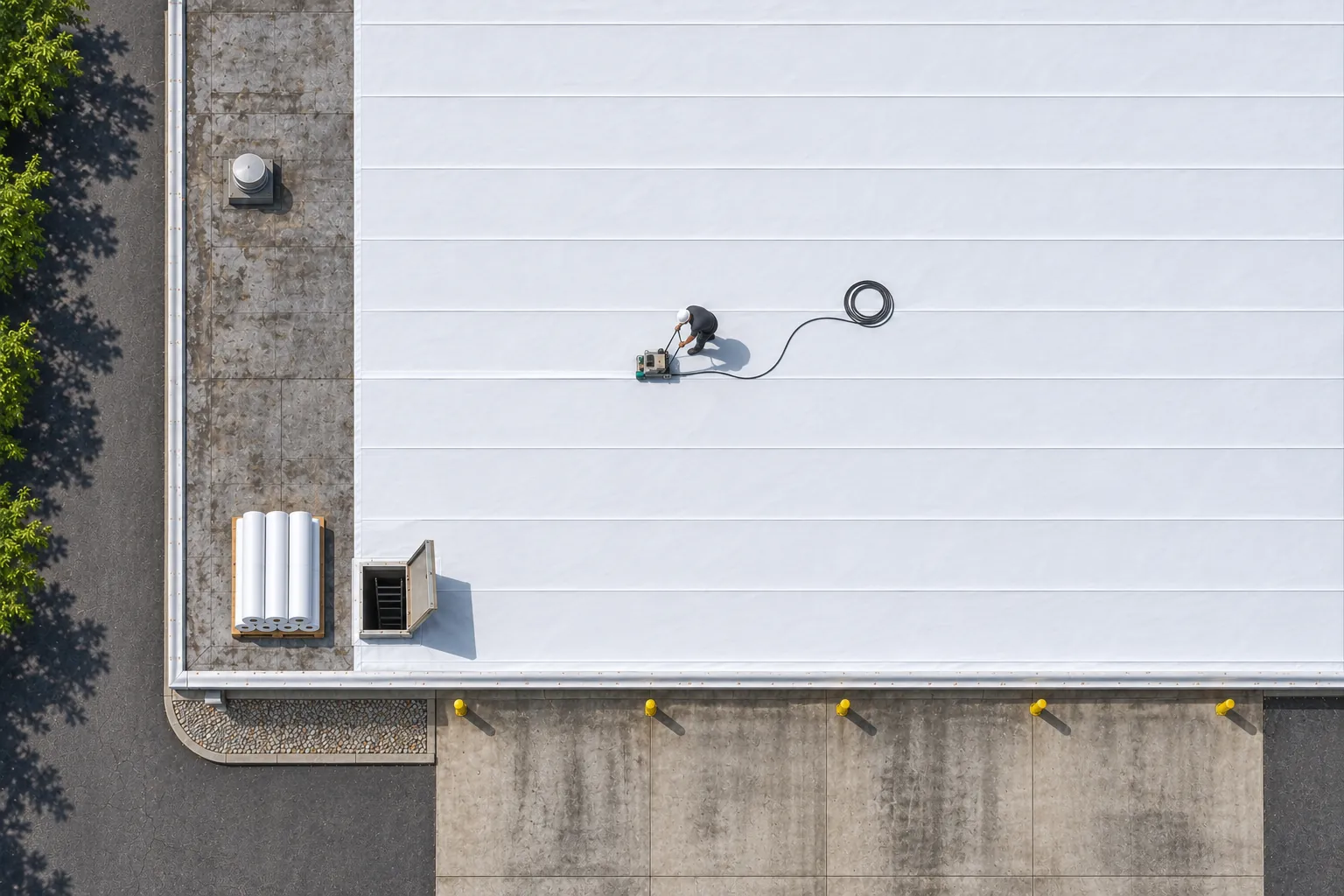
White welded membrane over sloped boards that carry water to the drains.
How TPO works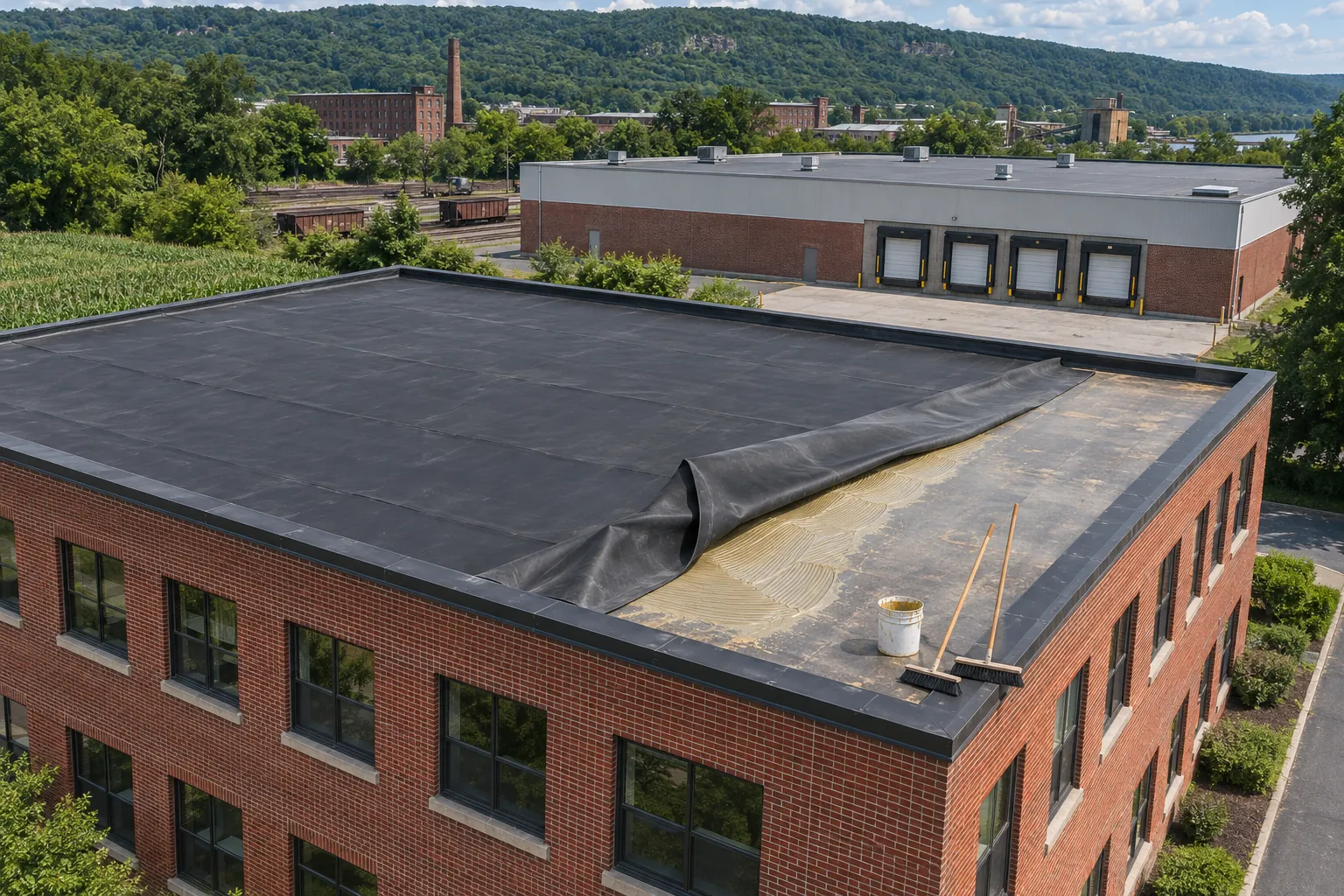
Rubber membrane adhered over tapered insulation on low-slope buildings.
How EPDM works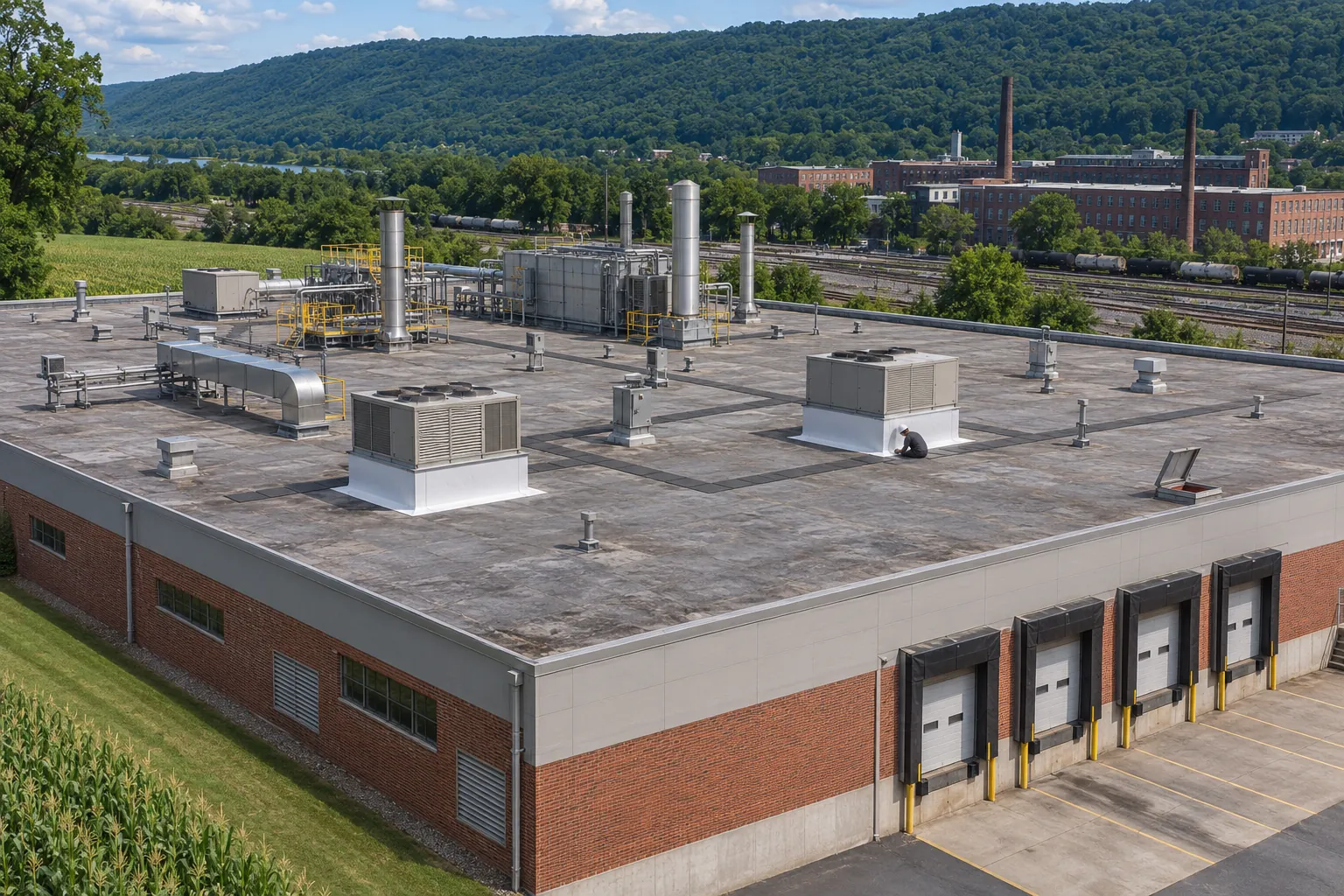
Roof replacement around equipment, with crickets behind each unit.
How industrial roofing works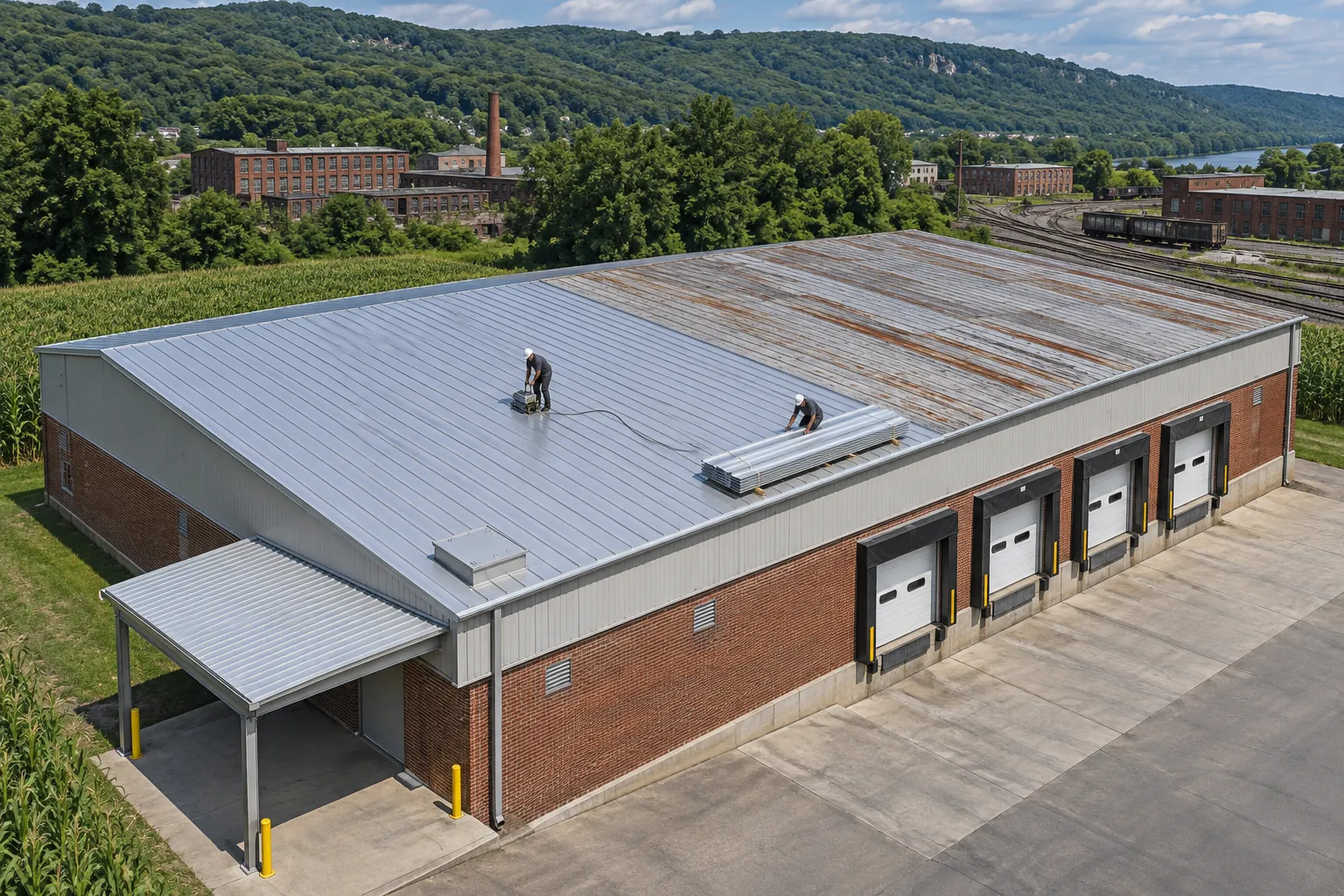
Sloped panel roofs that drain to gutters sized for rain and snow.
How metal roofing worksCall and tell us where it pools. We will check the drains and the slope.
Call UsDrainage gets designed before a single board goes down.
We mark where water stands, measure drain heights against the roof, and cut cores in the wet areas.
The scope includes a drainage layout showing slope direction, crickets behind units, and which drains get reset.
Drain bodies, clamping rings, and strainers are replaced or reset as each section is torn off.
Tapered panels go down in the planned pattern, then the membrane and flashing over them.
We look at the roof after the first good rain where we can and give you photos and the drainage layout.
Have a building outside these towns? Please call (484) 978-6354 or send us a message. We cover Downingtown and the towns listed here.
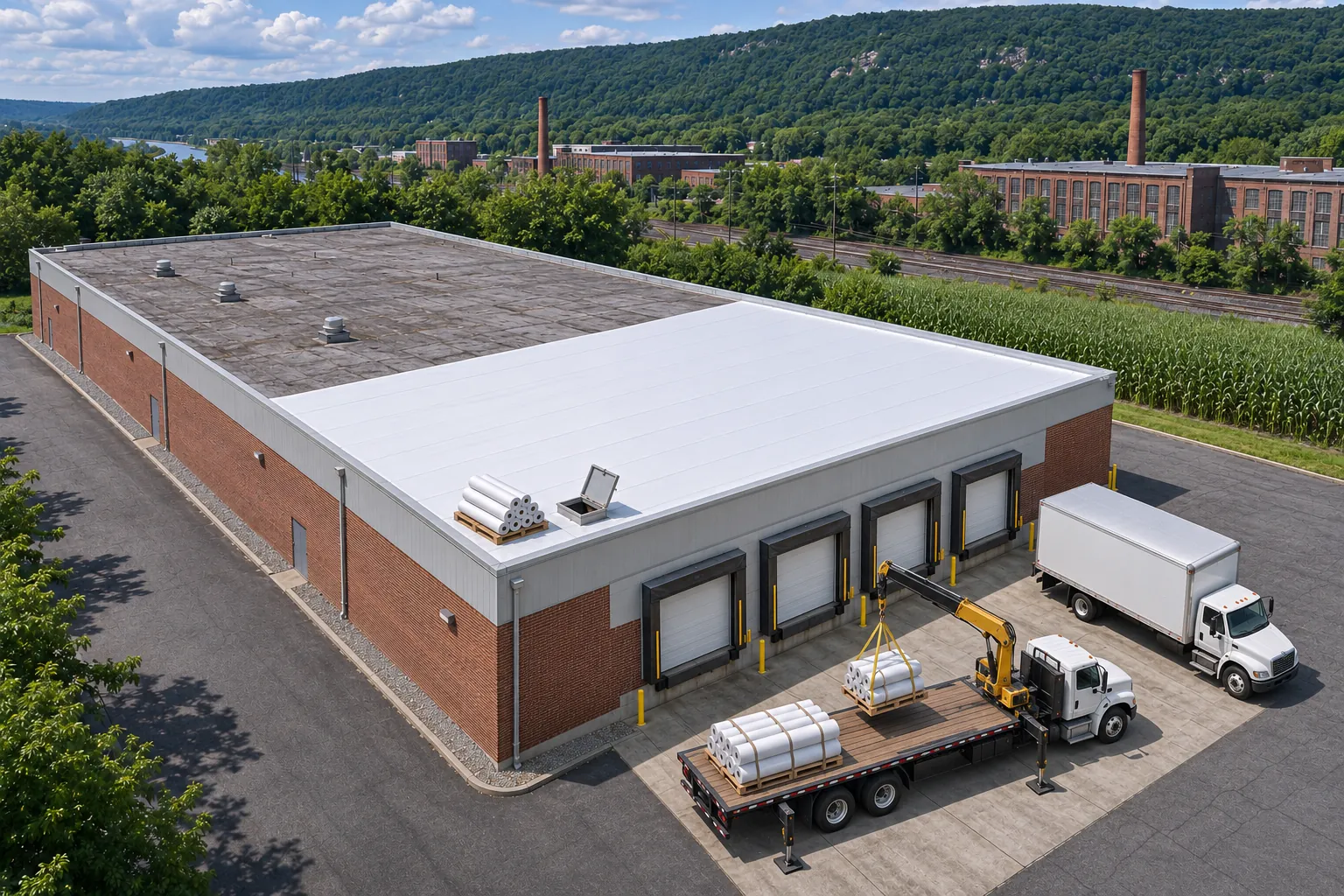
The city where we started, with wide warehouse roofs and brick mills that also tend to hold water near drains.
Warehouse roofs over stored stock, where each section gets closed up before the crew leaves for the night.
Roofs with rows of units that block the slope, so crickets behind each curb are part of the job.
Busy roofs where walkway pads have to run with the slope so they never dam water on its way out.
Brick buildings with parapets and through-wall scuppers that need new sleeves along with the membrane.
Answers about ponding, slope, and drains on a new roof.
We trace how water reaches each outlet and find low areas that need correcting. That means checking insulation shape, drain heights, and anything around equipment blocking the flow. A new roof over the old drainage pattern will hold the same standing water.
Find out why it ponds. Water can sit because the drain is high, the deck has sagged, or equipment blocks the slope. Each cause has a different fix, so we measure before we design anything.
Tapered boards are thicker at one end, so stacking them creates a slope toward the drains without changing the deck. Crickets, which are small sloped wedges, push water around units and between drains.
Enough that water reaches a drain instead of sitting. We design the taper to the drain layout and the code in effect at reroof time, and we check the finished slope against that plan.
Often yes. Old drain bodies, cracked clamping rings, and missing strainers are easiest to replace while the roof is open. We list each drain in the scope as replace, reset, or keep.
Melt water runs to the drain and refreezes at night, building ice at the outlet. Water then backs up behind it. Clear outlets and well-sealed drain flashing keep that backed-up water out of the roof.
Tell us where water stands on your roof. We will measure the drains and design the slope.