Systems and Replacement

Commercial Roofing Services in Reading

Four Roof Systems and Full Replacement for Flat and Metal Roofs

Our commercial roofing services in Reading cover TPO, EPDM, industrial, and metal roofs, plus complete replacement when the old roof is past saving.

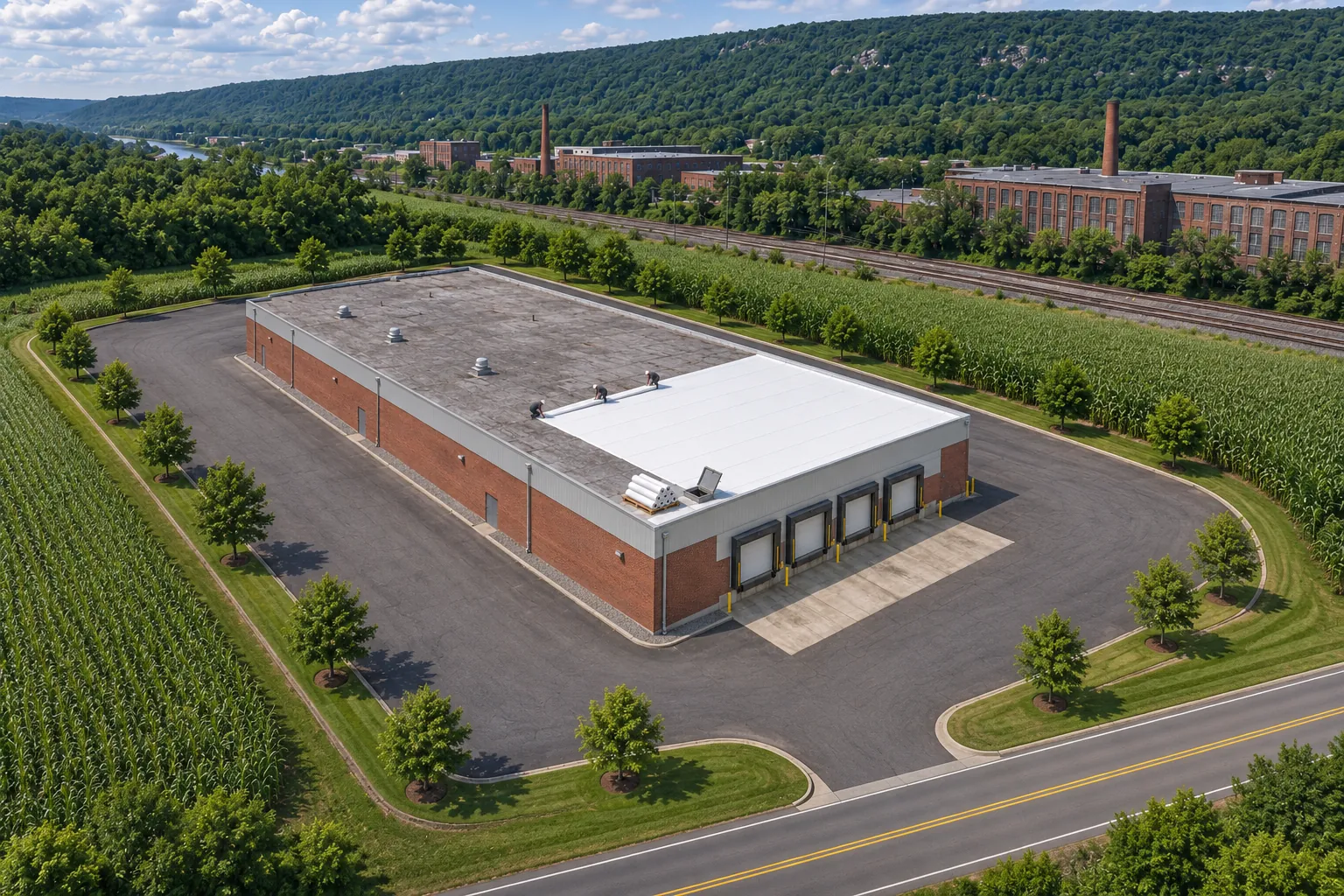
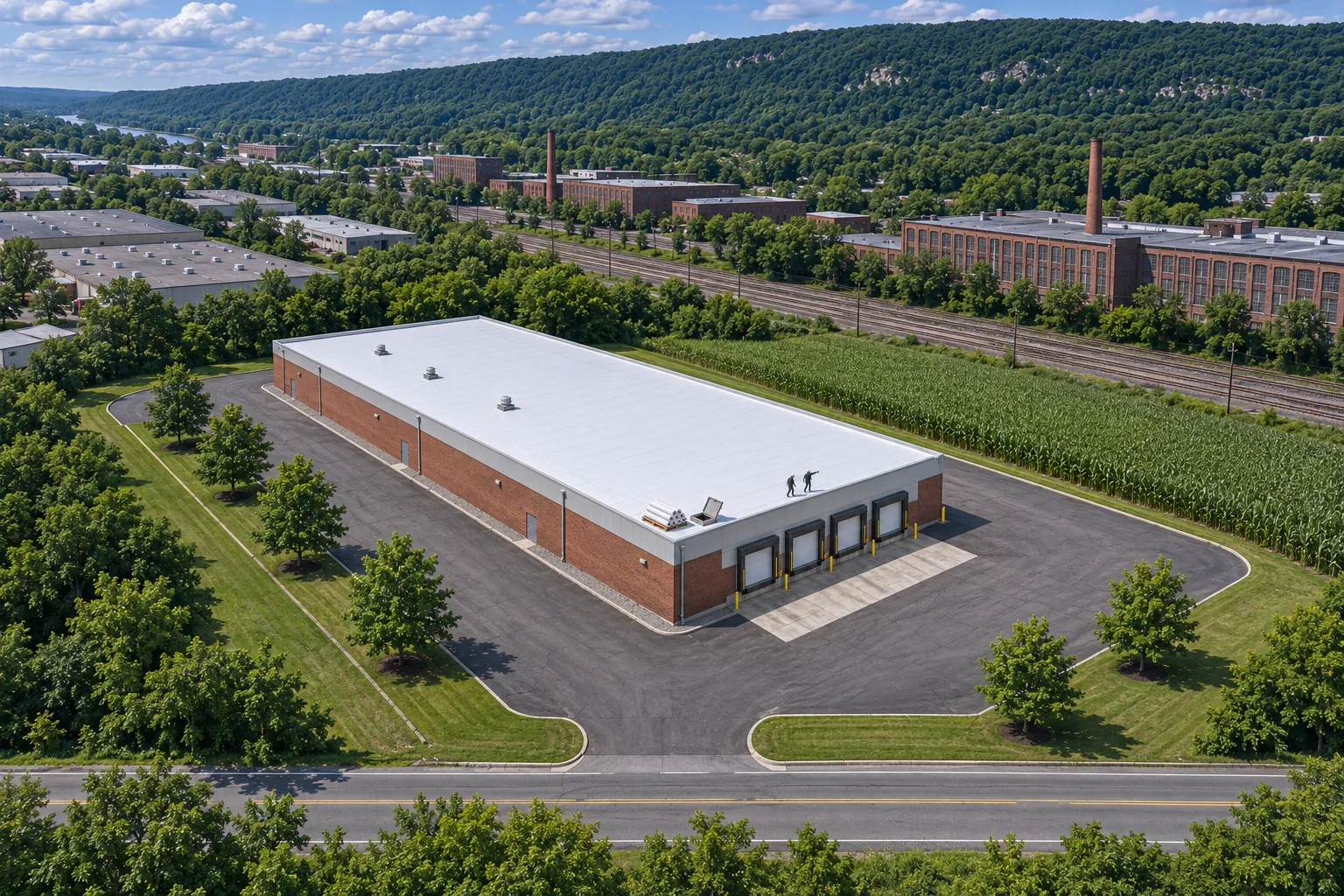
Drone view of a brick warehouse with loading docks and a half-finished white TPO roof among cornfields and river hills

Pick From Four Commercial Roofing Services in Reading

Each of our commercial roofing services in Reading has its own page with details, options, and questions.

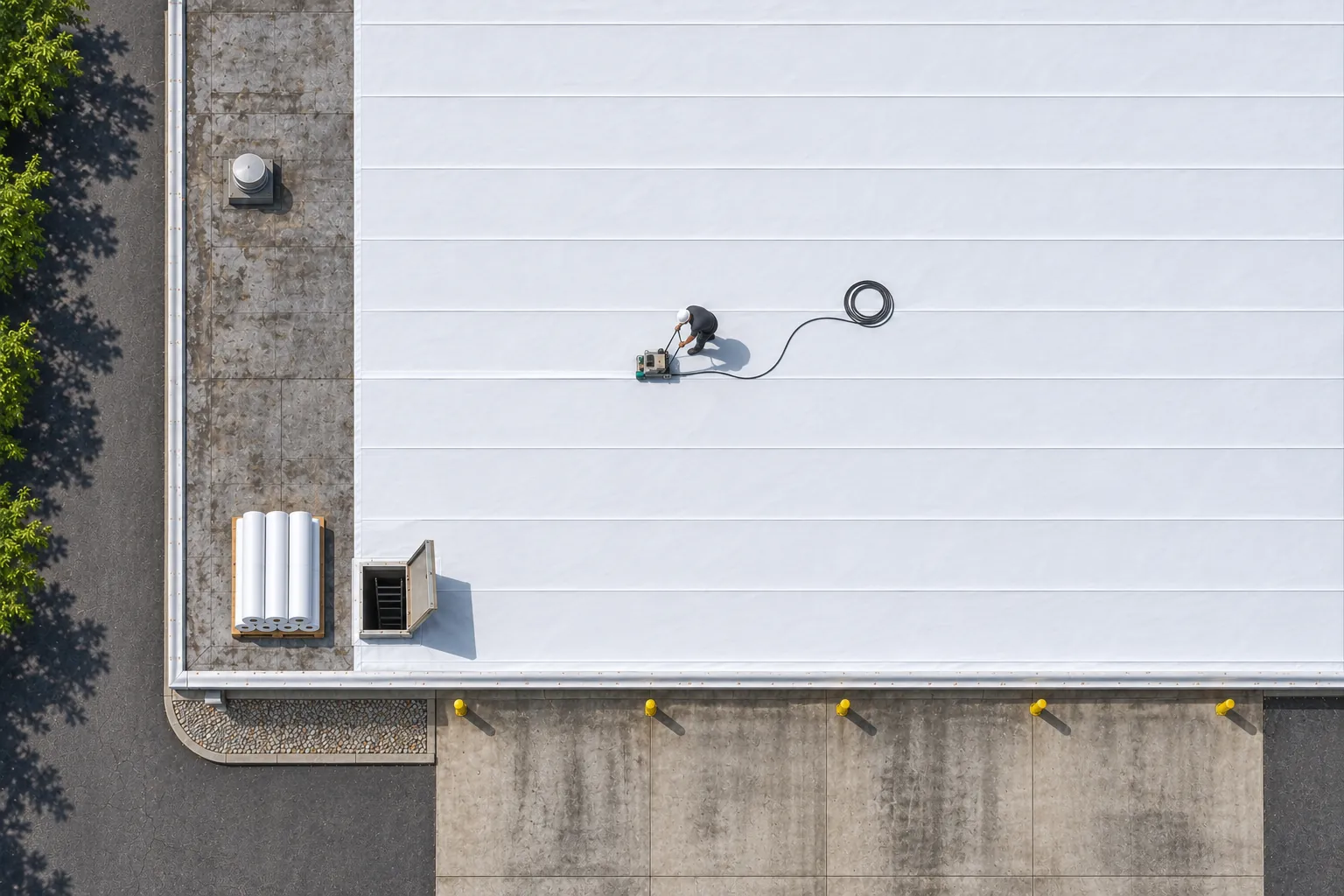
  • Top-down view of a roofer running a hot-air welder along a seam on a white TPO roof
    TPO Roofing

    TPO Single-Ply Roofing

    A welded white sheet for wide flat roofs with many curbs and fans. Seams get trial welds at the start of each day and probing at the end, and walkway pads protect the service routes.

    Open TPO roofing
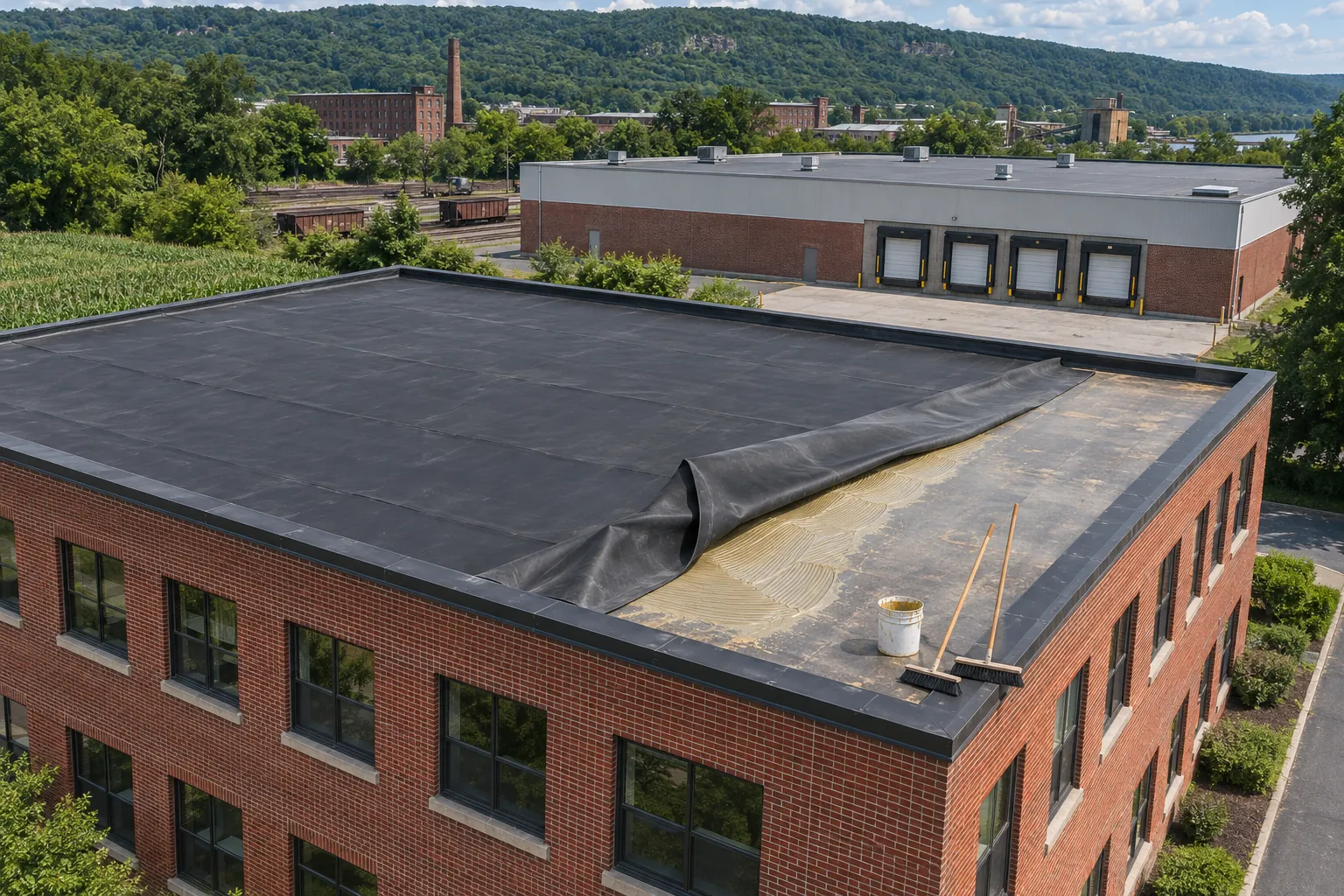
  • Black EPDM membrane being laid on a brick mill building, one sheet folded back over fresh adhesive
    EPDM Roofing

    EPDM Rubber Roofing

    Black rubber membrane, adhered or ballasted, for older brick buildings and low slopes that see hard winters. Laps are primed and taped, and corners get preformed flashing.

    Open EPDM roofing
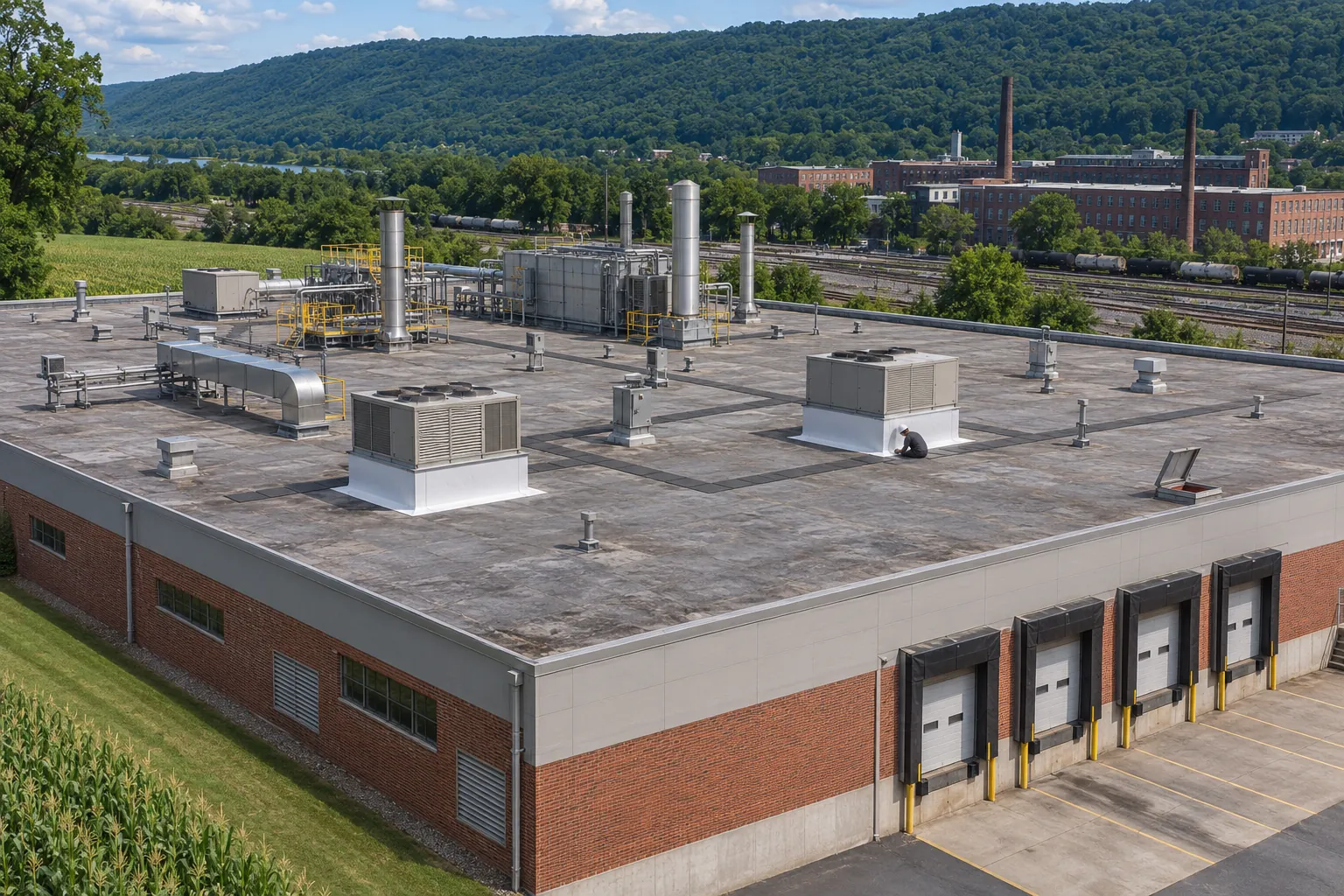
  • Industrial flat roof crowded with exhaust stacks, ducts, and rooftop units above loading docks
    Industrial Roofing

    Industrial Roofing

    Roof replacement on plants and shops, staged around exhaust, heavy units, and production shifts. Each unit gets a written plan before tear-off reaches it.

    Open industrial roofing
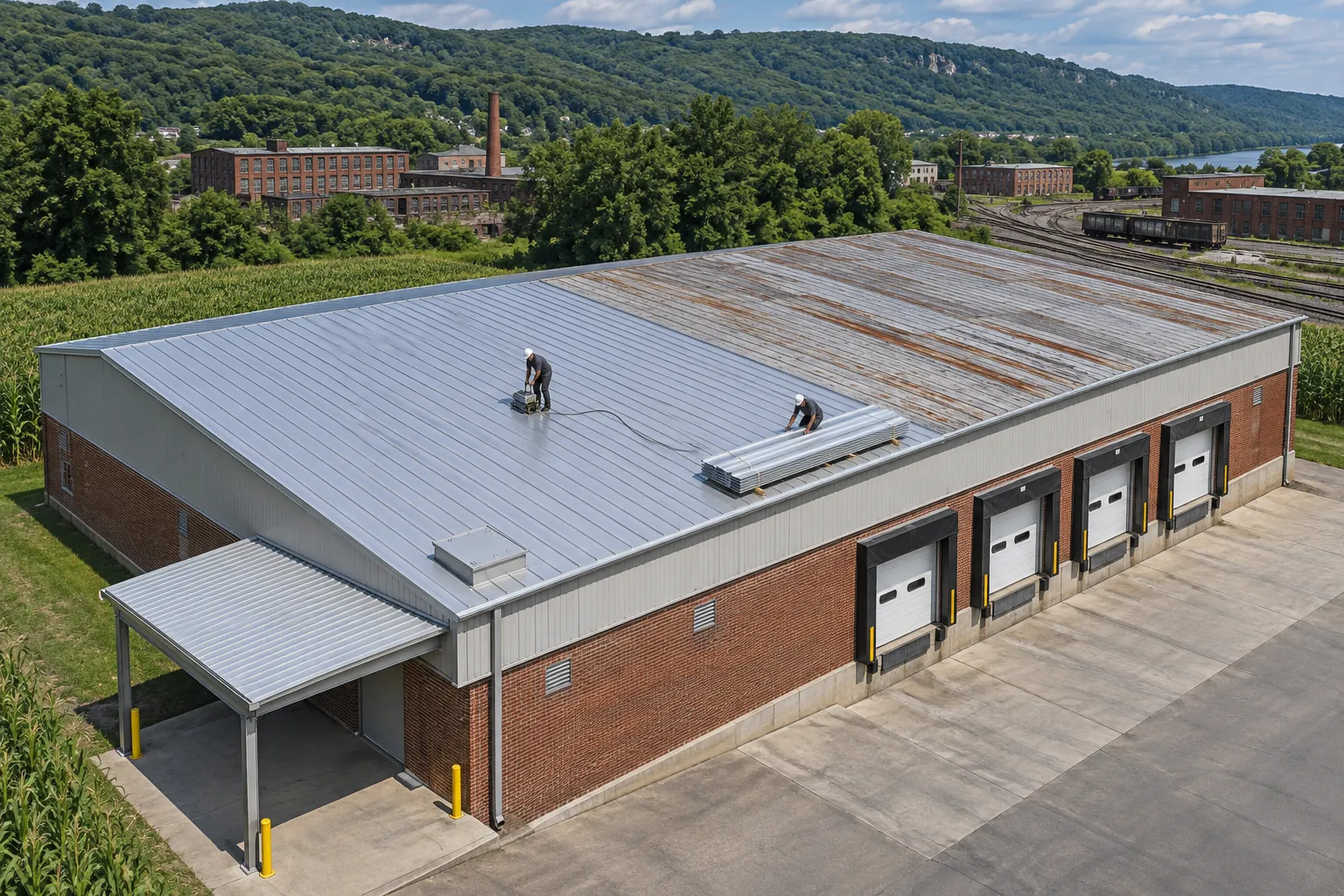
  • Two roofers setting new standing-seam metal panels over an old rusted metal warehouse roof
    Commercial Metal Roofing

    Commercial Metal Roofing

    Standing-seam and exposed-fastener panels, panel replacement, and retrofit framing over worn metal, with insulation that keeps condensation off stored goods.

    Open metal roofing

Which Roof System Fits Which Building

A quick guide. The roof inspection settles it for your building.

BuildingUsual FitWhy
Large flat warehouseTPOWelded seams and a white surface on a wide roof with fans and units
Older brick millEPDMLight, flexible rubber that handles wall movement and cold
Plant with stacks and ductsIndustrial plan, TPO or EPDMSheet chosen for the exhaust, with curbs and sequence planned
Metal building with slopeMetal panelsStanding seam or panels replace rusted steel
Farm or equipment storageMetal with insulationPanels plus condensation control over stored equipment
Bakery or food plantTPO or EPDMIntakes, exhaust, and grease decide which sheet
Office or medical buildingTPOMany rooftop units and a light surface over occupied floors
Retail strip with parapetsTPO or EPDMWall flashing and coping run along every storefront

Not Sure Which System You Have?

Call and describe the roof. A short roof walk and a core cut will tell us.

Call Us

How Our Commercial Roofing Services Run

The same order of work applies across all four systems.

Service Work Order5 Steps
  1. 1

    Inspect Your Roof and Identify the System

    On The Roof

    We confirm what is on the roof, count layers with core cuts, and check the deck, drains, curbs, and edges. Photos of each go into the file we build for your building.

    Brick warehouse with a new white roof among trees, with river hills and old brick mills behind
  2. 2

    Compare Systems for the Building

    Paperwork

    You see the system we recommend next to the alternative, with attachment, insulation, and drainage written out for each, so the choice is made on details instead of names.

  3. 3

    Set Removal and Hidden-Damage Pricing

    Paperwork

    The scope lists what comes off and states how wet insulation and deck repairs get priced if they turn up, using unit prices you approve before work starts.

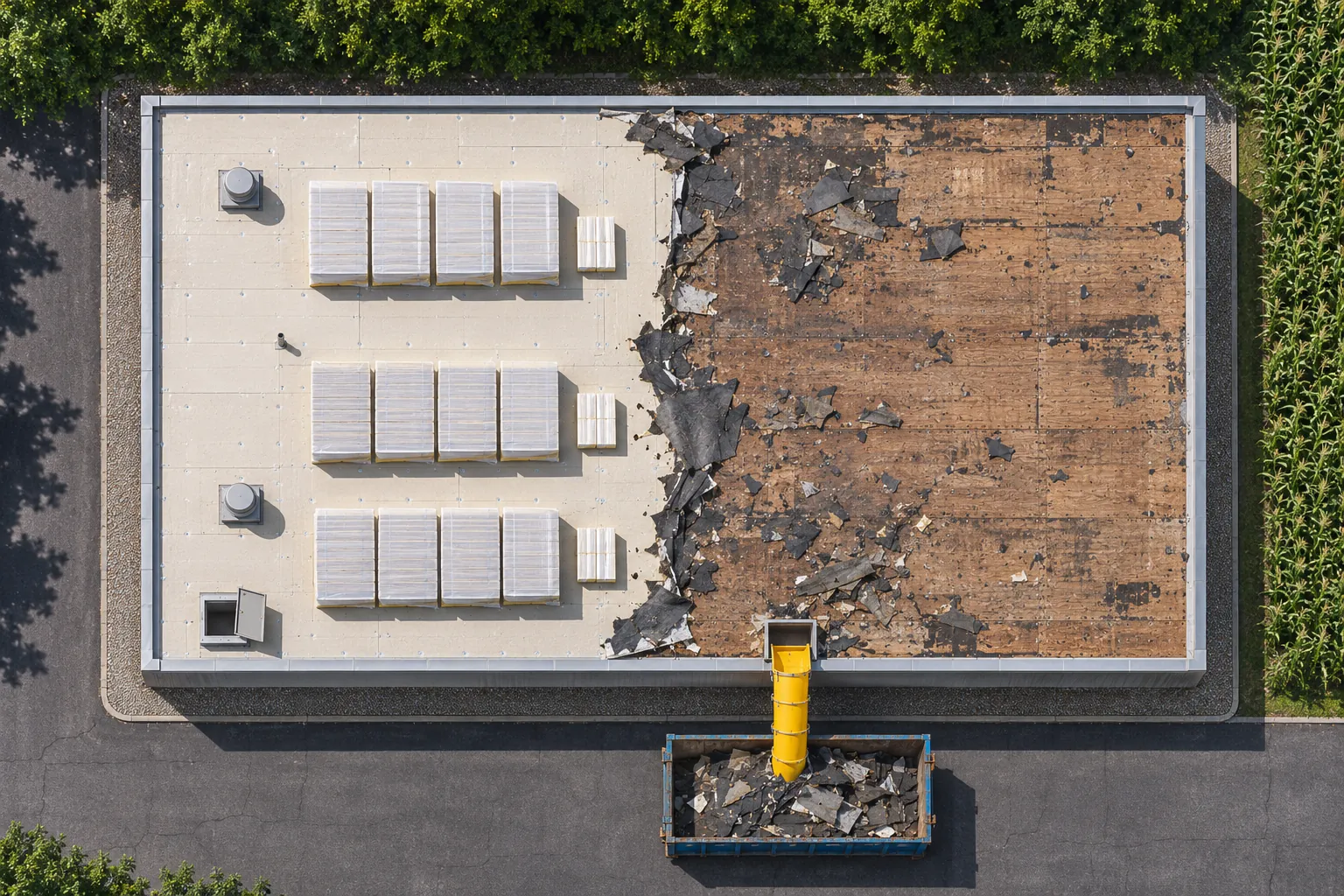
    Top-down view of a flat roof mid tear-off, half new white membrane and half stripped to the deck
  4. 4

    Build the Roof Section by Section

    On The Roof

    Old roofing comes off in pieces we can close each day, and the new assembly goes on with its flashing and edge metal. Equipment work happens on the dates set with your trades.

  5. 5

    Final Walk and Records

    Paperwork

    Before we leave, the roof gets walked with you, and you receive photos, system records, and the roof plan for future repairs.

Commercial Roof Replacement in Reading

When repairs stop making sense, we replace the whole roof. Here is what that covers.

  • Tear-Off to Sound Material

    Wet insulation and failed roofing come off down to a deck or layer that can carry the new roof. Core cuts taken during the inspection set those limits before any price is written.

  • Deck Repairs Where Found

    Rusted steel deck or rotted wood gets replaced at the unit price set in the scope, so you know the cost of each sheet or board before tear-off begins. Deck sheets get fastened to the framing before insulation goes back down.

  • New Insulation and Slope

    New board at the thickness the energy code asks for at reroof time, with tapered sections and crickets wherever water used to pond near units or drains. Cover board goes over the top.

  • Membrane or Panels

    TPO, EPDM, or metal, chosen for the building after the inspection, with attachment set by the deck type, wind exposure, and the weight the structure carries. The sheet thickness or panel gauge is written into the scope.

  • Flashing at Every Penetration

    Curbs, stacks, pipes, drains, and walls get new flashing at the new roof height. Short curbs are raised, and unused curbs come out and get decked over. Pipe boots are sized to each pipe.

  • Edge Metal and Coping

    Perimeter metal is replaced or confirmed solid before the new roof ties into it. Loose coping and edge pieces are the first things wind lifts, so they are never left to chance.

Questions About Commercial Roofing Services in Reading

What owners ask before choosing a system.

Price

Why Do Two Roofs the Same Size Get Different Prices?

The size is only one input. Removal layers, wet insulation, deck repairs, edge metal, equipment, and access each change the work. Two buildings with the same square footage can need very different scopes, so each price follows its own inspection.

What Should a Roofer Explain Before Replacing a Bakery’s Roof?

What comes off, what stays, and how the new assembly fits the bakery’s operation. That includes protecting air intakes, routing material away from production, and timing equipment work. The scope should also say how hidden deck or insulation damage gets handled.

Roof Age

Why Do Commercial Roofs of Similar Age Need Different Replacement Plans?

Installation quality, moisture, and upkeep vary from roof to roof. One roof can show a few isolated defects at twenty years while another fails across the field much sooner. We inspect seams, flashing, drainage, and the layers under damage before planning anything.

Can Part of a Roof Be Replaced Instead of All of It?

Sometimes. When core cuts show wet insulation limited to one section and the rest is dry, a section replacement with proper tie-ins can work. Widespread moisture or seam failure points to a full replacement.

After Storms

Should a New Roof Be Inspected After Summer Hailstorms?

Yes. A new roof can still be punctured or have details displaced by hail and high wind. We check seams, edge metal, and equipment flashing once it is safe, since a surface that looks intact can hide damage.

Does Installing a New Commercial Roof Reduce Insurance Premiums?

It depends on your policy and the insurer’s review. A new roof does not change premiums or coverage on its own. We can document the scope and condition, and you should talk with your insurer before counting on a discount.

Read all thirty questions on the FAQ page

Book Commercial Roofing Services in Reading

Tell us about the building. We will inspect the roof and recommend the system that fits.

Call Us (484) 978-6354