Coping Joints Letting Water In
Open joints in parapet coping send water down inside the wall and behind the roof flashing. Sealant at those joints dries out after a few summers.
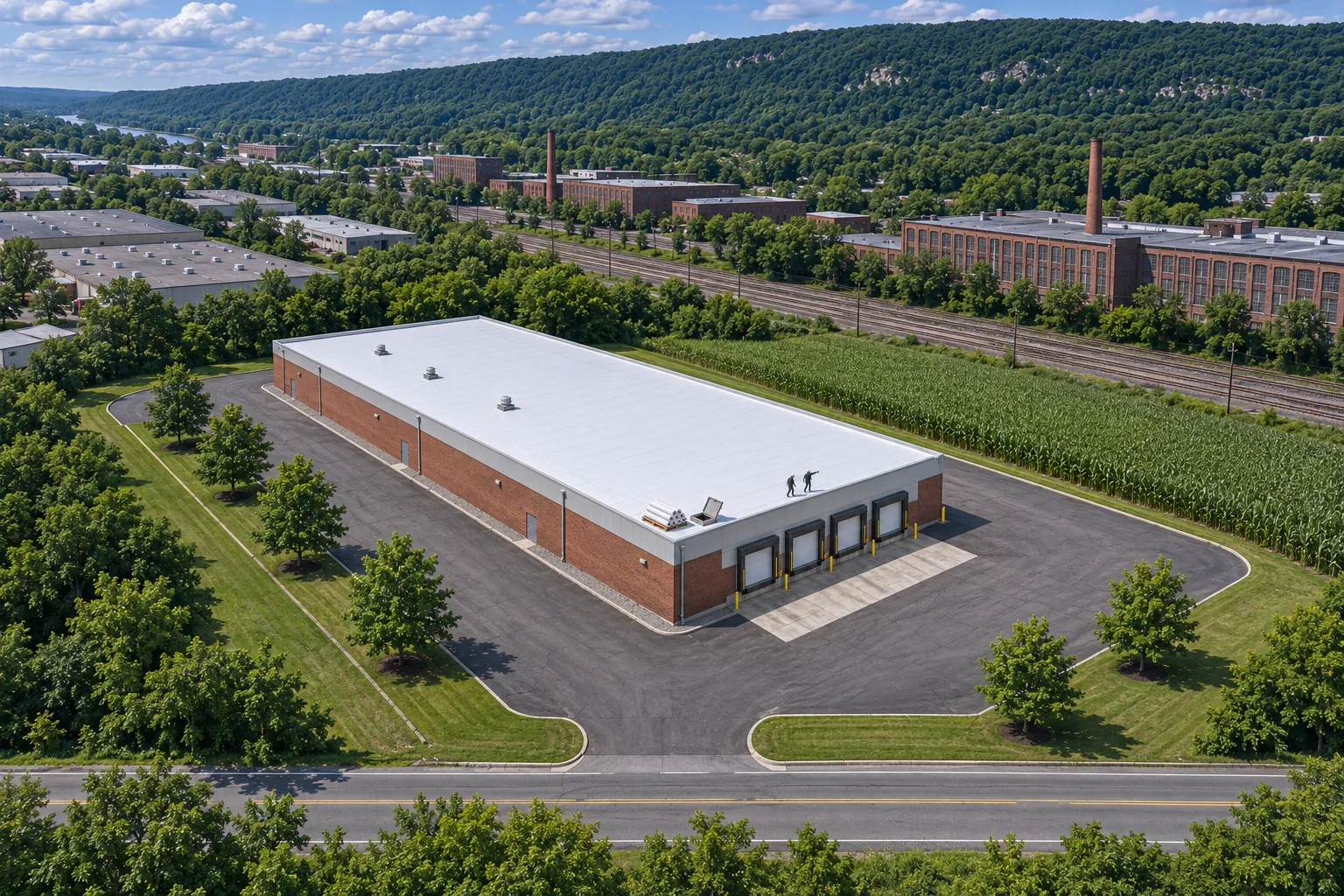
Collingdale commercial roofing is work we take on: we replace flat roofs on brick and block buildings, starting with the perimeter details.
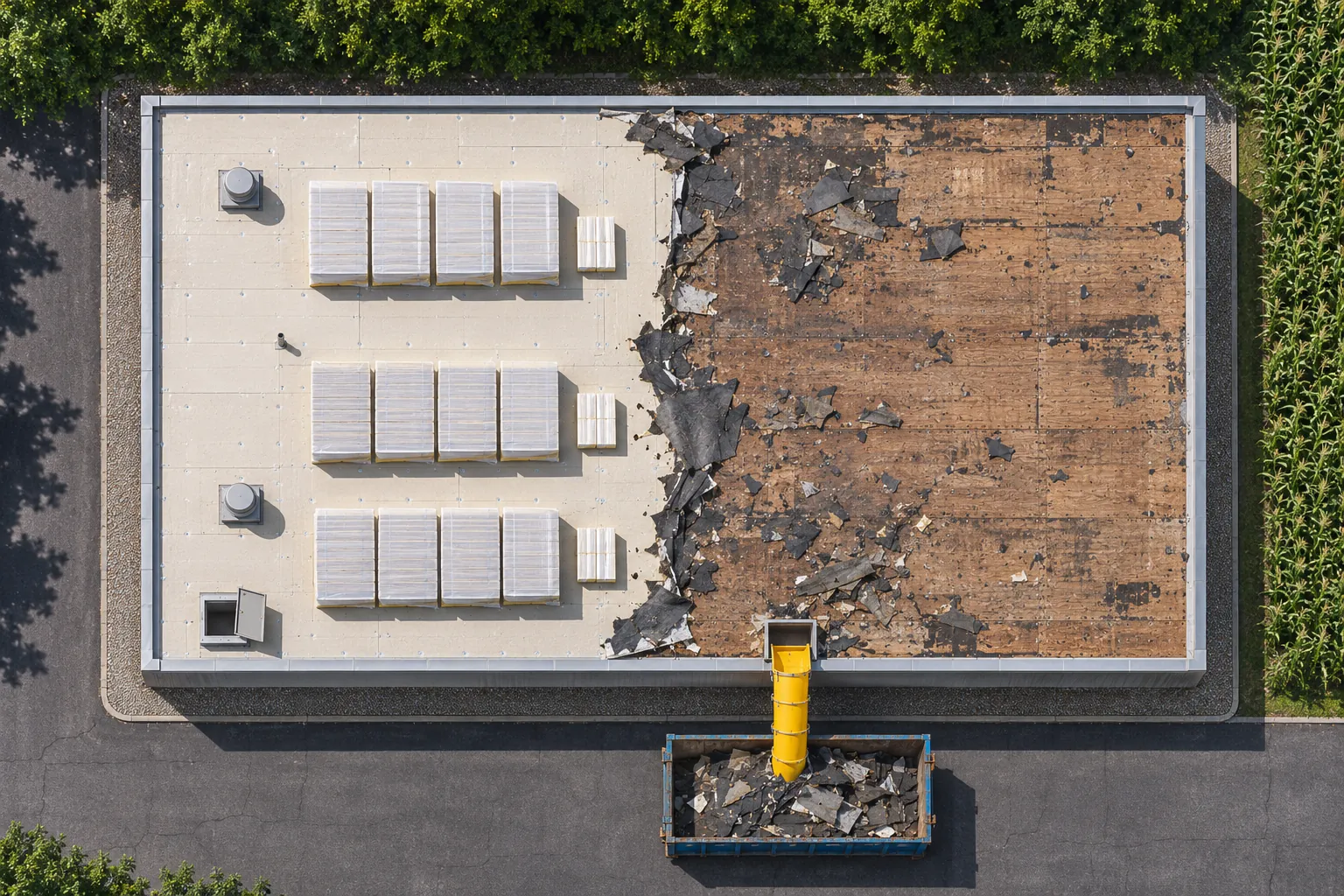
On many Collingdale commercial roofing jobs, the edges decide the scope more than the field of the roof does.
Older brick buildings often have parapet walls, coping, and counterflashing that were left alone during earlier reroofs. A new membrane tied into tired metal leaks at the wall line within a few seasons.
So we check every piece of edge metal and wall flashing first: how it is fastened, whether the brick behind it is solid, and whether the metal can work with the new membrane.
These are the edge and wall conditions we find most on older Collingdale buildings.
Open joints in parapet coping send water down inside the wall and behind the roof flashing. Sealant at those joints dries out after a few summers.
Old edge metal with rusted nails lifts in wind, and the membrane under it peels back. Rusted nail heads along the fascia are the first sign.
The slot in the brick that holds counterflashing cracks and lets water behind the base flashing. Old sealant in the slot often peels out in strips.
Shrinking membrane pulls base flashing away from parapets, opening a gap right at the corner.
Water getting in at the coping shows up as damp interior brick near the ceiling.
Scuppers that drain through the wall rust out and leak where they meet the brick.
Rebuilding the perimeter with the roof closes the gaps that cause most wall-line leaks.
New or reset coping with sealed joints keeps water out of the wall tops. Joints get cover plates under them.
Edge metal is fastened at the spacing the system calls for, so the sheet stays down in high wind.
Base and counterflashing are attached to solid masonry, with the reglet cleaned and resealed.
Through-wall scuppers get new sleeves and flashing matched to the new membrane.
Any of these systems can go on a Collingdale building once the perimeter is sorted.
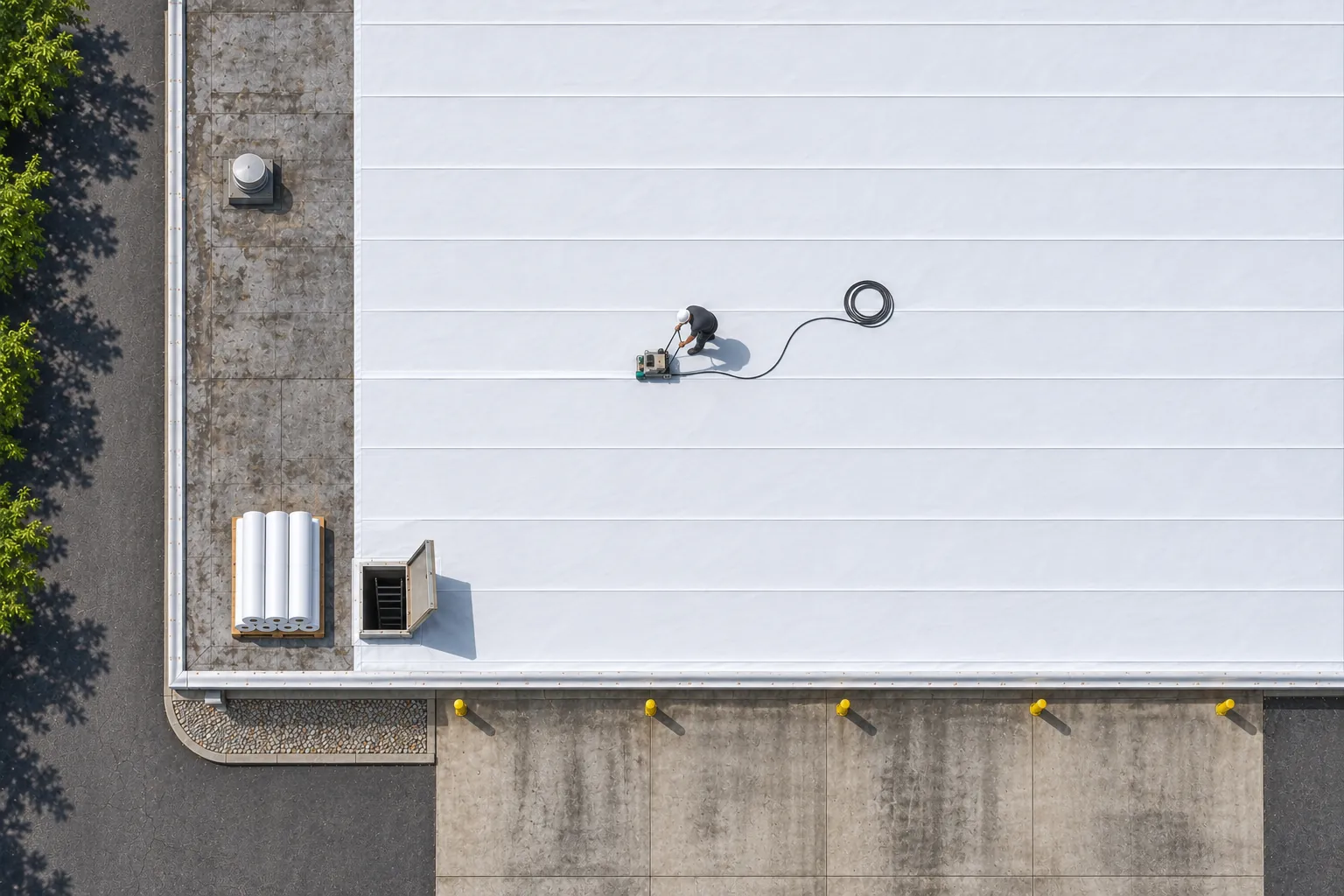
White membrane with welded base flashing up the parapets and around corners.
More on TPO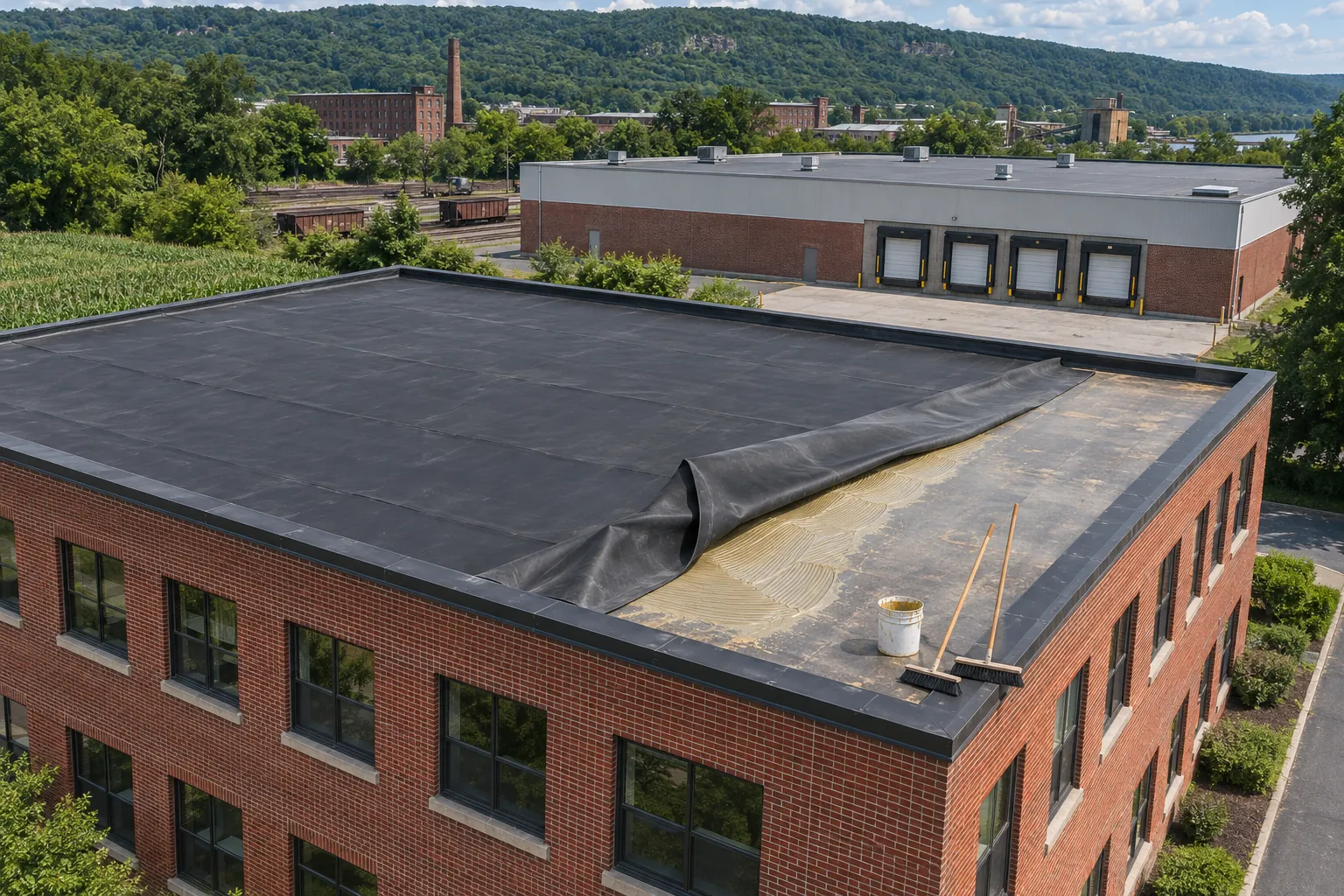
Rubber membrane with flashing run up and over the walls on older brick buildings.
More on EPDM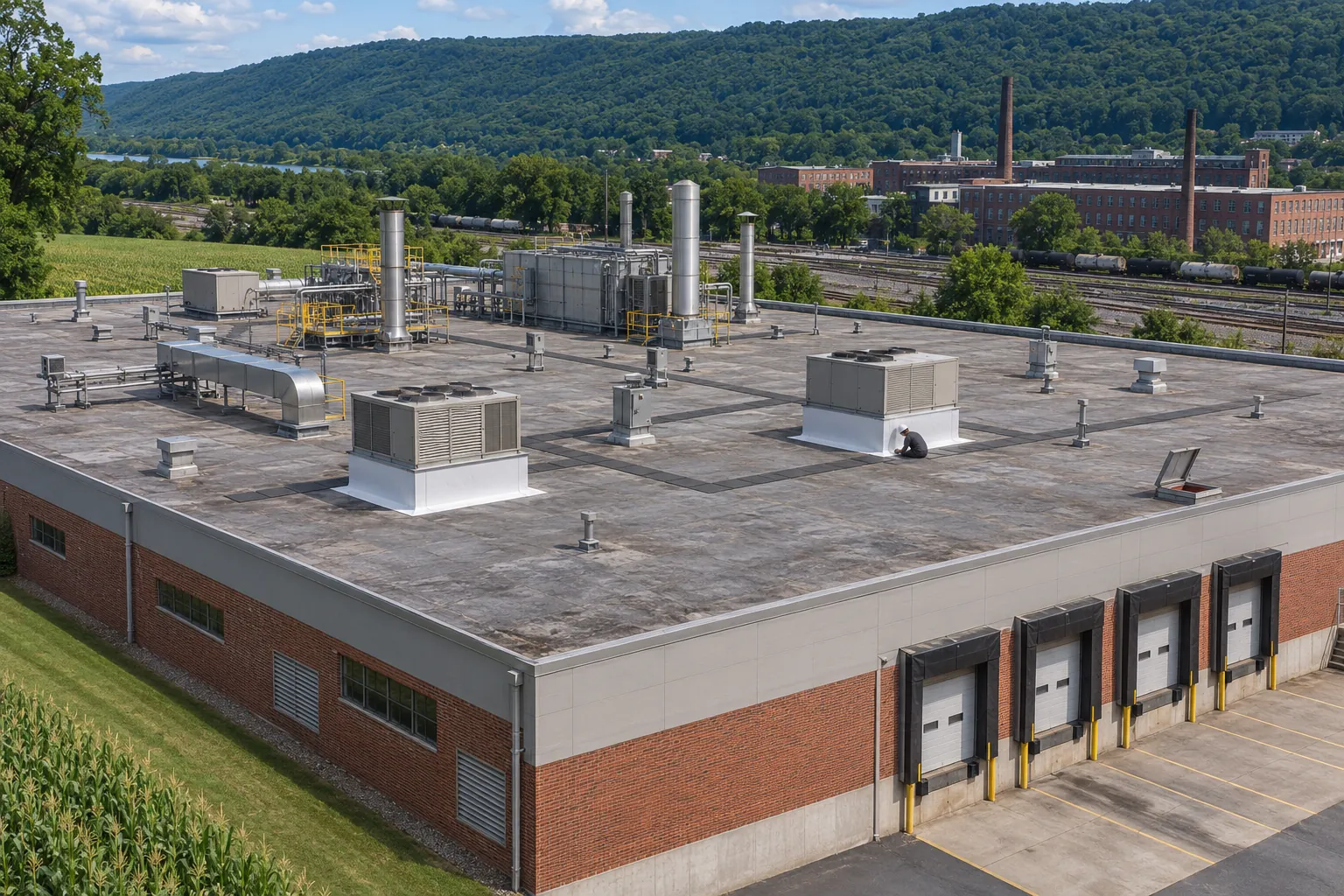
Reroofing around equipment on shops and production buildings in the area.
More on industrial roofing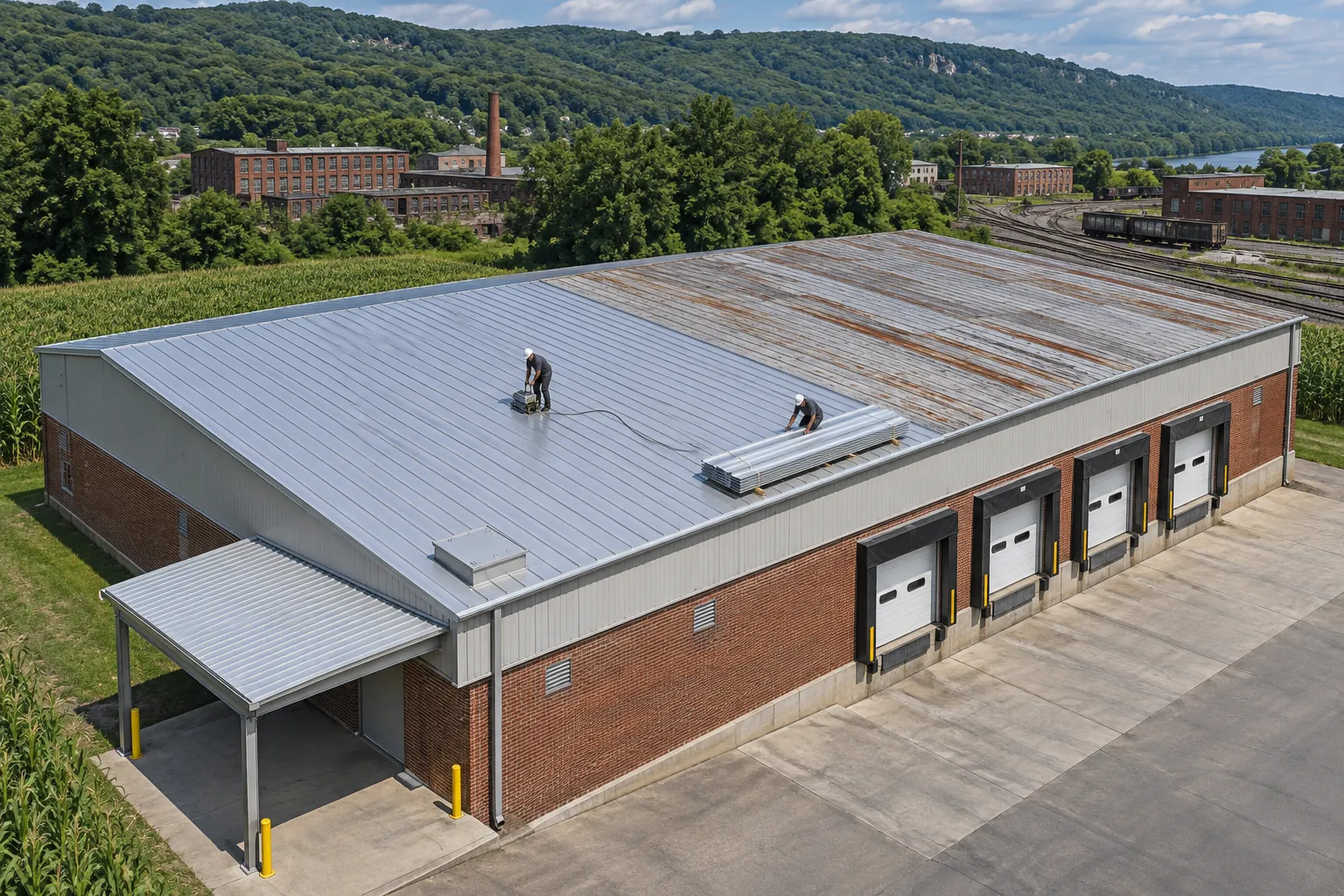
Panel roofs for sloped additions and storage buildings beside flat roofs.
More on metal roofingCall and describe where the stain shows. We will check the coping and wall flashing.
Call UsThe perimeter gets checked and planned before the field of the roof.
We check coping joints, edge metal fasteners, counterflashing, and the brick behind them, then cut cores in the field.
The scope says which edge pieces, coping, and scuppers get replaced and which stay, with the reason for each.
Loose brick or open mortar joints behind the flashing get repaired first, so new metal has something solid to hold.
New membrane goes down, then base flashing up the walls, counterflashing, coping, and edge metal in that order.
We photograph each corner and scupper and give you the records and roof plan at the final walk.
Owners outside these towns can still call (484) 978-6354 or send us a message. Collingdale and the places below are where we work most.
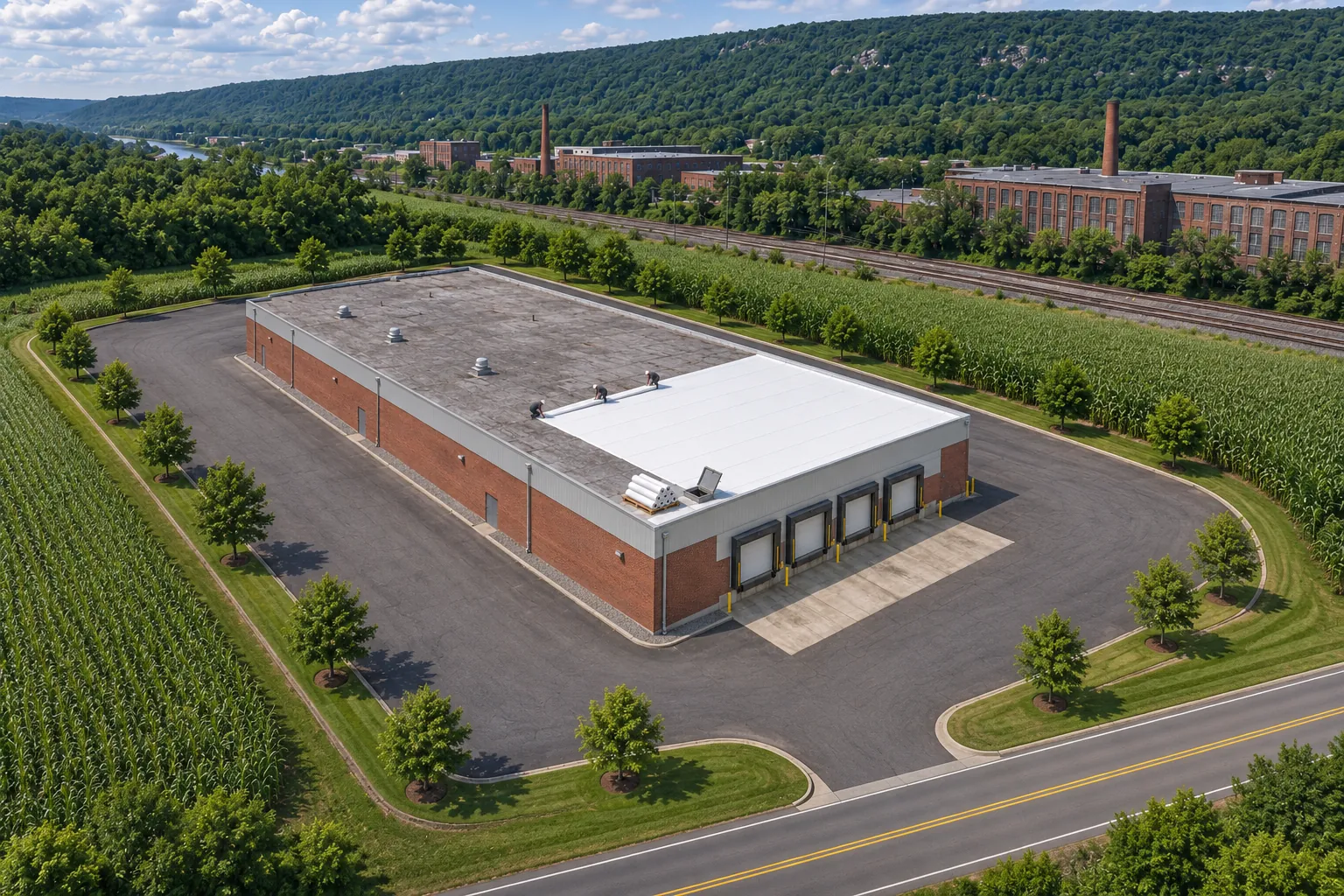
Our home base in Berks County, with warehouses and old mill roofs that often have the same tired coping.
A short way from Collingdale, with roofs where heavy service traffic wears the membrane along set paths.
Buildings carrying many rooftop units, where raising curbs is a regular part of the replacement.
Large warehouses that stay stocked during the work, so covers and section sizes come first.
Low-slope roofs where we reset drains and add tapered board so water stops pooling near the outlets.
What owners ask about walls, coping, and edge metal on a reroof.
Only after we check its condition, its fastening, and whether it works with the new membrane. We look at how it connects to the walls and coping. A new roof should never end against damaged metal just because the edge was left out of the first scope.
When the metal is fastened tight, has no rust through, and sits at a height that works with the new insulation. If any of that fails, new flashing costs less than chasing leaks at the wall line later.
We remove the old coping or edge pieces, check the wood nailer and brick under them, then set new metal with sealed joints and fasteners at the right spacing. It happens alongside the membrane so the layers lap correctly.
Base flashing runs from the roof up the wall face and is fastened at the top. Counterflashing or coping covers that top edge so water runs over the top edge and away from the wall. Each corner gets its own preformed piece.
Water often gets in at open coping joints or cracked reglets and runs down inside the wall. The roof field can be dry while the wall leaks. That is why we test the perimeter before pricing a new roof.
TPO and EPDM both work on brick buildings with parapets. The choice depends on the deck, the weight it can carry, and how the flashing ties into the walls. We decide that after the roof walk.
Send the address and tell us about the walls and edges. We will inspect the perimeter and the field.