Thirty Answers

Reading Commercial Roofing FAQ

Plain Answers on Membranes, Metal Panels, and Replacement Scope

This Reading commercial roofing FAQ answers what owners ask about new roofs, TPO, EPDM, industrial and metal roofs, weather, and nearby towns.

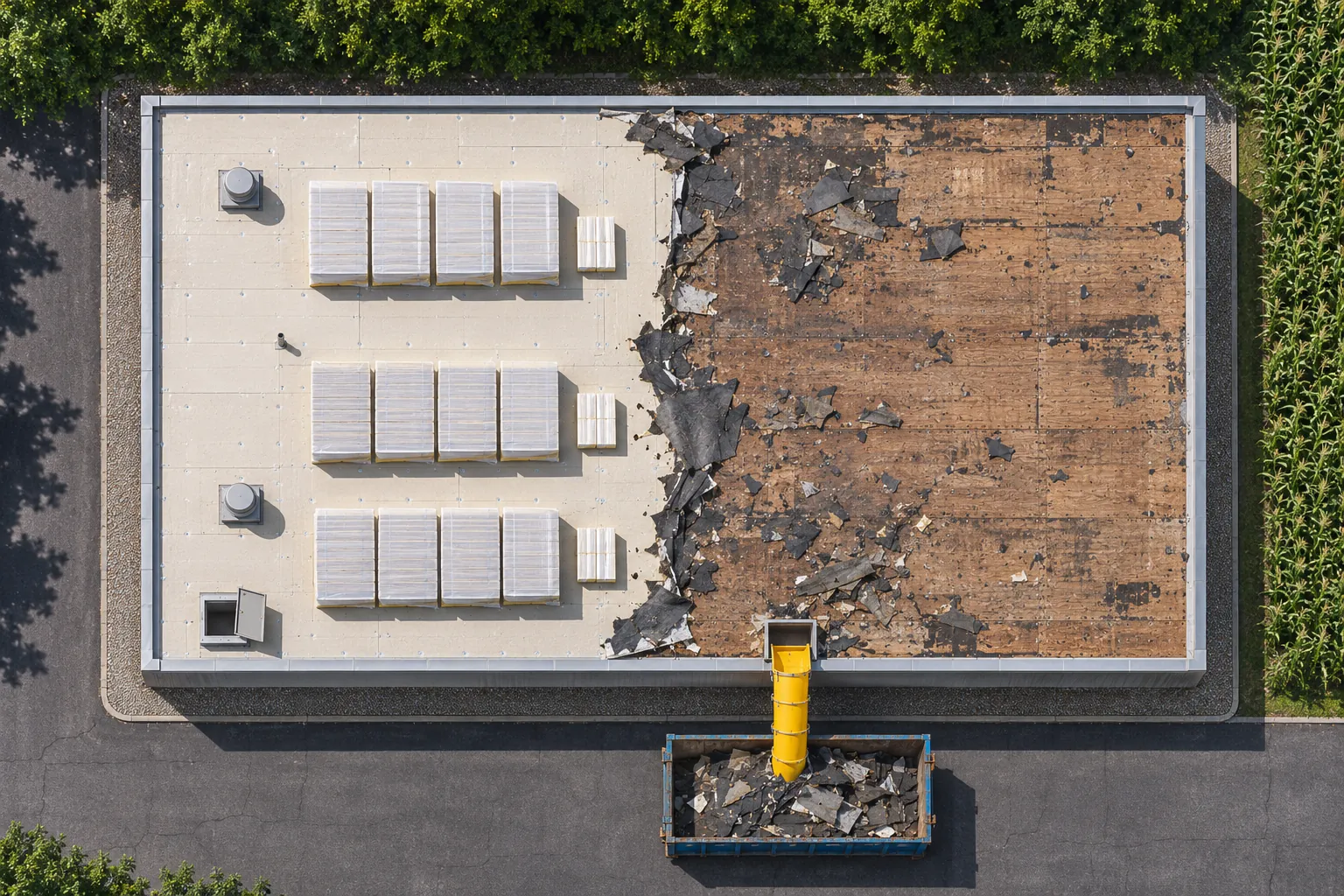
Top-down view of a flat roof mid tear-off, half new white membrane and half stripped to the deck

Reading Commercial Roofing FAQ by Topic

Jump to a topic. Every answer in this Reading commercial roofing FAQ is written for building owners and facility managers.

Reading Commercial Roofing FAQ on Choosing a New Roof

Price drivers, membrane choice, roof age, and what a roofer should explain before work starts.

What changes the replacement price for a Reading commercial roof?

A roof inspection sets the replacement price for a specific Reading, PA building. We assess roof size, system and thickness, insulation, existing layers requiring tear-off, deck repairs, edge metal and flashing. Equipment, access, staging and season also affect the scope, particularly when removal must be coordinated with occupied spaces below.

Is TPO or EPDM more suitable above a metal fabrication shop?

Either TPO or EPDM can suit a fabrication shop when the complete assembly matches its exposure and layout. We compare attachment, insulation, drainage and access around equipment before selecting the membrane. Exhaust conditions and future servicing matter alongside seam methods, so the material name alone cannot settle the choice.

Why do commercial roofs of similar age need different replacement plans?

Roofs of similar age can differ greatly in moisture damage, installation quality and upkeep. We inspect seams, flashing, drainage and the materials beneath damaged areas before judging remaining serviceability. A maintained assembly can present isolated defects, while another roof’s widespread deterioration can require broader work without waiting for a particular age.

What should a roofer explain before replacing a bakery’s roof?

A roofer should explain what will be removed, what can remain and how the new assembly meets the bakery’s operating needs. We would also discuss intake protection, material routes and equipment coordination. Clear assumptions about concealed deck or insulation damage help the owner understand where further findings could change the work.

TPO Membrane Questions for Reading Buildings

Heat-welded seams, equipment areas, and what goes into a full TPO assembly.

Which TPO weaknesses deserve attention around rooftop machinery?

Repeated traffic, punctures or poorly executed details around machinery can damage TPO. We review service paths and the space available for welding seams beside curbs. The design should also consider exhaust exposure and compatible flashing, rather than expecting the membrane sheet to compensate for inaccessible or unsuitable connections.

How do EPDM and TPO differ at roof seams?

TPO sheets join through heat-welded seams, while EPDM uses the selected system’s compatible seam materials and preparation. We compare how those methods can be carried out around the building’s curbs and edges. Both need clean, compatible surfaces and proper checking; complete assembly design still matters after a seam method is chosen.

Can a TPO seam look neat without being properly welded?

A neat-looking TPO seam does not by itself demonstrate a good weld. We use the selected system’s installation checks, including trial welds suited to actual conditions, to evaluate joining quality. Surface contamination, equipment settings and weather changes can affect the connection even when the seam line appears straight.

What is included in a TPO commercial roof assembly?

A TPO roof assembly combines a thermoplastic polyolefin membrane with its supporting layers, attachment and flashing. We specify the covering together with insulation, drainage and perimeter details rather than treating the sheet as the whole roof. Equipment penetrations also need compatible transitions that remain accessible for inspection and maintenance.

EPDM Rubber Roof Questions Around Reading

Where rubber roofs fail, how they attach, and what comes off at replacement.

Where do EPDM roofs commonly develop repair problems?

Problems in EPDM can develop at stressed edges, damaged seams, punctures and flashing around penetrations. We consider movement, service traffic and previous repair materials when assessing those defects. The pattern of damage helps distinguish a local connection problem from wider deterioration beneath the rubber that can affect replacement planning.

Should an EPDM roof be fully adhered or ballasted?

Attachment for EPDM should be chosen from the building’s structural capacity, wind design and substrate conditions. We examine the consequences of ballast weight and access for future repairs alongside the bonding requirements of an adhered system. A flat-looking roof does not establish that either method is suitable without that assembly review.

What should be removed when an old EPDM roof is replaced?

Materials too weak or wet to support a solid replacement assembly need removal, including affected wet insulation or deteriorated roofing where found. We investigate the existing EPDM layers and deck before defining what can remain. Edge metal, equipment curbs and drain connections also need consideration so new membrane only meets retained details in good condition.

Does rubber roofing mean the same thing as EPDM?

EPDM is a synthetic rubber membrane commonly described as rubber roofing in commercial work. We still need to identify the actual material and assembly rather than select repairs or specifications from that nickname. Attachment, insulation, seams and flashing determine how the completed roof fits a building’s drainage and maintenance needs.

Question Not Listed Here?

Call and ask about your roof directly. We answer roofing questions by phone.

Call Us

Industrial Reroofing Questions From Plant Managers

Equipment curbs, production schedules, and proposals that spell out the work.

How should a replacement roof meet existing equipment curbs?

A replacement roof needs curb details compatible with the new assembly height and flashing requirements. We inspect curb condition and determine whether equipment must be lifted, isolated or adjusted during installation. Leaving those decisions until roofing reaches the unit can create difficult transitions or interfere with the planned removal sequence.

Can industrial reroofing be divided around production shifts?

Reroofing an industrial building can be divided into sections that fit production schedules if exposed areas can be protected and closed appropriately. We identify sensitive processes, equipment interruptions and routes for removing materials. Some work can still require isolation below the roof, so the plan should name those limits before removal begins.

What separates useful industrial roofing proposals from vague scopes?

A useful industrial roofing proposal identifies the assembly, removal limits and responsibilities at equipment connections. We would also state assumptions about hidden damage, drainage and access over operating areas. Those details let the owner compare actual work rather than roof-covering names that can conceal very different preparation and coordination needs.

What makes roofing industrial rather than ordinary commercial work?

Industrial roofing is commercial roof work planned around production conditions, equipment and the operation below. We consider exhaust, interior moisture and service traffic when selecting materials and details. A roof over manufacturing space can need different sequencing or protection from one over offices, even where the outer membrane is similar.

Commercial Metal Roof Questions in Berks County

Panel systems, farm storage buildings, retrofits, and installation scope.

Are standing-seam roofs maintained differently from exposed-fastener roofs?

Standing-seam and exposed-fastener roofs have different attachment and joint details, which affect the maintenance checks they need. We review panel movement, flashing and the condition of visible fixings where present. Neither system removes the need to inspect damage or drainage, and the complete design should suit the building’s slope and supports.

What should metal roofing address above agricultural equipment storage?

Agricultural metal roofing should address condensation and ventilation alongside panel attachment and weather protection. We consider how the space is used, what equipment is stored and where moisture can collect beneath the covering. Compatible metals and well-built flashing details also matter, especially around additions or openings that interrupt the panel runs.

Can a metal retrofit cover an existing commercial roof?

A metal retrofit may be possible after the existing structure, moisture condition and proposed attachment are evaluated. We investigate retained layers and the load path rather than assuming an overlay can bypass removal. Drainage transitions and equipment openings must be worked into the design so concealed problems get addressed instead of enclosed.

Which costs belong in a commercial metal roof installation scope?

A roof inspection establishes the installation price for the particular building. We evaluate size, panel system and thickness, insulation, tear-off layers, deck repairs, edge metal, flashing and equipment details. Access, staging and season also matter; those items need to be included before a broad square-foot comparison can describe the actual work.

Weather, Insurance, and Code Questions

Snowmelt, hail, damp brick mills, premiums, and the Pennsylvania code framework.

How should a replacement roof handle snowmelt and frozen drainage?

A replacement roof should provide workable drainage and sound transitions where snowmelt could collect behind ice. We review outlets, gutters and details affected by freeze-thaw movement. Heavy wet snow also requires appropriate structural consideration, so the new covering should not be treated as evidence of a particular snow-load capacity.

Should a new roof be inspected after summer hailstorms?

A new roof should be checked after hail or damaging summer winds because recent installation does not prevent punctures or displaced details. We inspect seams, perimeter metal and equipment flashing once access is safe. Finding and correcting damage supports continued service, without assuming that an intact-looking surface tells the whole story.

Will reroofing cure dampness inside an older Reading brick mill?

Reroofing will not necessarily cure dampness caused by indoor humidity or water entering the brickwork. In Reading, PA, we would compare roof moisture findings with ventilation and wall-flashing conditions before selecting the replacement scope. New roofing should address documented roof defects while other sources of water receive their own investigation.

Does installing a new commercial roof reduce insurance premiums?

A new commercial roof does not automatically reduce insurance premiums or change coverage. The outcome depends on the policy and the insurer’s assessment, including the cause of any existing damage. We can document the roofing scope and condition, but the owner should discuss policy terms directly without budgeting for an assumed discount.

What code framework applies when a Reading business plans reroofing?

Pennsylvania’s Uniform Construction Code provides the statewide framework for the project. For Reading, PA reroofing, we would take the existing assembly and proposed changes to the appropriate reviewing authority. Insulation, covering removal and any affected supports should be described clearly so the discussion concerns the actual replacement rather than a generic roof label.

Questions From Owners in Nearby Towns

Warehouse proposals, perimeter flashing, drainage, rooftop units, and maintenance routes.

What should a Wyomissing warehouse compare in replacement roof proposals?

A Wyomissing warehouse should compare removal assumptions, insulation, attachment and drainage along with the chosen covering. We would also review loading access and protection of stored contents during the work. Proposals that omit equipment coordination or possible deck repairs may not describe the same project, even when their roof areas match.

Can retained perimeter flashing be used with new roofing in Collingdale?

Retained perimeter flashing in Collingdale needs condition and compatibility checks before it is included in a replacement roof. We inspect its attachment and connection to walls, coping and the proposed membrane. New roofing should not end against damaged or unsuitable metal merely because the perimeter was excluded from an initial scope.

How should Downingtown roof drainage be reviewed before replacement?

Drainage review in Downingtown should establish how water reaches outlets and whether existing low areas need correction. We examine insulation shape, drain elevations and obstructions around equipment. Repeating a failed drainage arrangement beneath a new covering can expose the replacement to the same standing-water conditions as the old roof.

Do Brookhaven rooftop units need coordination during a roof replacement?

Rooftop units in Brookhaven need coordination when new roofing changes flashing connections, access or assembly height around their curbs. We identify equipment tasks before removal reaches those areas. The work can involve temporary isolation or adjustment by the equipment trade, with clear responsibility for restoring both roofing and mechanical connections.

Where should maintenance routes run on a new Ridley Park roof?

Maintenance routes on a Ridley Park roof should connect access points with equipment that needs servicing while keeping drainage paths clear. We consider compatible walkway protection at vulnerable traffic areas. The layout should also leave seams, flashings and outlets available for inspection rather than cover details that require continued attention.

Beyond the Reading Commercial Roofing FAQ

If your question is about a specific roof, a roof walk answers it best. Book an inspection or call.

Call Us (484) 978-6354