Fully Adhered EPDM
Sheet bonded to the cover board
- Weight
- Light, no stone load
- Wind
- Bonded across the field
- Repairs
- Leaks are easy to find
- Needs
- Clean, dry, bondable surface
- Good On
- Older decks with limited capacity
Reading EPDM roofing starts with the building under it: we install adhered or ballasted rubber membrane over dry insulation on low-slope roofs.
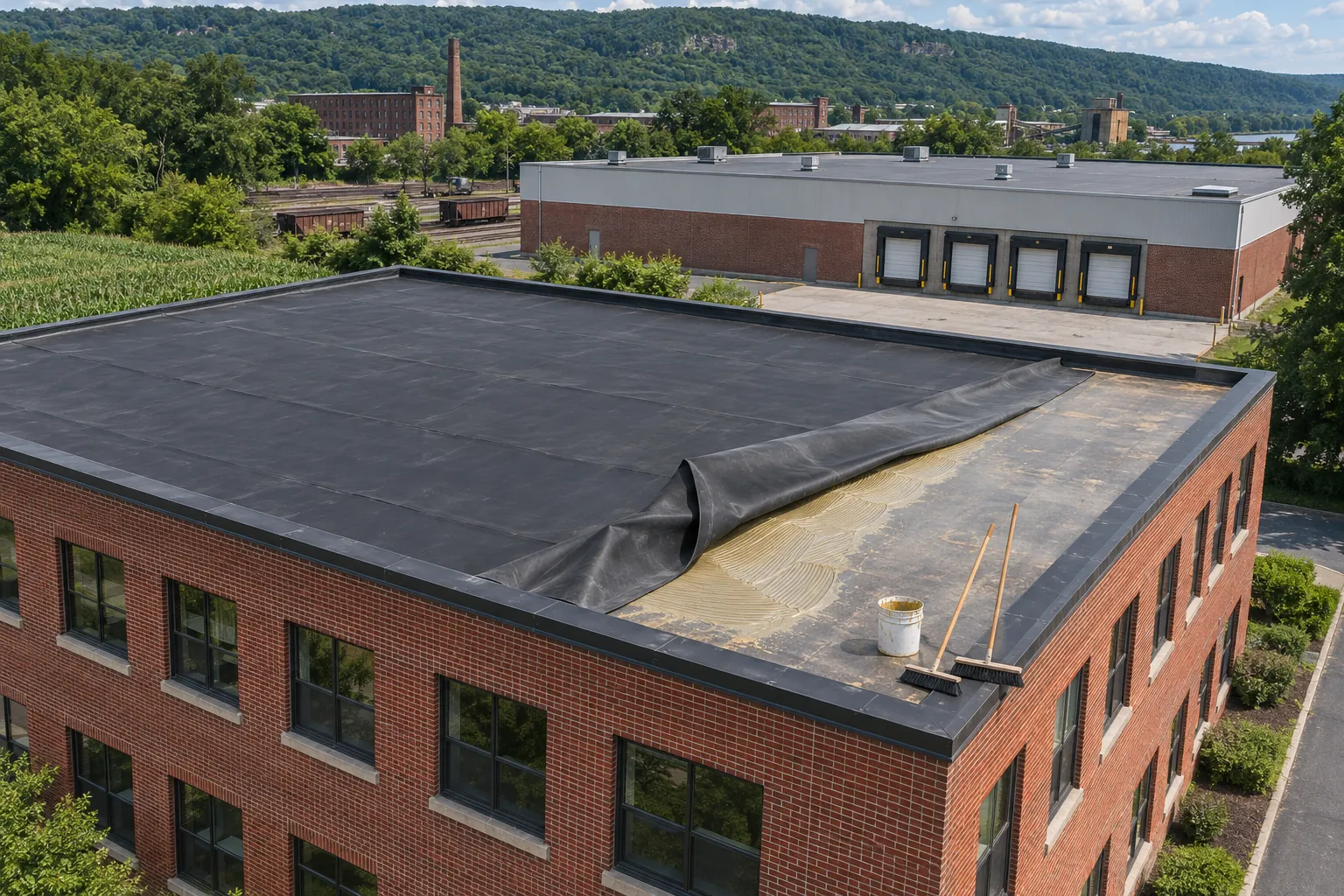
Reading EPDM roofing comes in two common forms. The structure, wind exposure, and future repairs decide between them.
Sheet bonded to the cover board
Loose sheet held by stone
A flat-looking roof does not show which method fits. We review structure, wind design, and the substrate first.
Rubber roofs fail in a few predictable places. Finding the pattern tells us whether to repair or replace.
Older EPDM laps lose their bond and open at the edges. Water follows the lap line and soaks the insulation several feet from where it got in.
Aging rubber shrinks and pulls on walls, curbs, and edge metal. That tension tears flashing at corners and lifts the sheet off the parapet.
Sharp stones and service traffic poke holes through the sheet. On ballasted roofs, those holes stay hidden until the stone gets moved.
Years of mixed repair materials leave patches that no longer stick. Many patches in one area usually mean wider wear under the rubber.
Drain rings that have lost their clamp let water slip under the membrane. New drain inserts or clamping rings go in with the replacement.
Spongy areas underfoot mean wet insulation. Core cuts show how far it reaches and how much needs to come out.
An EPDM roof is chosen layer by layer. These are the decisions in a typical scope.
| Choice | Options | What Decides It |
|---|---|---|
| Attachment | Fully adhered, mechanically fastened, or ballasted | Structural capacity, wind design, and how easy future repairs should be |
| Sheet Thickness | Standard and heavier rubber | Traffic, hail exposure, and how the roof is used |
| Seams | Factory tape with primer, plus cover strips at edges | Lap layout around curbs, walls, and drains |
| Removal | Full tear-off or partial, based on core cuts | How much insulation is wet and how many layers already exist |
| Flashing | Uncured flashing at corners, cured at walls | Curb shapes, pipe sizes, and wall height |
Rubber membrane suits many older brick buildings in the city for a few plain reasons.
The rubber stays pliable in freezing weather, so it handles freeze-thaw movement at walls and joints.
Adhered EPDM can be cleaned, primed, and patched without special welding equipment.
An adhered rubber roof adds little weight, which matters on old wood and plank decks.
The roof plan in your file shows where each lap runs, which speeds up any future leak search.
Call us. We will check the seams, edges, and drains and tell you what we find.
Call UsEvery EPDM roof replacement follows these five steps.
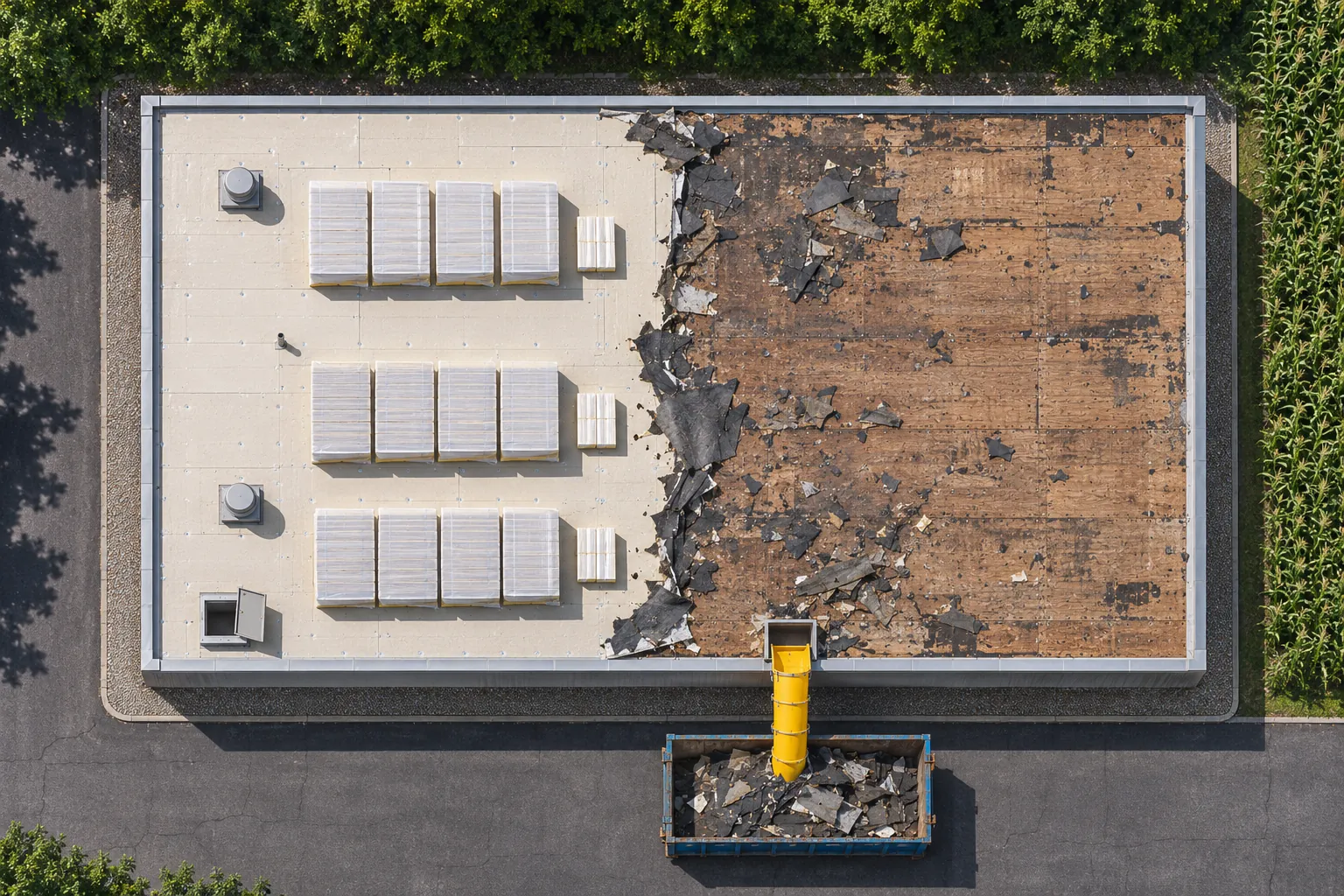
We cut cores to count existing layers, check the deck, and mark wet insulation so the removal limits are set from what is actually there.
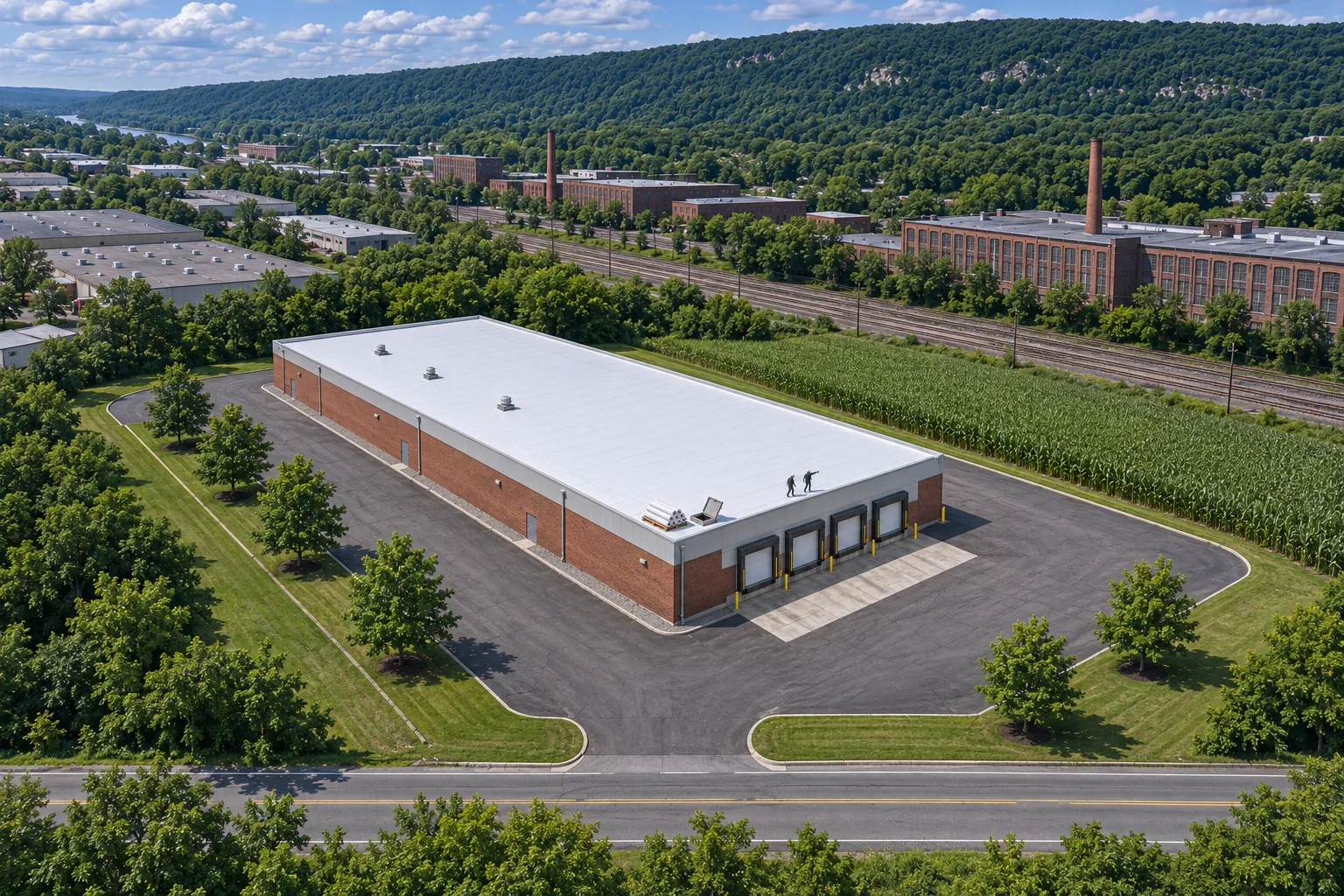
Your written scope names what comes off, the attachment method, sheet thickness, insulation, and how edge metal, curbs, and drains get handled.
Adhesive, rolls, and debris get planned routes, and we cover openings so dust and odor stay out of the rooms under the work.
Sheets go down over new board, get bonded or ballasted, and each lap is primed and taped with cover strips at edges and corners.
Every lap and flashing corner gets checked and photographed, and you receive the roof plan and system records.
Rubber is one option. These three fit other buildings and roof shapes.
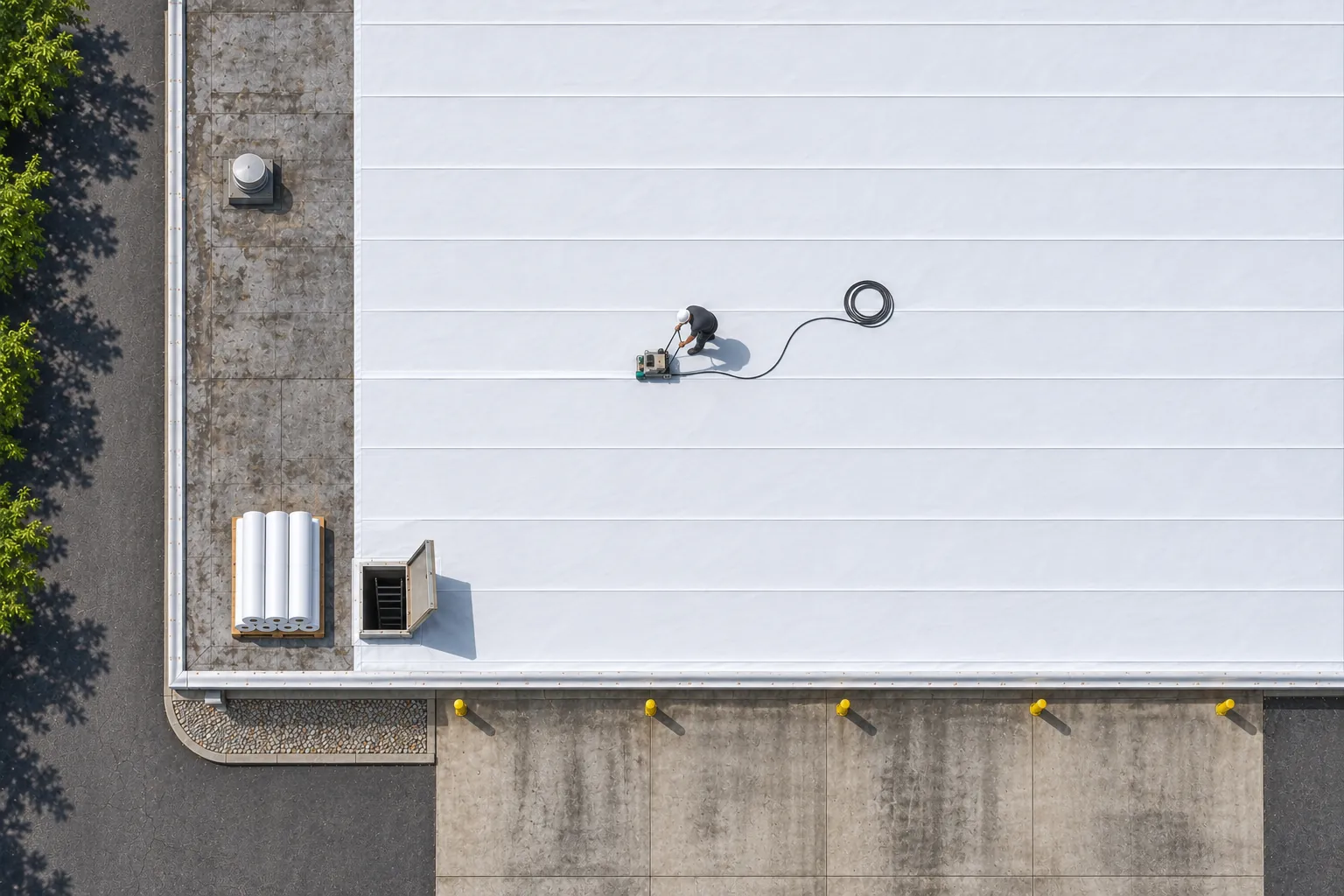
A white, heat-welded sheet that reflects summer sun, often chosen for warehouses and food plants.
Compare TPO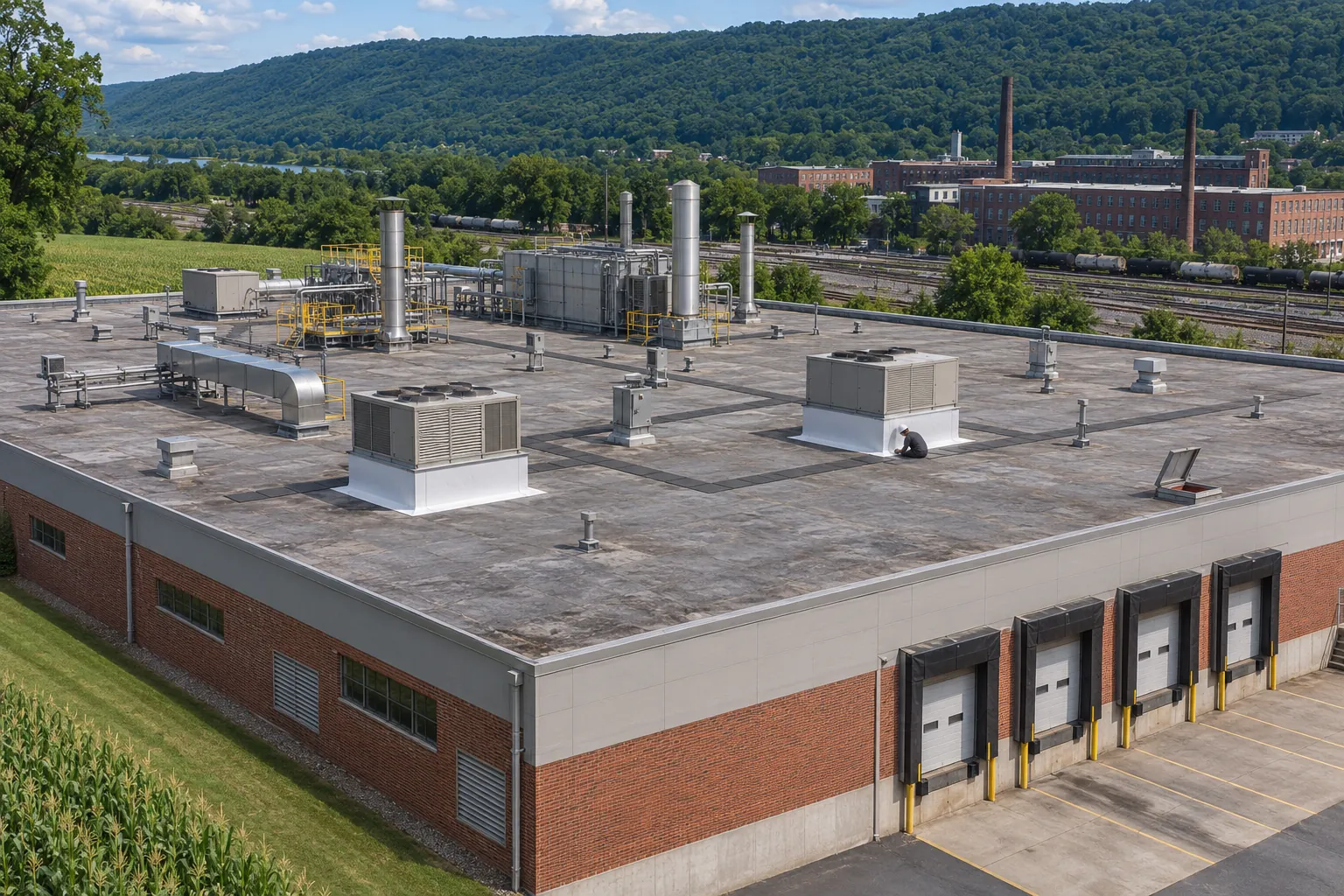
Reroofing staged around production, exhaust, and heavy rooftop equipment on plants and shops.
View industrial roofing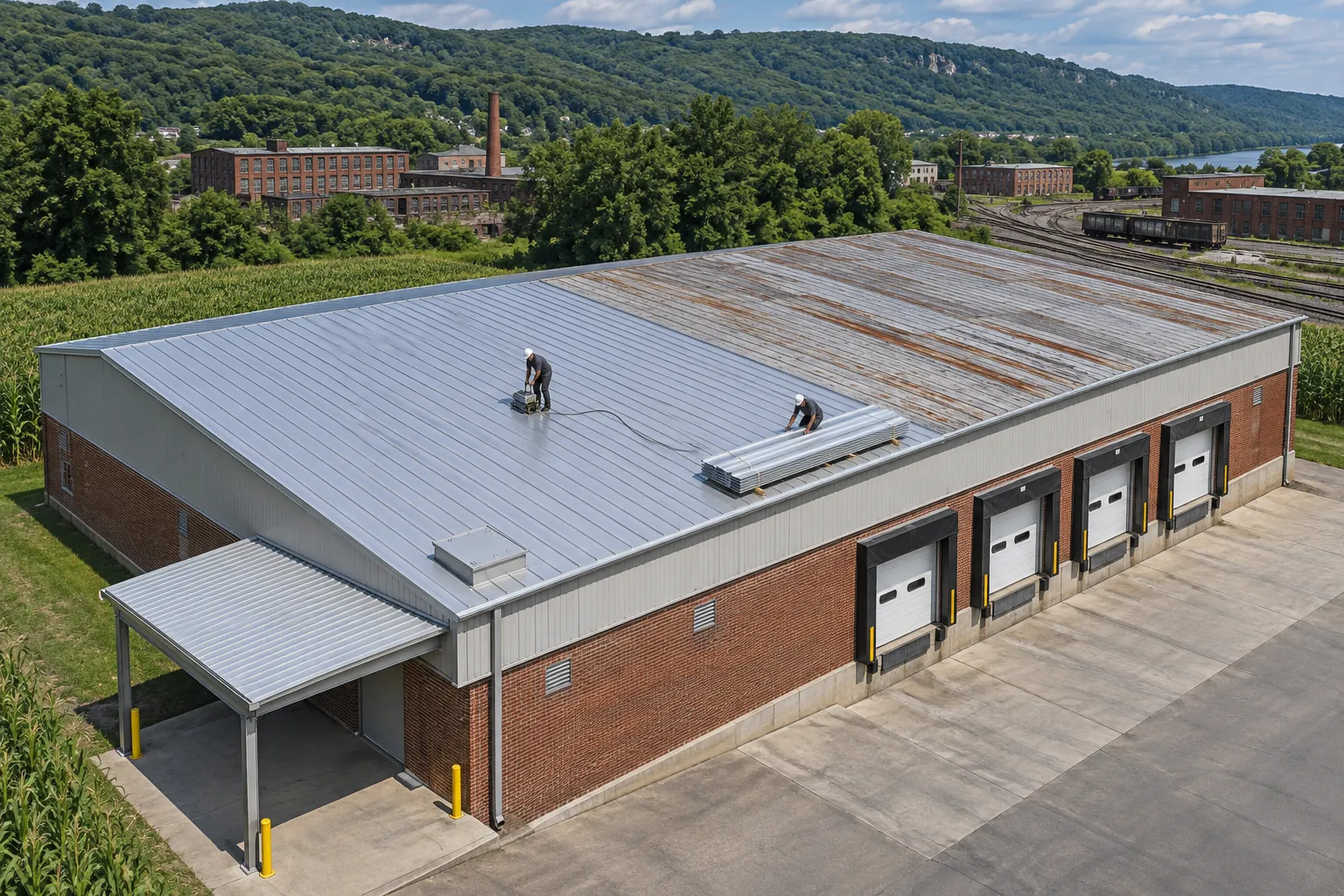
New panels, replacement panels, and retrofits on metal buildings with enough slope to shed water.
View metal roofingAnswers about rubber roofs, how they attach, and what comes off at replacement.
EPDM is a synthetic rubber membrane, usually black, used on flat and low-slope commercial roofs. It comes in wide rolls with few seams. Laps are joined with primer and seam tape, and the sheet is bonded, fastened, or held down with stone.
People often call EPDM rubber roofing, but the nickname covers other materials too. We confirm what is actually on your roof before ordering repairs, because the attachment, seams, and flashing on that roof set what the next step should be.
Seam tape lifting at laps, shrinkage at walls and edges, punctures from stone or traffic, and drains losing their clamp are the usual ones. Many old patches clustered in one area often point to wear spread wider under the sheet.
Stressed edges, damaged seams, punctured areas, and flashing around pipes and curbs see most of the trouble. We also look at old repair materials and traffic paths, since that pattern shows whether one connection failed or the whole sheet is wearing out.
It comes down to the structure, wind design, and the deck surface. Ballast adds heavy stone that the framing must carry, and it slows future repairs. Adhered sheets need a clean, bondable surface. We check all three before choosing.
Wet insulation and roofing that cannot carry the new assembly comes off. We cut into the existing layers and check the deck first, then review edge metal, curbs, and drain connections so the new membrane never ties into worn details.
Tell us about the building and the rubber roof on it. We will inspect the laps, edges, and drains and send a written scope.