Worn Paths Across the Field
A visible path from the hatch to the units marks where the membrane is thinnest. Granules, scuffs, and dull streaks follow the line technicians take most often.
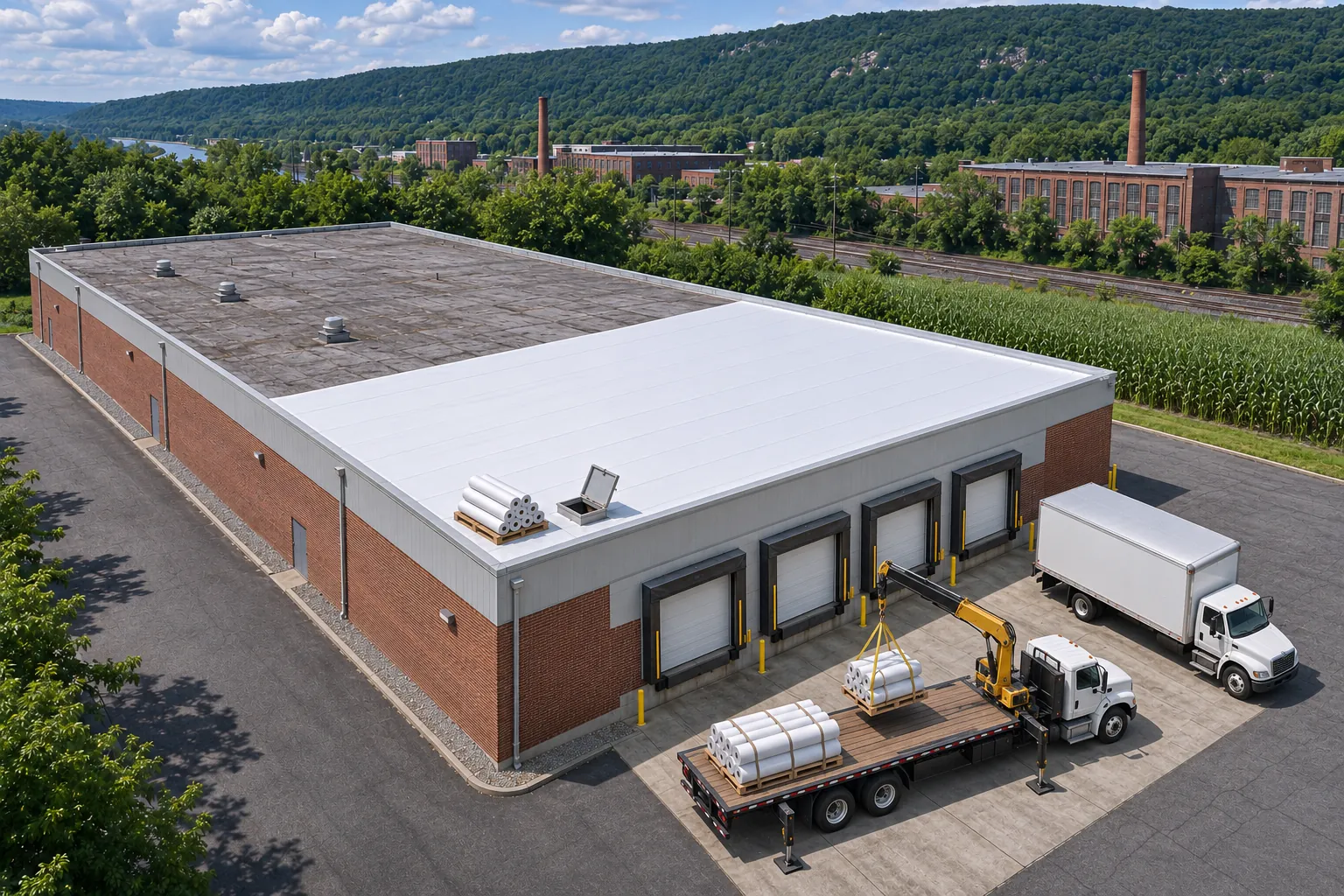
Ridley Park commercial roofing covers busy roofs: we install new membrane and lay out walkway routes so service traffic stays off the field.

Ridley Park commercial roofing jobs often involve roofs that technicians cross every week.
Service traffic wears a membrane faster than weather does. Tools get dropped, boots scuff seams, and the same path gets walked hundreds of times a year.
We plan walkway routes from the roof hatch to each unit, keep them out of drain paths, and leave seams, flashing, and outlets exposed so they can still be inspected.
These conditions show up on roofs with frequent service visits.
A visible path from the hatch to the units marks where the membrane is thinnest. Granules, scuffs, and dull streaks follow the line technicians take most often.
Screws, filters, and tools dropped near units leave small holes that soak the insulation. Each hole is small, so it can leak for months before a ceiling stain gives it away.
Seams crossed by every visit get scuffed and lift sooner than seams elsewhere. Boot heels catch the lap edge and slowly peel it back.
Old walkway pads or stored parts laid across the slope hold water behind them. Pads set across the slope act like small dams on a flat roof.
The membrane at the hatch and ladder takes the most traffic and often fails first. Ladders, carts, and dropped gear all land in that same corner.
Pads glued over seams or flashing hide problems that need regular checks. Lifting an old pad often shows an open seam that had been leaking for years.
A laid-out route protects the new roof from the people who service the equipment on it.
Technicians follow the pads instead of cutting across the membrane. Those paths also make it easy to spot new wear at each inspection. Service contractors get a copy of the plan.
Pads run with the slope or stop short of drain paths, so water still reaches the outlets. Gaps between pads let water pass through at each low point. Drains stay reachable for cleaning.
Seams and flashing stay clear of pads, so those details can still be inspected and repaired. Any small opening gets caught before it reaches the insulation.
Extra protection at the hatch and ladder handles the heaviest foot traffic. A wider pad there spreads the load of ladders and dropped gear.
Each roof system takes walkway protection in its own way.
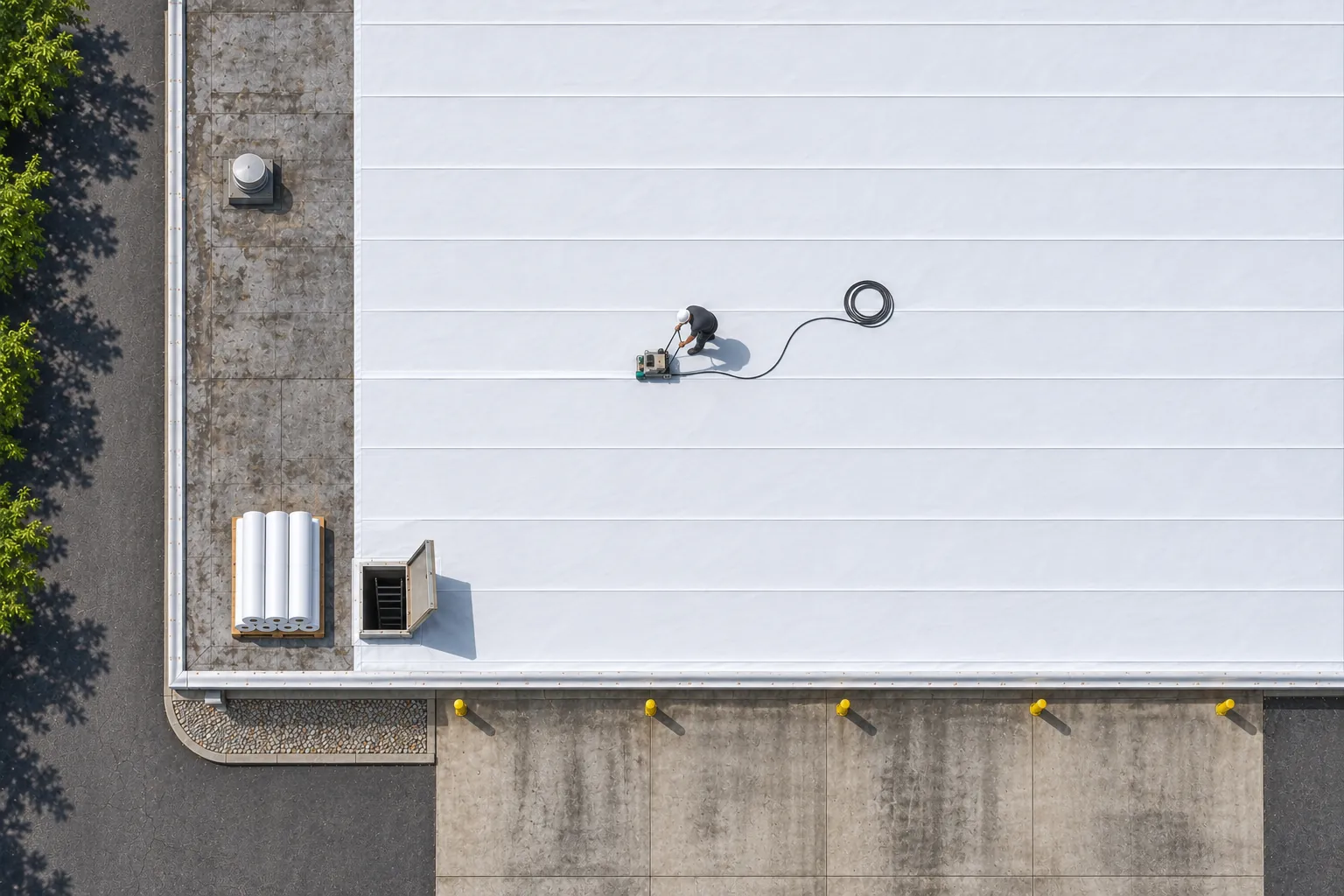
White membrane with walkway pads heat-welded along each route.
Visit the TPO page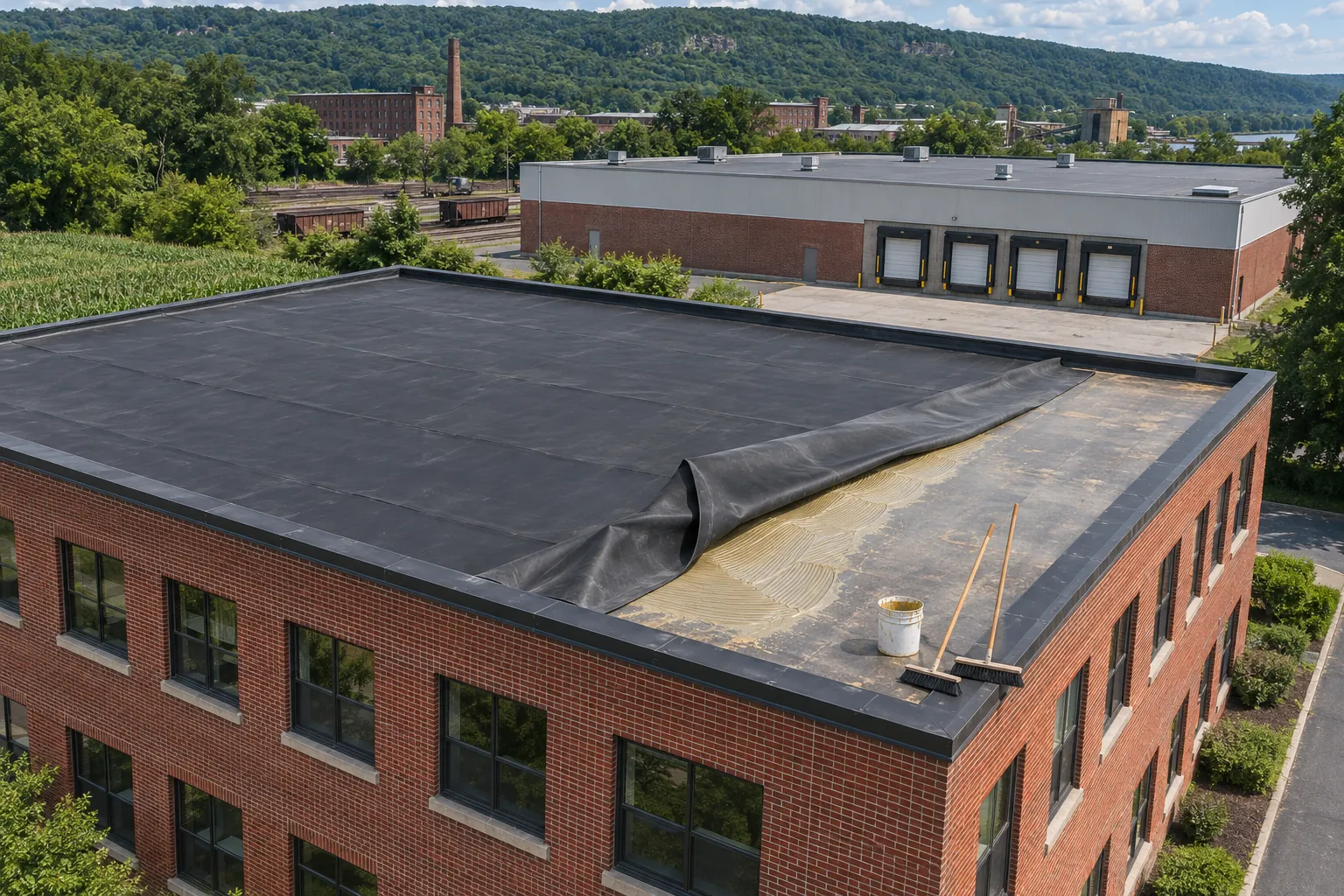
Rubber membrane with walkway pads bonded on with system adhesive.
Visit the EPDM page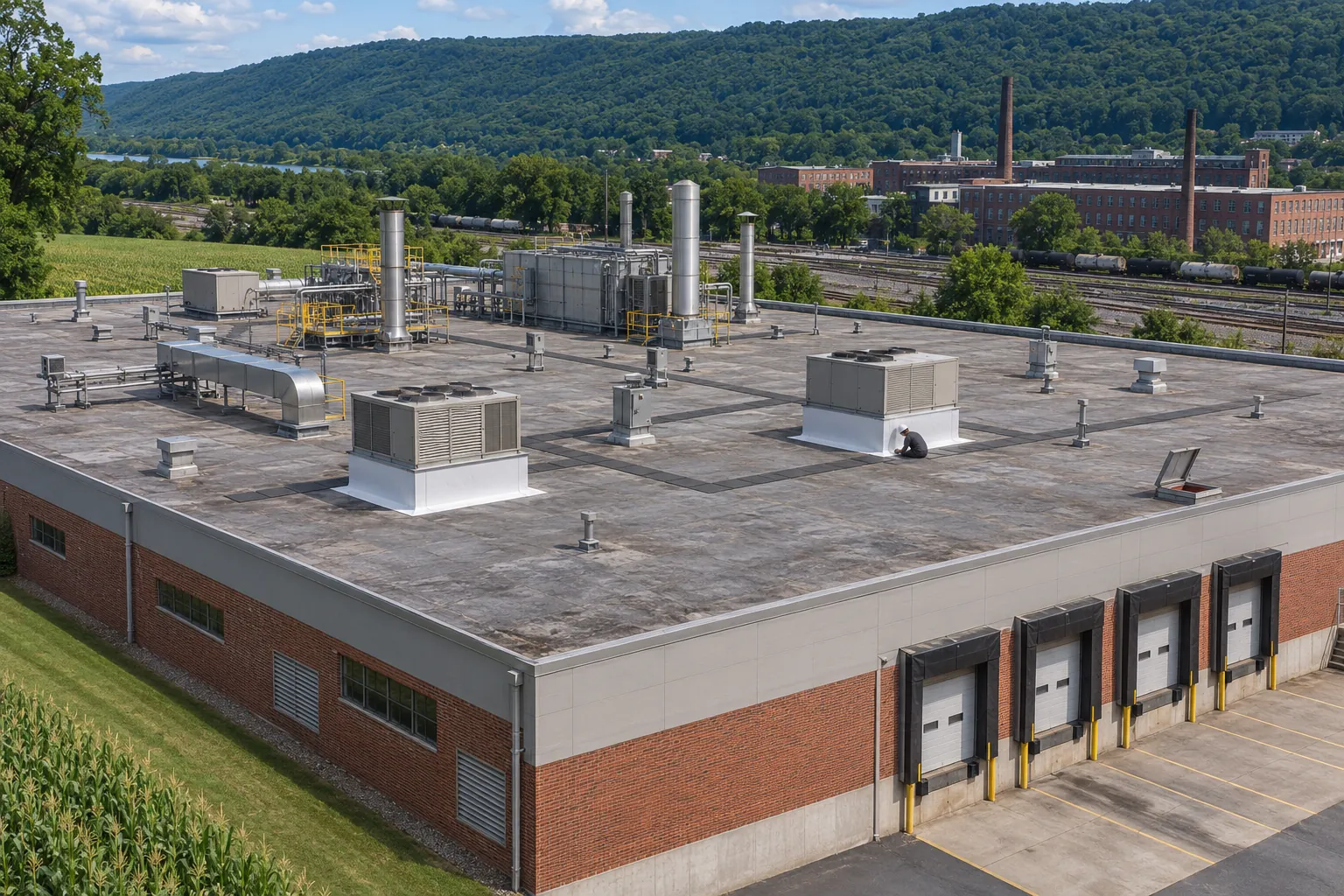
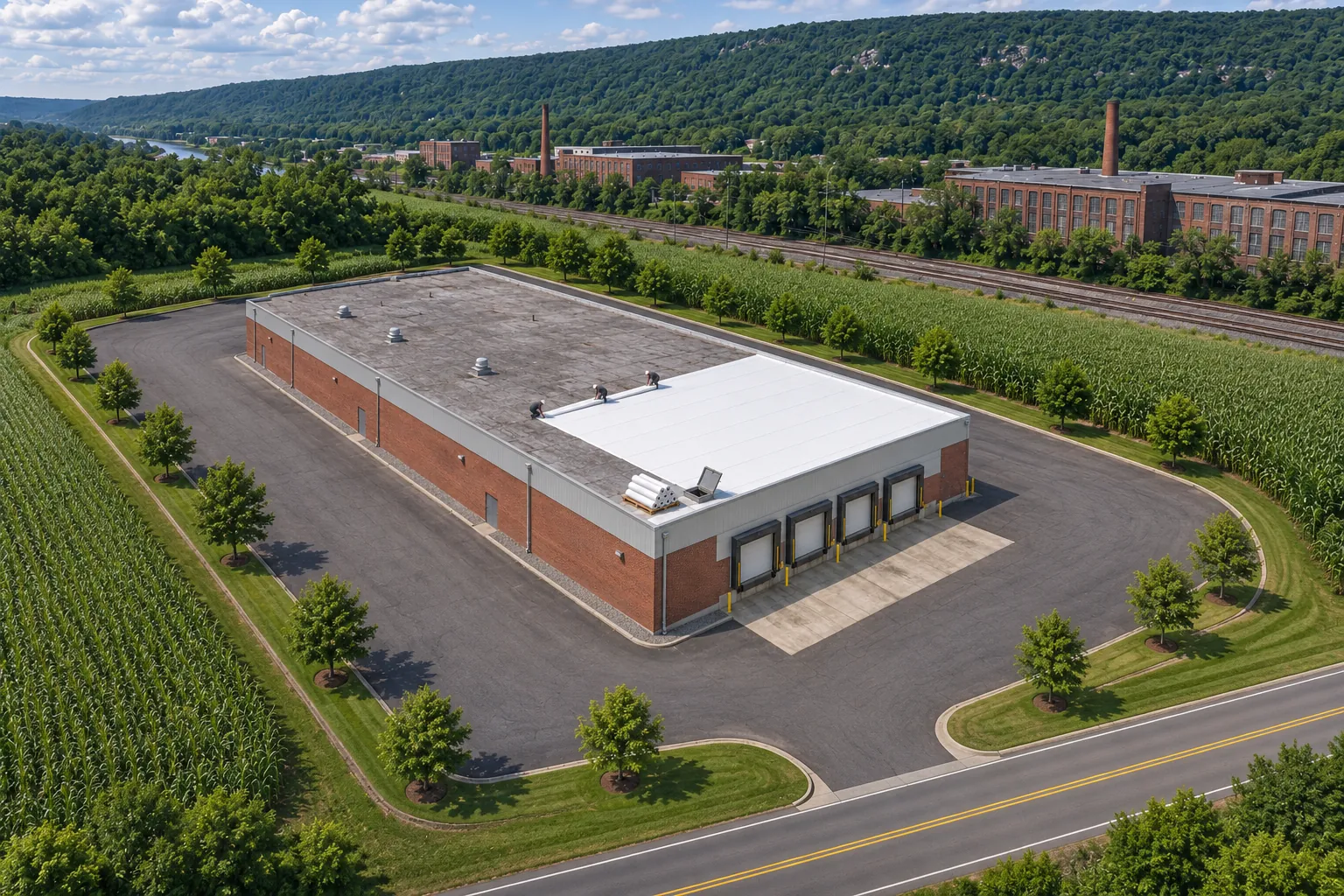
Roof replacement on plants where crews reach equipment every day.
Visit the industrial page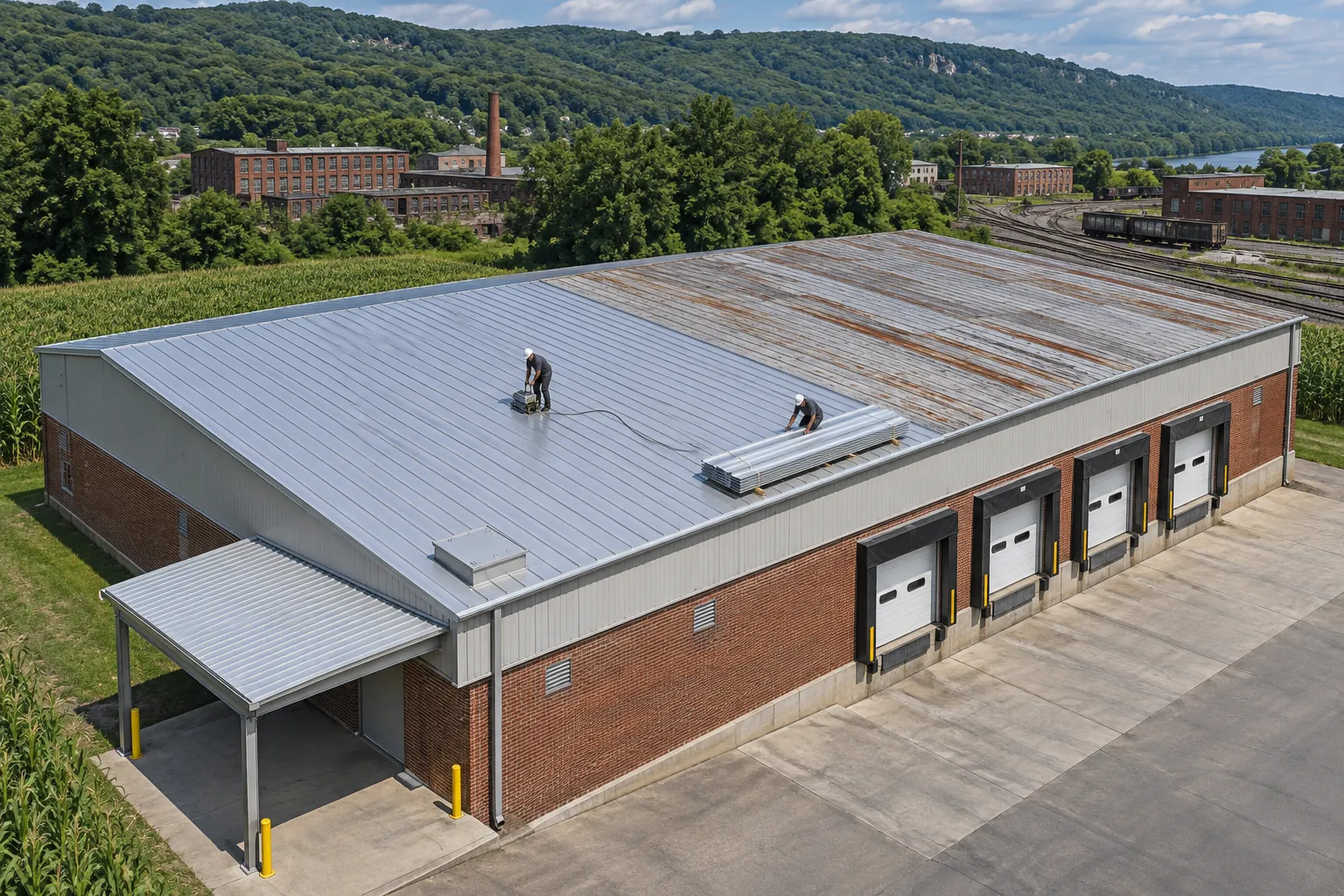
Panel roofs with marked walk zones over the purlins.
Visit the metal roofing pageCall and tell us how often the roof gets service visits. We will look at the worn path and the units it leads to.
Call UsWalkway routes are drawn alongside the roof plan.
We follow the worn paths, note every unit and hatch, and cut cores where traffic has damaged the sheet.
The scope shows walkway routes from the hatch to each unit, kept clear of drains, seams, and flashing.
We set times when technicians can reach units while sections are open, so service visits do not cross wet work.
New membrane and flashing go down first, then walkway pads welded or bonded along the drawn routes.
You get photos, the roof plan with routes marked, and a copy to give your service contractors.
We cover Ridley Park and these towns. For a building elsewhere, call (484) 978-6354 or send us a message before you rule us out.
The Berks County city where we work most, from food plants to brick mills with steady rooftop traffic.
Close by, with roofs crowded by units whose curbs often need raising for the new insulation.
Brick and block buildings where parapet flashing and coping get checked before any new membrane goes on.
Big warehouses where loading docks and stock protection shape the order of the work.
Low-slope roofs where we map standing water first and design slope to the drains.
Answers about walkways, access, and keeping a roof easy to inspect.
From each access point to every unit that needs service, with drain paths left clear. Walkway protection goes where traffic is heaviest, and the layout leaves seams, flashing, and outlets uncovered so they can still be checked.
We start at the hatch or ladder and connect each unit by the shortest path that avoids drains and seams. The routes go on the roof plan so every service contractor follows the same path.
Pads are made for the roof system: TPO pads are welded on, and EPDM pads are bonded with system adhesive. They are thicker and textured, which spreads foot traffic and gives grip in wet weather.
We keep them off seams and flashing where possible. Covered seams cannot be inspected, and a problem under a pad goes unnoticed until it leaks.
Keep pads and stored parts out of drain paths, check strainers in spring and fall, and clear leaves after storms. Service technicians should carry out what they bring up.
Spring and fall are a good minimum, plus after hail or high wind. Roofs with weekly service traffic benefit from a quick look along the routes each time a unit is serviced.
Send the address and how often your roof is serviced. We will inspect it and plan the routes.